
10 Most Effective Cleaning Products for Outdoor Patios and Decks
The best outdoor patio cleaning products are a biodegradable heavy-duty cleaner for BBQ grease and general grime, a specialist mold and algae remover, an oxygen bleach cleaner for timber and composite decking, a pH-neutral stone cleaner, a glass cleaner or squeegee system, a dedicated outdoor furniture cleaner, a grill cleaner, a stiff deck brush, a pressure washer used carefully, and an acidic cleaner for compatible mineral stains. Sanitify products are excellent where they match the job, especially grease, grime and mineral deposits.
Outdoor cleaning has a sense of humor. You sweep the patio, and a tree drops confetti. You scrub the deck, and the barbecue contributes a glossy memorial to last weekend’s sausages. You clean the glass doors, and a bird files a review. Patios, decks and garden furniture live in the weather, so the goal is not sterile perfection. The goal is safe, pleasant, good-looking outdoor space that does not turn green, greasy or crunchy underfoot.
This guide covers the ten most effective cleaning products for patios, decks, BBQ areas, outdoor furniture, exterior glass, mold, algae and general garden grime. It also explains when named brands are useful, when a Sanitify product makes sense and when the best cleaner is actually patience plus a brush.
How Outdoor Dirt Is Different
Indoor dirt mostly arrives by foot, hand and pet. Outdoor dirt arrives by weather system. Rain brings mineral deposits. Trees drop tannins, sap, pollen and leaves. Birds provide commentary. BBQs produce grease and carbon. Damp shaded corners grow algae and mold. Deck boards collect organic film. Stone absorbs stains. Glass collects hard water spots and airborne grime. In other words, the patio is not dirty because you failed. It is dirty because it is outside.
That means one miracle product is rarely the answer. Grease needs a degreaser. Green growth needs an algae or mold treatment. Timber needs a product that respects fibers and finishes. Natural stone needs pH awareness. Glass needs a streak-free method. A pressure washer can help, but used badly it can scar wood, blast sand from paving joints and turn dirty water into modern art on your walls.
The 10 Most Effective Outdoor Patio Cleaning Products
1. Sanitify Biodegradable Super Cleaner for BBQ Grease and Patio Grime
Sanitify Biodegradable Super Cleaner is the most relevant Sanitify product for many outdoor cleaning jobs because patios often suffer from greasy, sticky, traffic-heavy dirt. Around BBQs, outdoor kitchens, bins, garden tools and dining areas, ordinary soap can give up early and ask for a chair.
This cleaner is built for tough residues such as grease, oil, soot, gum and heavy grime. That makes it useful for BBQ splash zones, greasy paving near outdoor kitchens, plastic storage boxes, durable garden furniture frames, wheelie-bin areas, outdoor tiles and workshop-to-patio tracks. It is also biodegradable, which is a meaningful advantage outside, where rinse water may reach soil or drains.
Use it with practical caveats. Dilute correctly, pre-wet nearby plants, avoid letting strong solution dry on surfaces, scrub with a suitable brush and rinse thoroughly. Do not assume it is right for untreated wood, delicate natural stone, oxidized paint or powder-coated metal without a spot test. Powerful cleaner plus delicate finish can become a learning experience you did not request.
2. Specialist Mold and Algae Remover for Green Growth
If your patio or deck turns slippery and green, a dedicated mold and algae remover is usually the most effective product. Algae is not just cosmetic. It creates a slick biofilm that makes steps, paving and decking unsafe, especially in shaded or damp areas. A general cleaner may remove surface dirt, but a specialist biocidal or oxygen-based treatment is better at dealing with the growth itself.
Brands such as Wet & Forget, Patio Magic, Algon and Jeyes Fluid are common options, depending on your market. The caveat is that formulas vary, dwell times matter and plant safety differs. Some products are designed to be applied and left for rain to finish the job. Others require scrubbing and rinsing. Read the label, because outdoor cleaners are not all interchangeable green-liquid mysticism.
For best results, remove loose debris first, apply on a dry day, keep pets and children away until the surface is safe and give the product time to work. Severe green growth often fades over days or weeks, not seconds. If you need instant visual improvement, scrub after dwell time, but do not skip the treatment stage or the algae may return with confidence.
3. Oxygen Bleach Cleaner for Timber and Composite Decking
Oxygen bleach, usually sodium percarbonate based, is one of the best options for cleaning timber decks and many composite boards. It lifts organic staining, mildew film and grey surface dirt without the harshness of chlorine bleach. It is often sold as deck cleaner powder or concentrate and activated with water.
On timber, oxygen bleach can brighten weathered boards and loosen grime before brushing. It is also useful where leaves have left tannin-like staining. On composite decking, it can help remove organic film without damaging the cap layer, but always check the deck manufacturer’s care guide. Some composite warranties are surprisingly particular, like a tiny lawyer lives inside each plank.
Apply according to the label, keep the surface wet during dwell time, scrub with the grain and rinse thoroughly. Follow with a deck brightener or oxalic acid product only if appropriate for the timber and finish. Do not use chlorine bleach as a default deck cleaner; it can damage wood fibers, corrode metal fixings and harm surrounding plants.
4. pH-Neutral Stone Cleaner for Natural Stone Patios
Natural stone is beautiful, expensive and occasionally dramatic. Limestone, marble, travertine, sandstone, slate and granite do not all respond the same way to cleaning products. Acidic cleaners can etch calcium-rich stone. Strong alkaline degreasers can affect sealers. Abrasive brushes can scratch softer stone. A pH-neutral stone cleaner is the safest routine choice for sealed natural stone patios.
Use it for general dirt, pollen, food spills and light traffic marks. Sweep first, dilute as directed, scrub with a soft or medium brush and rinse. For stained stone, identify the stain before choosing a treatment. Rust, oil, leaf tannin, algae and efflorescence need different approaches. Guessing can set a stain permanently or create a clean patch shaped like regret.
Brands such as Lithofin, Fila, LTP and StoneTech make stone-specific cleaners and stain removers. They cost more than generic patio wash, but they are cheaper than replacing etched slabs. If your patio is sealed, check whether the cleaner is compatible with the sealer.
5. Sanitify Organic Acidic Cleaner for Mineral Deposits and Rust on Compatible Surfaces
Sanitify Organic Acidic Cleaner is not the first product for general patio washing, but it is very relevant for specific outdoor problems: limescale, rust marks, mineral deposits, hard-water spots and some stubborn staining on compatible materials. Around outdoor taps, metal furniture feet, planters, glass, stainless steel and tiled areas, mineral stains can resist ordinary cleaners.
The caveat is essential. Acidic cleaners should not be used on acid-sensitive natural stone such as marble, limestone or travertine. They may also affect cement-based grout, concrete, unsealed stone and certain metal finishes if overused or left too long. Always test, apply locally, let it work briefly and rinse thoroughly.
Used correctly, an acidic cleaner can save a lot of scrubbing. Used casually, it can create etched halos that look clean only because the surface has changed. Treat it as a specialist tool, not a patio perfume.
6. Outdoor Furniture Cleaner for Plastic, Rattan, Metal and Fabric
Outdoor furniture collects pollen, sunscreen, bird droppings, mildew, food spills and the dusty film that appears whenever cushions are left outside for exactly one optimistic week. A dedicated outdoor furniture cleaner is useful because it is typically designed for mixed materials: plastic, resin rattan, powder-coated aluminum, painted metal, treated wood and weather-resistant fabrics.
For plastic and resin furniture, a mild all-purpose cleaner or diluted biodegradable cleaner can remove grey grime and food residue. For powder-coated metal, avoid abrasive pads and strong solvents that dull the finish. For wood furniture, use a wood-safe cleaner and follow with oil or protector if the item requires it. For cushions, check the care label. Removable covers may be machine washable; fixed cushions may need fabric cleaner and careful drying.
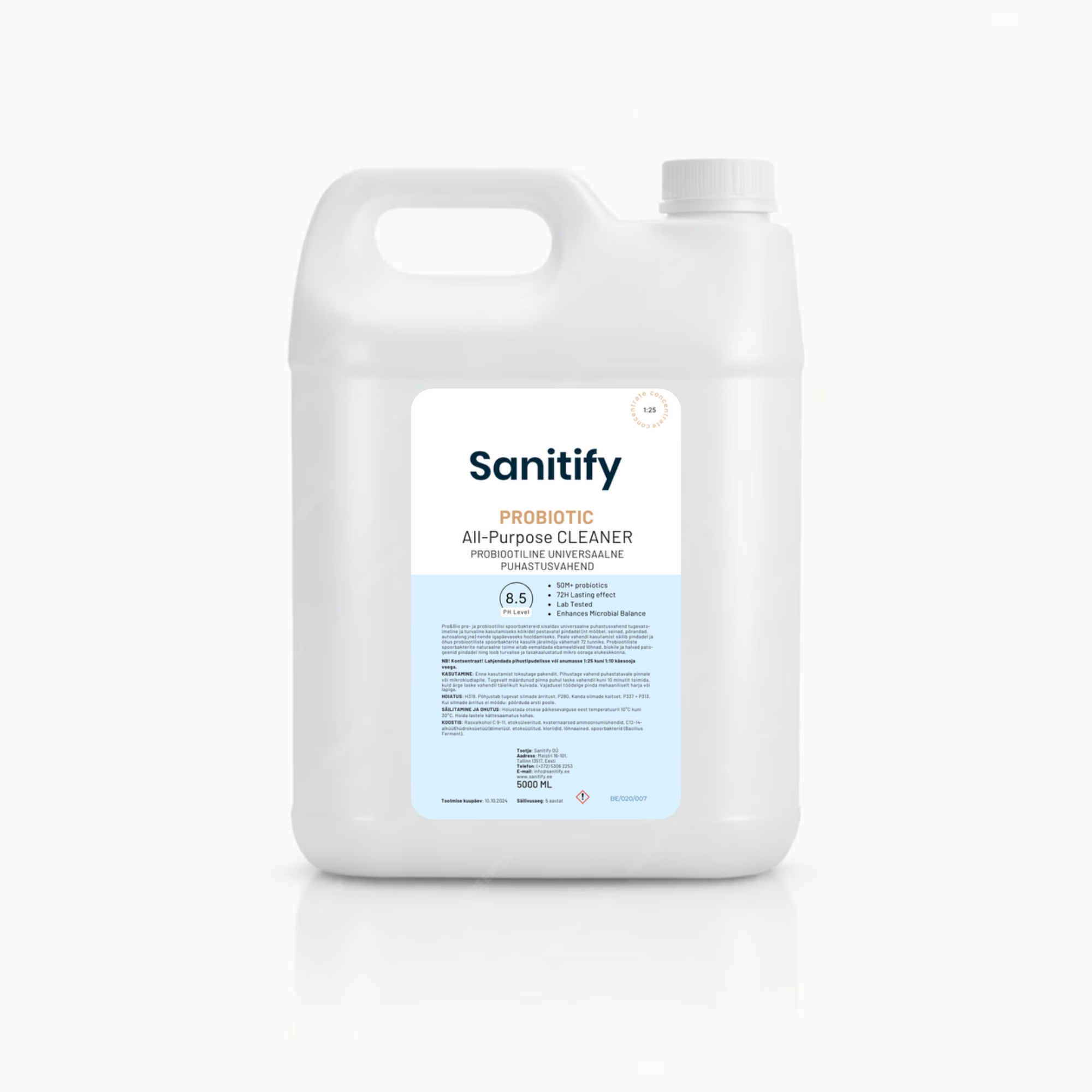
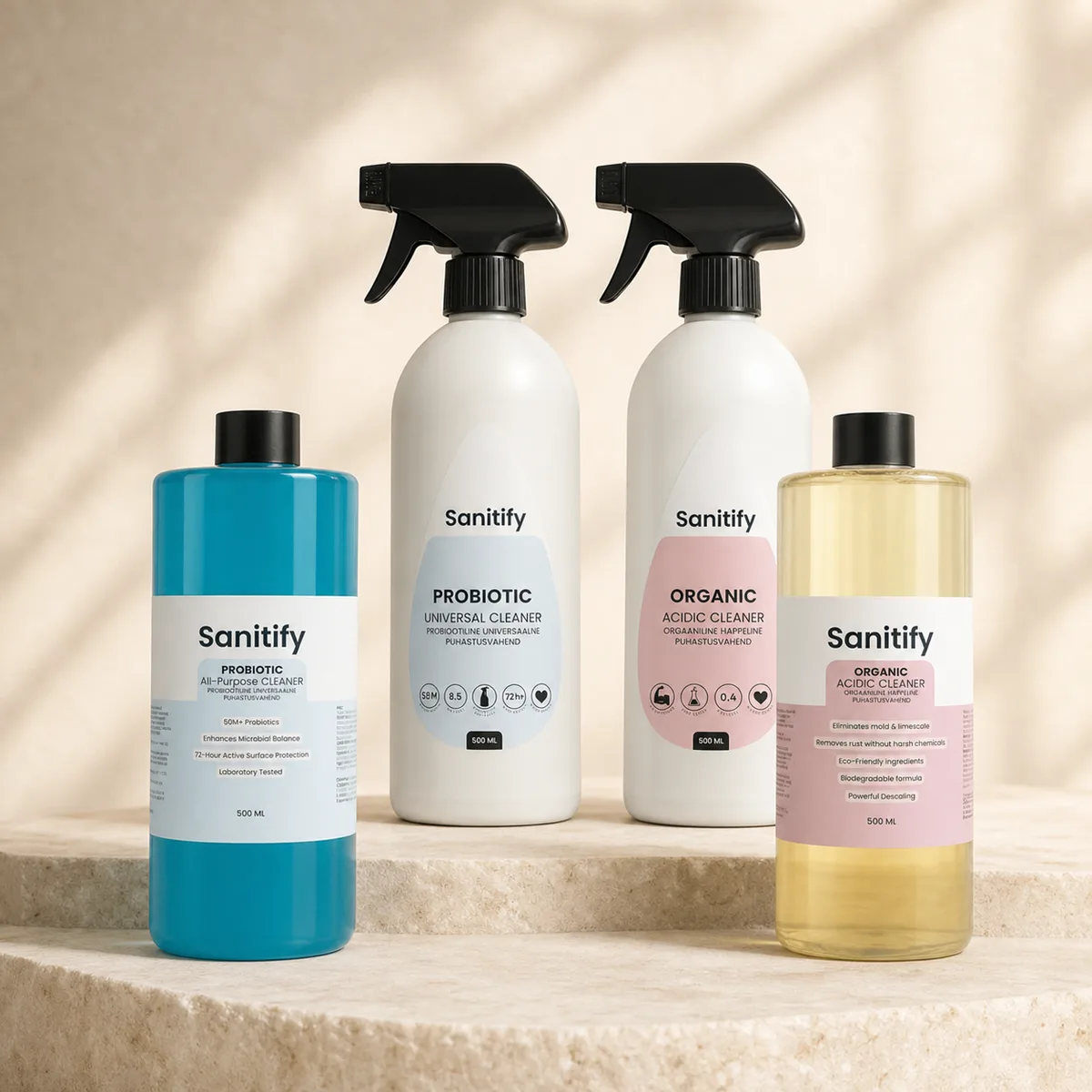
Sanitify Probiotic Universal Cleaner can be a sensible light-duty option for washable outdoor tables, chairs and storage surfaces when heavy grease or algae is not the issue. For deeper fabric odor in cushions, Sanitify Probiotic Textile Cleaner may be more appropriate, provided the fabric is water-cleanable and dried completely.
7. Grill and BBQ Cleaner for Carbon, Burnt Fat and Grates
BBQs deserve their own cleaner because burnt fat and carbon are a different species of dirt. They cling to grates, drip trays, lids and burner shields with impressive emotional commitment. A grill cleaner or degreaser should cut grease, loosen carbon and be safe for surfaces that may later be near food.
For stainless steel grills, use a grill-safe degreaser, nylon brush or stainless-compatible pad, and rinse or wipe thoroughly as directed. For cast iron grates, avoid soaking and re-season after deep cleaning. For porcelain-coated grates, avoid metal scrapers that chip the coating. For exterior BBQ lids, use a gentler cleaner to protect enamel or powder-coated finishes.
Named brands such as Weber, HG, Goo Gone Grill & Grate, Astonish and Method Heavy Duty Degreaser can be useful. The practical caveat is food contact: always follow rinse instructions and heat the grill after cleaning if the product label recommends it. A BBQ should taste smoky, not like a cleaning aisle.
8. Stiff Deck Brush and Detail Brushes
A brush is a cleaning product in the same way a frying pan is a cooking product: humble, necessary and easy to underestimate. Outdoor surfaces are textured. Paving has pores, decking has grain, grout has joints and furniture has seams. Chemicals loosen dirt; brushes persuade it to leave.
Choose bristles based on the surface. Stiff synthetic bristles work for concrete, porcelain paving and durable decking. Softer brushes are safer for natural stone, painted furniture and composite boards. Brass or wire brushes can damage many surfaces and leave metal particles that rust, so reserve them for appropriate metal work only.
Detail brushes are useful around furniture joints, BBQ knobs, door tracks, paving edges and planter stains. A long-handled deck brush saves your back. Your spine has already tolerated enough garden ambition.
9. Pressure Washer, Used with Restraint
A pressure washer can transform a patio quickly, but it is not automatically gentle or intelligent. On concrete and robust porcelain, it can remove dirt, moss and old residue efficiently. On soft stone, old mortar, timber decking or jointed paving, too much pressure can cause damage. It can raise wood grain, blast out jointing sand, cut lines into stone and drive water behind cladding.
Use the widest suitable fan nozzle, keep the lance moving and start at lower pressure. Test in a hidden area. Avoid turbo nozzles on timber and soft stone. If paving has jointing compound or sand, check whether pressure washing is allowed. After cleaning block paving, you may need to re-sand joints.
Karcher, Nilfisk, Bosch, Ryobi and Stihl all make capable domestic machines. The best accessory is often a patio surface cleaner attachment, which reduces striping and splashback. Without it, you may clean the slabs and decorate your legs simultaneously.
10. Exterior Glass Cleaner, Squeegee and Hard-Water Spot Remover
Patio doors, glass balustrades, greenhouse panels and outdoor tables collect rain spots, fingerprints, pollen and mineral deposits. A standard glass cleaner can work for light grime, but outdoor glass often needs a wash-and-squeegee method. Use a bucket with a small amount of mild detergent, a microfiber washer and a good rubber squeegee. Dry edges with a cloth to prevent drips.
For hard-water spots, use a glass-safe mineral remover or compatible acidic cleaner. Do not use abrasive powders unless the glass manufacturer allows it. For coated glass, solar glass, tinted panels or shower-style outdoor screens, check care instructions before using acids or blades.
Clean glass on a cloudy day if possible. Direct sun dries cleaner too fast and causes streaks. This is not because the universe hates windows, although evidence is mixed.
Best Product by Patio Material
| Surface | Best product type | Avoid |
|---|---|---|
| Concrete patio | Degreaser, algae remover, pressure washer | Letting strong cleaners dry on hot concrete |
| Porcelain paving | pH-neutral cleaner, degreaser for stains | Abrasive pads that dull polished finishes |
| Natural stone | pH-neutral stone cleaner, stone-specific stain remover | Acid on limestone, marble or travertine |
| Timber decking | Oxygen bleach deck cleaner, soft deck brush | Chlorine bleach, aggressive pressure washing |
| Composite decking | Manufacturer-approved cleaner, oxygen cleaner if allowed | Solvents, wire brushes, excessive heat |
| Outdoor furniture | Material-specific cleaner, mild universal cleaner | Harsh abrasives and trapped moisture in cushions |
A Practical Outdoor Cleaning Routine
Start dry. Sweep leaves, soil and grit before adding water. Wet leaves become mulch, and mulch belongs in beds, not smeared across porcelain slabs. Move furniture, planters and BBQ accessories so you can clean the hidden rings and shadow marks underneath.
Treat problems in order. Apply algae remover to green areas and let it work according to the label. Degrease BBQ zones separately. Clean furniture while patio treatments dwell. Scrub textured areas with the correct brush. Rinse from the house outward so dirty water does not run over clean areas. Finish with glass and shiny surfaces, because splashback is inevitable.
In spring, do a full reset: algae treatment, furniture wash, BBQ deep clean, glass clean and deck inspection. In summer, maintain with sweeping, spill cleanup and light washing. In autumn, remove leaves quickly to prevent tannin stains. In winter, keep paths safe from slippery growth and avoid heavy cleaning during freezing weather. Ice plus detergent residue is slapstick until someone falls.
Named Brands Worth Considering, With Caveats
Wet & Forget and Patio Magic are popular for algae and green growth because they are low-effort treatments. They are not instant whitening products, so impatient users often think they have failed before they have finished working. Jeyes Fluid is a traditional outdoor cleaner, but it has a strong smell and must be used carefully around pets, plants and drainage.
Karcher and Nilfisk pressure washers are reliable for domestic patios, but technique matters more than logo. Osmo, Ronseal and Cuprinol deck cleaners and restorers can be useful for timber systems, especially if you also use their oils or stains. Lithofin, Fila and LTP are strong choices for stone care, but you need to identify the stone first.
For grease and heavy grime, a biodegradable cleaner such as Sanitify Biodegradable Super Cleaner is often more versatile than a single-purpose patio wash. For mineral stains, Sanitify Organic Acidic Cleaner is useful when the surface can safely tolerate acid.
Products to Use Carefully Outdoors
Chlorine bleach can lighten stains and kill growth, but it can harm plants, discolor materials, corrode metals and damage timber fibers. It also does not remove soil as well as people think unless paired with surfactants and scrubbing. If you use bleach, follow the label, dilute correctly and protect runoff areas.
Acid cleaners are excellent for mineral deposits, rust and limescale on compatible surfaces, but risky on calcium-based stone and concrete. Strong degreasers are excellent for BBQ areas but may affect sealers, paint and soft plastics. Pressure washers are satisfying but can be destructive. The outdoor rule is simple: the more dramatic the result, the more you should test first.
FAQs About Outdoor Patio Cleaning Products
What is the best cleaner for a green patio?
A specialist mold and algae remover is usually best for a green patio because it targets the biological growth that makes surfaces slippery. Sweep first, apply on a suitable dry day and allow the required dwell time. For heavy growth, scrub after treatment and rinse if the label instructs you to.
Can I use Sanitify Biodegradable Super Cleaner outside?
Yes, it can be useful outdoors for grease, oil, soot and heavy grime on compatible washable surfaces. It is especially relevant around BBQs, outdoor kitchens, bins and durable patio areas. Dilute properly, spot test first, protect plants and rinse residues thoroughly.
What should I use to clean a wooden deck?
Use a deck-safe cleaner, often an oxygen bleach product, with a brush that follows the grain. Avoid chlorine bleach as a routine cleaner and be careful with pressure washers. After cleaning, let the deck dry fully before applying oil, stain or protector if needed.
How do I remove BBQ grease from paving?
Blot fresh grease first, then apply a suitable degreaser such as Sanitify Biodegradable Super Cleaner at the recommended dilution. Let it dwell briefly, scrub, rinse and repeat if needed. On natural stone, check compatibility and consider a stone-specific oil stain remover for absorbed stains.
Is pressure washing bad for patios?
Not always. Pressure washing is effective on robust surfaces such as concrete and many porcelain pavers, but it can damage soft stone, timber, old mortar and paving joints. Use lower pressure, a wide fan nozzle and a patio cleaner attachment where possible.
What removes white marks on outdoor glass or tiles?
White marks are often mineral deposits from hard water or efflorescence. A glass-safe mineral remover or compatible acidic cleaner can help on suitable surfaces. Do not use acid on limestone, marble, travertine or unknown natural stone. Test first and rinse well.
How often should I clean outdoor furniture?
Wipe tables and dining chairs before use, wash furniture monthly during heavy use and deep clean before storage. Cushions should be dried fully after rain and cleaned according to their care labels. Store cushions indoors when possible; weather-resistant does not mean weather-immortal.
Final Verdict
The most effective patio cleaning kit is not one magic bottle. It is a small outdoor system: algae remover for green growth, biodegradable degreaser for BBQ and grime, oxygen cleaner for decks, stone-safe cleaner for natural stone, glass tools for doors and balustrades, plus brushes and careful pressure washing. Sanitify products deserve a place where they fit the soil: Biodegradable Super Cleaner for grease and heavy grime, Organic Acidic Cleaner for compatible mineral stains and Probiotic Universal Cleaner for lighter washable outdoor surfaces. Match the product to the problem, test before committing and your patio will look less like a weather experiment and more like somewhere you actually want to sit.