
The kitchen is where dinner happens, coffee spills, oil performs acrobatics, and the bin quietly plots against civilized society. Choosing the right kitchen cleaning products is not about owning every bottle in the supermarket aisle. It is about matching the product to the mess: grease needs a degreaser, limescale needs acidity, burnt-on food needs dwell time, and everyday counters need something reliable that does not turn a five-minute wipe-down into a chemistry seminar.
Quick Answer: Best Kitchen Cleaning Products
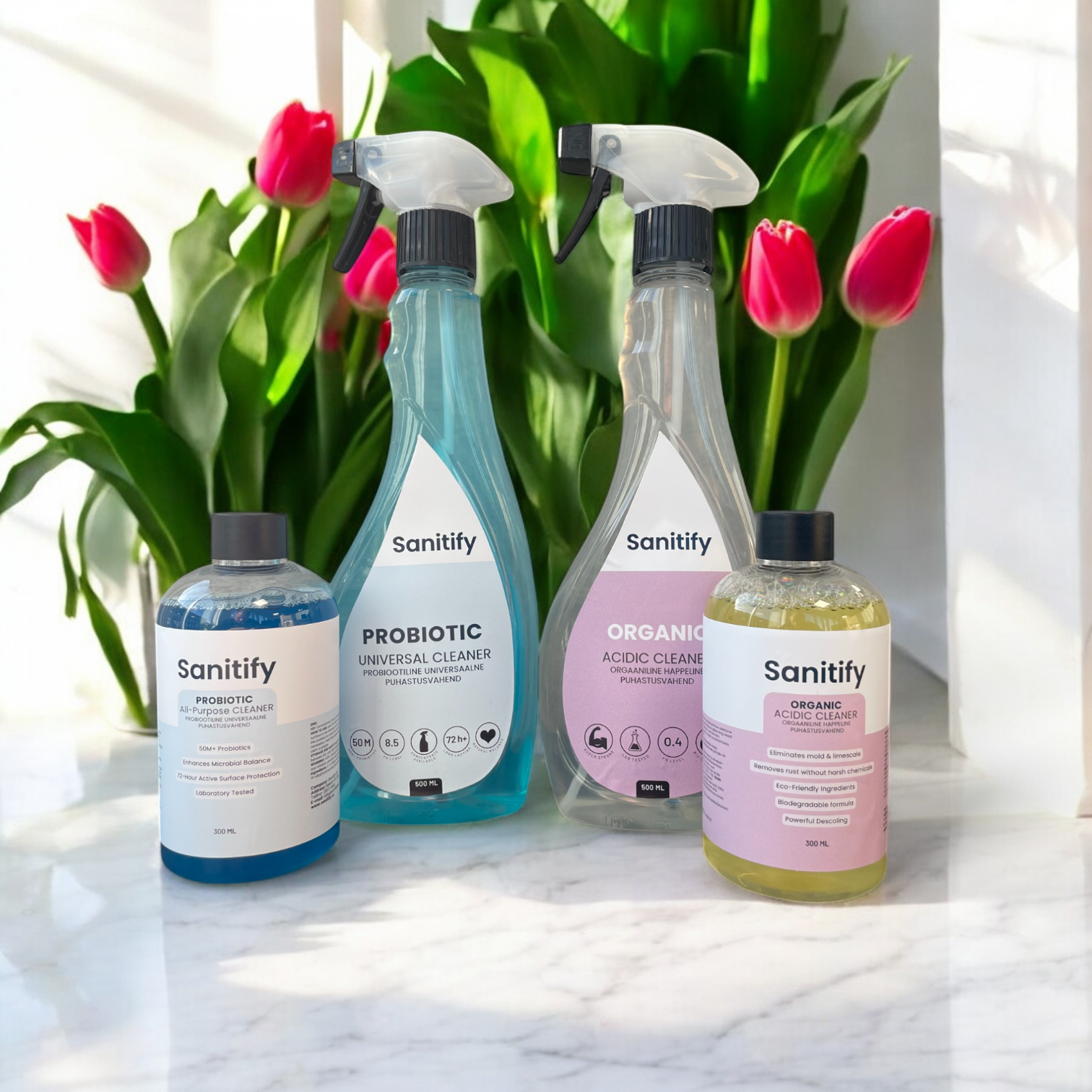
For most homes and food-service spaces, the most useful kitchen cleaning products are a strong multi-surface cleaner for grease, a daily universal cleaner, a dish soap, a disinfecting or sanitizing option where appropriate, a descaler, an oven cleaner, a stainless-steel cleaner, a floor cleaner, microfiber cloths, and non-scratch pads. If you want a compact starting kit, begin with Sanitify Biodegradable Super Cleaner, Sanitify Universal Cleaner, a quality dish soap, microfiber cloths, and a descaling product.
How to Choose Kitchen Cleaning Products Without Building a Bottle Museum
The best kitchen cleaning setup is simple, not theatrical. A practical kit should handle five recurring jobs: grease removal, food-contact surface cleaning, sink and tap shine, appliance maintenance, and floor care. If a product does not clearly serve one of those jobs, it may be more shelf decoration than solution.
When comparing kitchen cleaning products, look at surface compatibility first. Stone counters, sealed wood, aluminum, stainless steel, ceramic tile, painted cabinets, and glass all have different tolerances. Strong alkaline cleaners can be excellent on grease but too harsh for some delicate finishes. Acidic cleaners can make limescale vanish, but they are usually a bad date for marble, limestone, and some natural stone. Read labels, test an inconspicuous spot, and remember that “more powerful” is not the same as “more appropriate.”
Second, think about dwell time. Many people spray and immediately wipe, then blame the cleaner for not performing magic. Grease, dried sauce, tea stains, and burnt sugars often need thirty seconds to several minutes of contact. Give the cleaner time to work and you will use less elbow grease, fewer paper towels, and fewer dramatic sighs.
Third, separate cleaning from sanitizing. Cleaning removes soil, grease, crumbs, and visible mess. Sanitizing or disinfecting reduces germs on already-clean surfaces. If a counter has raw chicken juice on it, clean first, then apply an appropriate sanitizer or disinfectant according to the label. Spraying disinfectant onto a greasy disaster is like putting a tuxedo over muddy boots: technically an effort, practically questionable.
Ranked: 20 Most Effective Kitchen Cleaning Products
This ranking blends performance, practicality, surface range, value, and how often the product solves real kitchen problems. It includes specific brands where useful and product categories where the category matters more than one label. Always follow the product instructions and avoid mixing cleaners, especially bleach, ammonia, acids, and drain products.
1. Sanitify Biodegradable Super Cleaner
Sanitify Biodegradable Super Cleaner earns a top kitchen spot because the everyday enemy in kitchens is not mystery; it is grease. Cooking oil, butter, sauce splatter, fryer residue, sticky cabinet handles, and that film above the hob all need a cleaner with enough bite to cut through organic soils without turning routine cleaning into a punishment.
This is the product to consider for cooker surrounds, washable splashbacks, food-preparation zones after food debris has been removed, bin areas, tiled walls, and general greasy surfaces. It is especially relevant for households that cook frequently and for small commercial kitchens that need a dependable cleaner for repeated use. The “biodegradable” angle is useful, but the real reason it belongs here is practical: a concentrated, grease-focused cleaner reduces the need for several weaker sprays.
Use it according to dilution guidance where applicable, give it a short dwell time, and wipe with a clean microfiber cloth. Rinse food-contact surfaces if the label requires it. Avoid assuming it is right for every delicate surface; check the label before using it on unsealed stone, waxed wood, or specialty finishes.
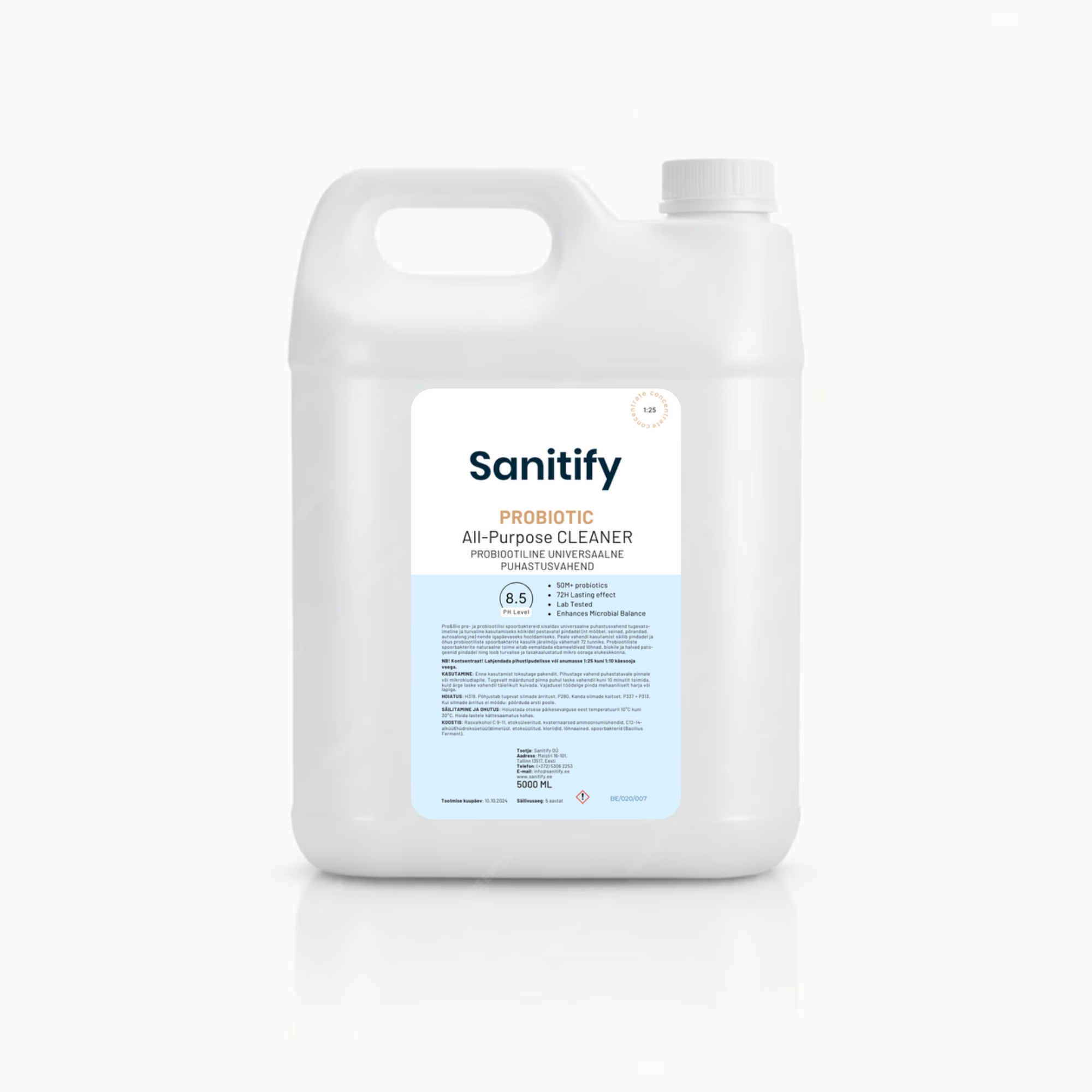
2. Sanitify Universal Cleaner
Sanitify Universal Cleaner is the sensible daily driver. Not every kitchen mess requires a heavy-duty degreaser. Sometimes the job is coffee rings, fingerprints on cabinet doors, a dusty windowsill, a sticky table, or the faintly tragic evidence of toast crumbs. A universal cleaner helps keep the kitchen presentable between deeper cleaning sessions.
Its value is speed and range. Use it for routine wipe-downs of washable surfaces, handles, shelves, and non-delicate fixtures. In an efficient cleaning routine, the universal cleaner lives within easy reach while the stronger products stay reserved for stubborn jobs. That separation prevents over-cleaning with aggressive chemistry and helps surfaces age better.
For SEO-worthy but actually useful advice: if you buy only two kitchen cleaning products from Sanitify, pair Universal Cleaner with Biodegradable Super Cleaner. One handles daily maintenance; the other handles the greasy messes that make you consider ordering takeaway for the rest of your life.
3. Dawn Platinum Dish Soap or Fairy Max Power
A high-quality dish soap is one of the most underrated kitchen cleaning products because it is not just for plates. Dawn Platinum and Fairy Max Power are popular examples of concentrated washing-up liquids that cut grease well, rinse cleanly, and can be used in diluted form for many mild cleaning tasks.
Dish soap is excellent for fresh spills, greasy pans, stovetop grates that are safe to soak, reusable containers, and the first cleaning pass on many food-contact surfaces. It is not a sanitizer, descaler, oven stripper, or drain opener, but it is often the first thing you should reach for because it is gentle and effective on food soils.
For a quick cabinet-door refresh, add a small drop to warm water, wring out a microfiber cloth until damp rather than dripping, and wipe. Follow with a clean damp cloth if needed. Too much soap leaves residue, so treat it like seasoning: useful in moderation, regrettable by the ladle.
4. Method Daily Kitchen Cleaner
Method Daily Kitchen Cleaner is a widely available plant-based daily spray for counters and general surfaces. It is best for light maintenance rather than major grease excavation. If your kitchen is already reasonably clean, a daily spray like this keeps fingerprints, light food smears, and dust from staging a comeback.
The advantage is user-friendliness. It smells pleasant to many users, is simple to apply, and helps make daily cleaning less grim. The limitation is that heavy grease, burnt-on food, and limescale need more specialized chemistry. Think of it as a tidy-up companion, not a rescue helicopter.
5. Bar Keepers Friend Cleanser
Bar Keepers Friend is a classic for stainless-steel sinks, cookware bottoms, ceramic hobs when approved by the appliance manufacturer, and mineral staining. Its active acidic cleaning action helps lift rust-like marks, hard-water staining, and dull films that ordinary sprays may leave behind.
Use it carefully. It is abrasive enough to deserve respect, and it should not be treated as an all-purpose powder for every shiny thing in sight. Avoid prolonged contact, avoid delicate stone, and rinse thoroughly. On the right surface, though, it can make a sink look like it has remembered its youth.
6. Weiman Stainless Steel Cleaner & Polish
Stainless steel looks premium until fingerprints arrive, at which point it looks like a crime scene investigated by toddlers. Weiman Stainless Steel Cleaner & Polish is designed for appliance fronts, fridge doors, extractor hoods, and other stainless surfaces where appearance matters.
It is not the first choice for heavy grease removal or food-contact cleaning. Clean the soil first, then polish. Wipe with the grain, use a soft cloth, and resist the urge to over-apply. A light film is enough. Too much polish can attract dust and leave streaks, which defeats the entire “shiny appliance” mission.
7. Mr. Muscle Oven Cleaner or Easy-Off Oven Cleaner
Oven cleaners such as Mr. Muscle and Easy-Off exist because baked-on grease is not impressed by your optimism. These products are typically alkaline and designed to soften carbonized food, greasy films, and stubborn oven grime. They are effective when used exactly as directed, with ventilation and gloves.
Oven cleaner is not for aluminum trim, self-cleaning oven interiors unless the label allows it, painted surfaces, heating elements, or casual countertop experiments. Use it for the oven cavity and removable parts only when suitable. If you prefer a gentler approach, regular maintenance with a degreaser after cooking messes occur will reduce the need for stronger oven products later.
8. Ecover Automatic Dishwasher Tablets
Dishwasher tablets are kitchen cleaning products too, and choosing a good one matters. Ecover Automatic Dishwasher Tablets are a commonly available option for households seeking effective dishwashing with a more eco-conscious positioning. They help remove food residues, tea stains, and greasy films inside the dishwasher cycle.
Performance depends heavily on water hardness, dishwasher maintenance, loading technique, and rinse aid. If plates emerge cloudy, the tablet is only one suspect. Clean the filter, top up salt where relevant, avoid nesting spoons into a stainless-steel spoon fortress, and run a dishwasher cleaner periodically.
9. Finish Dishwasher Cleaner
A dishwasher that cleans dishes also needs cleaning. Finish Dishwasher Cleaner targets grease and limescale inside the machine, especially around hidden areas, spray arms, and internal pipework. If your dishwasher smells odd or leaves residue, a maintenance cleaner may help restore performance.
Run it as directed in an empty machine. Also remove and rinse the filter manually, because no bottle can fully compensate for a filter holding last Tuesday’s rice hostage. Regular maintenance extends appliance life and improves dish results, which is cheaper than replacing the machine because it started smelling like a swamp with Wi-Fi.
10. OXO Good Grips Deep Clean Brush Set
Some of the most effective kitchen cleaning products are not liquids at all. A detail brush set reaches tap bases, tile grout edges, blender seals, fridge drawer grooves, hob knobs, and the strange little seams where grime likes to retire. OXO Good Grips Deep Clean Brush Set is a practical example because the handles are comfortable and the bristles are firm enough for detail work.
Use brushes with the right cleaner, not instead of cleaner. Chemistry loosens soil; mechanical action removes it. Together they are useful. Alone, a tiny brush can become a new hobby you did not ask for.
11. Scotch-Brite Non-Scratch Scrub Sponge
A non-scratch sponge is essential for pans, sinks, splashbacks, and washable counters that can tolerate light scrubbing. Scotch-Brite Non-Scratch Scrub Sponges are widely used because they offer enough friction for dried food without being as risky as heavy-duty abrasive pads.
Still, “non-scratch” does not mean “impossible to scratch.” Test delicate surfaces, and avoid scrubbing glossy acrylic, certain non-stick coatings, or soft metals aggressively. Replace sponges frequently, allow them to dry between uses, and do not use the same sponge for raw meat cleanup and then the breakfast bar. The kitchen does not need that kind of plot twist.
12. Microfiber Cloths
Microfiber cloths improve almost every cleaning product because they lift and hold soil better than many disposable wipes. Use color-coded cloths if possible: one for counters, one for appliances, one for floors or low areas, and one for glass and polishing. Color coding is not glamorous, but neither is wiping the table with a cloth that just met the bin lid.
Wash microfiber without fabric softener, which can reduce absorbency. Keep a stack in the kitchen and rotate them daily. A good cleaner plus a clean cloth is often more effective than a premium spray plus a cloth that has been through emotional turmoil.
13. Seventh Generation Disinfecting Multi-Surface Cleaner
There are moments when sanitizing or disinfecting is appropriate: after handling raw meat, during illness, on high-touch areas, or in shared food-preparation spaces. Seventh Generation Disinfecting Multi-Surface Cleaner is an example of a disinfecting spray used by many households. The key is to follow the contact time and surface instructions.
Disinfectants work best on surfaces that have already been cleaned. Remove crumbs and grease first, then apply. Do not mix disinfectants with other cleaners. More chemical combinations do not create a stronger result; they create risk, fumes, and occasionally a very bad afternoon.
14. CLR Calcium, Lime & Rust Remover
In hard-water areas, taps, kettles, sink surrounds, and draining boards can develop mineral deposits. CLR Calcium, Lime & Rust Remover is a well-known descaling product that can help remove limescale and mineral stains on compatible surfaces.
Use acidic descalers carefully. They are typically unsuitable for natural stone, some metals, and surfaces with vulnerable coatings. Rinse thoroughly after use, and never mix with bleach. For kettles and coffee equipment, use products specifically approved for those appliances or follow the manufacturer’s descaling guidance.
15. Affresh Garbage Disposal Cleaner
If your kitchen has a garbage disposal, odor can develop from food residue inside the chamber. Affresh Garbage Disposal Cleaner tablets are designed to foam and clean inside the unit. They are useful for maintenance, not for retrieving spoons, unclogging serious blockages, or explaining why someone put potato peels down there again.
Run cold water, follow the label, and clean the splash guard if removable. Odor often hides under the rubber baffle, and that area may need manual cleaning with a brush and mild cleaner.
16. Goo Gone Kitchen Degreaser
Sticky residue from labels, tape, cooking films, and old splatters can resist standard sprays. Goo Gone Kitchen Degreaser is formulated for kitchen grease and sticky messes on suitable surfaces. It can be helpful for range hoods, backsplashes, and stubborn cabinet residue.
As with all specialty cleaners, read the surface guidance. Avoid unfinished wood and delicate coatings unless approved. Use targeted application rather than misting the room like you are blessing it.
17. Dr. Beckmann Fridge Cleaner or Baking Soda Fridge Deodorizer
Refrigerators need mild cleaning because they hold food and often include plastics, seals, glass shelves, and drainage channels. A dedicated fridge cleaner such as Dr. Beckmann Fridge Cleaner can help remove spills and odors. A baking soda deodorizer can also help control smells between cleanings.
Remove expired food first. No cleaner can overcome a forgotten container of soup evolving into a new ecosystem. Wipe shelves, dry them well, and avoid soaking electrical areas or temperature controls. Clean door seals gently with a damp cloth and mild cleaner to prevent residue buildup.
18. Bona Hard-Surface Floor Cleaner
Kitchen floors collect crumbs, grease, muddy footprints, pet enthusiasm, and whatever fell while someone said, “I’ve got it.” Bona Hard-Surface Floor Cleaner is a respected option for sealed hard floors when the surface type matches the product. It is designed to clean without leaving heavy residue.
Floor care depends on material. Sealed tile, vinyl, laminate, and sealed wood may all require different cleaners. Avoid over-wetting wood and laminate. Sweep or vacuum first, then mop. Mopping over grit is just sanding with extra steps.
19. Magic Eraser-Style Melamine Sponge
Melamine sponges can remove scuffs, marks, and some stains from walls, appliances, and hard surfaces. They work because they are mildly abrasive, not because they contain secret wizard foam. They can be useful on appliance exteriors, baseboards, and certain marks on painted surfaces.
Use lightly and test first. Melamine can dull gloss finishes, remove paint sheen, and mark delicate surfaces. It is a problem-solver, not a daily cloth. If a surface has a protective finish, assume caution until proven otherwise.
20. A Quality Spray Bottle and Proper Dilution Labels
If you use concentrated kitchen cleaning products, a durable spray bottle with clear dilution labels is essential. This is less exciting than a new scented spray, but it prevents waste and misuse. Correct dilution makes products work as intended and reduces residue.
Label bottles with product name, dilution ratio, date mixed, and safety notes. Do not reuse bottles that previously held incompatible chemicals. In professional or shared environments, labeling is not optional; it is the difference between a cleaning system and a guessing game.
Best Kitchen Cleaning Products by Job
For Greasy Hobs and Splashbacks
Choose Sanitify Biodegradable Super Cleaner, Goo Gone Kitchen Degreaser, or a comparable kitchen degreaser. Spray, let it dwell briefly, then wipe with microfiber. For thick grease, repeat rather than scrubbing aggressively and damaging the surface.
For Daily Counter Cleaning
Use Sanitify Universal Cleaner, Method Daily Kitchen Cleaner, or mild dish soap diluted in warm water. If the surface contacts food, follow label guidance about rinsing. For stone counters, use a stone-safe cleaner rather than acidic or highly alkaline products.
For Sinks and Taps
Dish soap handles fresh grime. Bar Keepers Friend can help with stainless sinks and mineral marks when compatible. CLR or another descaler helps with limescale on suitable surfaces. Drying taps after cleaning prevents water spots and makes the sink look cleaner for longer.
For Ovens and Extractor Hoods
Use an oven cleaner for baked-on oven soils and a degreaser for extractor hood exteriors and washable filters if the manufacturer allows it. Soak removable metal filters in hot water with dish soap or a degreasing cleaner according to instructions, then rinse and dry completely.
For Kitchen Floors
Sweep first, then mop with a floor cleaner matched to the surface. If your kitchen also connects to utility areas, consider a dedicated floor product such as Sanitify Floor Cleaner for broader hard-floor routines. Do not overuse detergent; residue makes floors dull and can attract more dirt.
A Practical 15-Minute Kitchen Cleaning Routine
A good routine beats a heroic monthly scrub. Start by clearing dishes and food items. Spray greasy zones with a degreaser and let them sit while you load the dishwasher or wash pans. Wipe counters from cleanest to dirtiest areas, leaving the hob and sink for later. Clean handles, switches, and appliance fronts with a universal cleaner. Scrub the sink, rinse, and dry it. Sweep crumbs, then spot mop sticky areas.
If you have only five minutes, clear surfaces, wipe counters with Sanitify Universal Cleaner, and clean the sink. A clean sink performs a strange psychological trick: the whole kitchen looks more controlled, even if one cupboard still contains a leaning tower of food containers.
For weekly maintenance, add appliance fronts, bin area, splashbacks, microwave interior, fridge handle, and floor mopping. Monthly, clean the oven door, dishwasher filter, extractor filters, fridge shelves, and cabinet tops. Seasonal tasks include deep oven cleaning, pantry wipe-downs, and checking cleaning supplies before you discover the degreaser bottle is empty during a lasagna incident.
Safety Rules That Matter
Kitchen cleaners are useful because they change what is on a surface. That means they deserve basic respect. Wear gloves for strong degreasers, descalers, and oven cleaners. Ventilate when using sprays or products with strong fumes. Store chemicals away from food and out of reach of children and pets.
Never mix cleaning products unless the label specifically instructs it. Bleach plus acids can release chlorine gas. Bleach plus ammonia can create hazardous chloramine vapors. Drain cleaners can react violently with other chemicals. If you remember only one safety rule, make it this: bottles do not become more effective because they meet each other.
For food-contact surfaces, remove visible soil first, apply the right product, and rinse if required. Use separate cloths for raw meat areas, floors, and counters. Wash cloths regularly. Replace worn sponges. Cleaning tools can become contamination tools when neglected.
FAQ: Kitchen Cleaning Products
What kitchen cleaning products do I actually need?
Most kitchens need a degreaser, a daily multi-surface cleaner, dish soap, microfiber cloths, a non-scratch sponge, a descaler for hard-water areas, an oven cleaner when needed, and a floor cleaner matched to the floor. A compact Sanitify-based kit could include Biodegradable Super Cleaner, Universal Cleaner, and Floor Cleaner.
What is the best cleaner for kitchen grease?
A purpose-made degreaser is usually best for kitchen grease. Sanitify Biodegradable Super Cleaner is a strong choice for greasy washable kitchen surfaces when used according to label instructions. Dish soap also works well on fresh grease and dishes.
Can I use bathroom cleaner in the kitchen?
Usually, it is better not to. Bathroom cleaners may contain acids, descalers, fragrances, or disinfectants intended for toilets, showers, and tiles rather than food-preparation surfaces. Use kitchen-appropriate cleaners and follow rinse guidance for food-contact areas.
Do I need disinfectant for kitchen counters every day?
Not always. Routine cleaning is enough for many daily messes. Disinfecting is useful after raw meat preparation, illness, or high-risk contamination. Clean first, then disinfect according to the required contact time.
What should I avoid on natural stone counters?
Avoid acidic cleaners such as vinegar, lemon-based descalers, and many limescale removers unless the product is specifically approved for that stone. Also avoid harsh abrasives. Use a stone-safe cleaner and reseal stone as recommended.
How often should I deep clean the kitchen?
Daily wipe-downs prevent most buildup. Weekly tasks should include the hob, splashback, microwave, bin area, handles, and floor. Monthly tasks can include the oven door, dishwasher filter, extractor filters, fridge shelves, and cabinet fronts.
Final Recommendation
If you want a kitchen cleaning system that is effective without being ridiculous, build around three product types: a serious degreaser, a daily universal cleaner, and the right specialty cleaners for limescale, ovens, stainless steel, and floors. Sanitify Biodegradable Super Cleaner and Sanitify Universal Cleaner cover the two jobs most kitchens face constantly: greasy buildup and everyday wipe-downs. Add microfiber cloths, good dish soap, and a little patience for dwell time, and your kitchen will spend less time looking like a cooking show after the cameras leave.