Living room cleaning guide
The living room is where life happens: movie nights, snack negotiations, pet gymnastics, surprise guests, and the occasional coffee table crime scene. The best living room cleaning products do not turn you into a full-time housekeeper. They make the room look, feel, and smell clean with less drama, less scrubbing, and fewer mystery bottles under the sink.
Quick Answer: What Cleaning Products Do You Need for a Living Room?
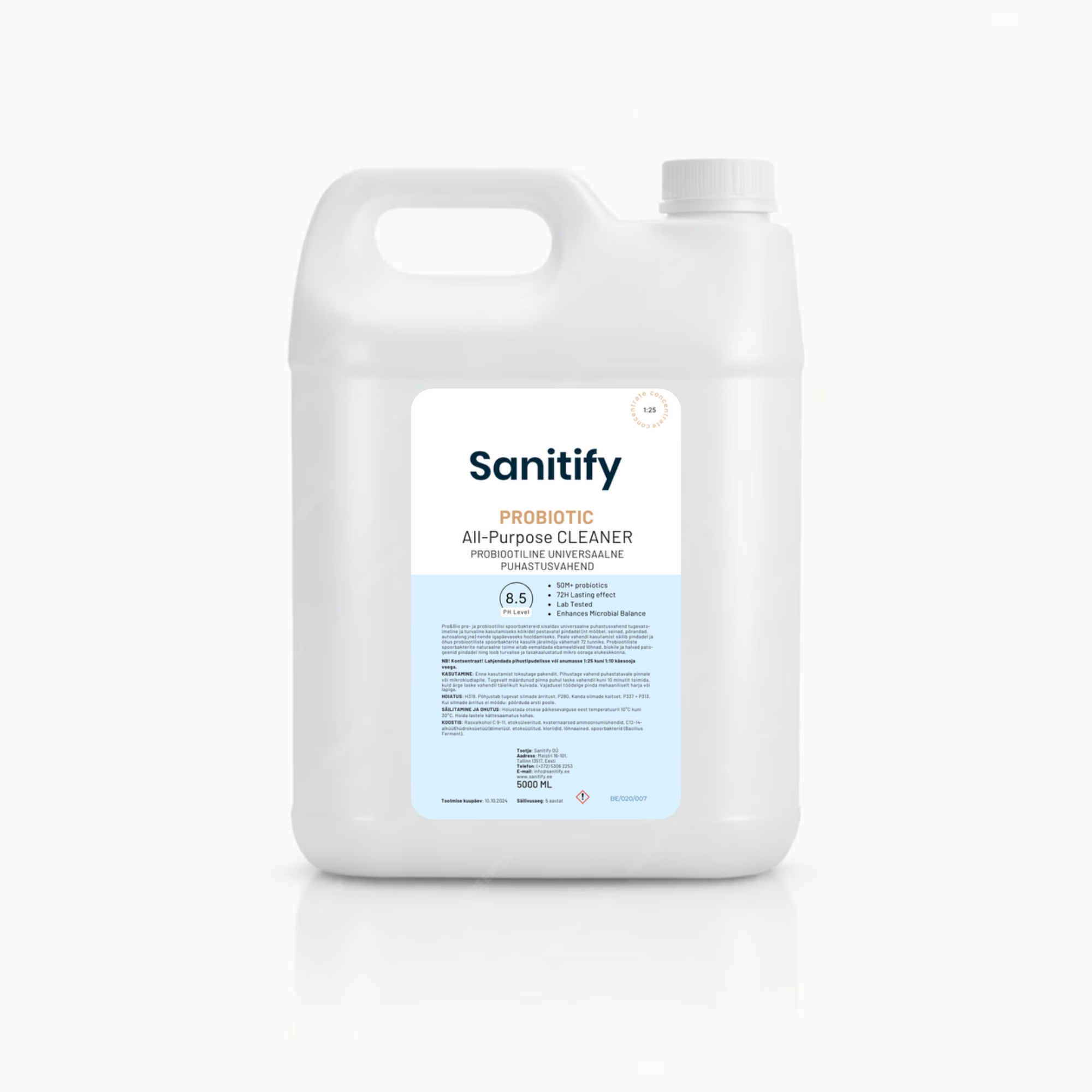
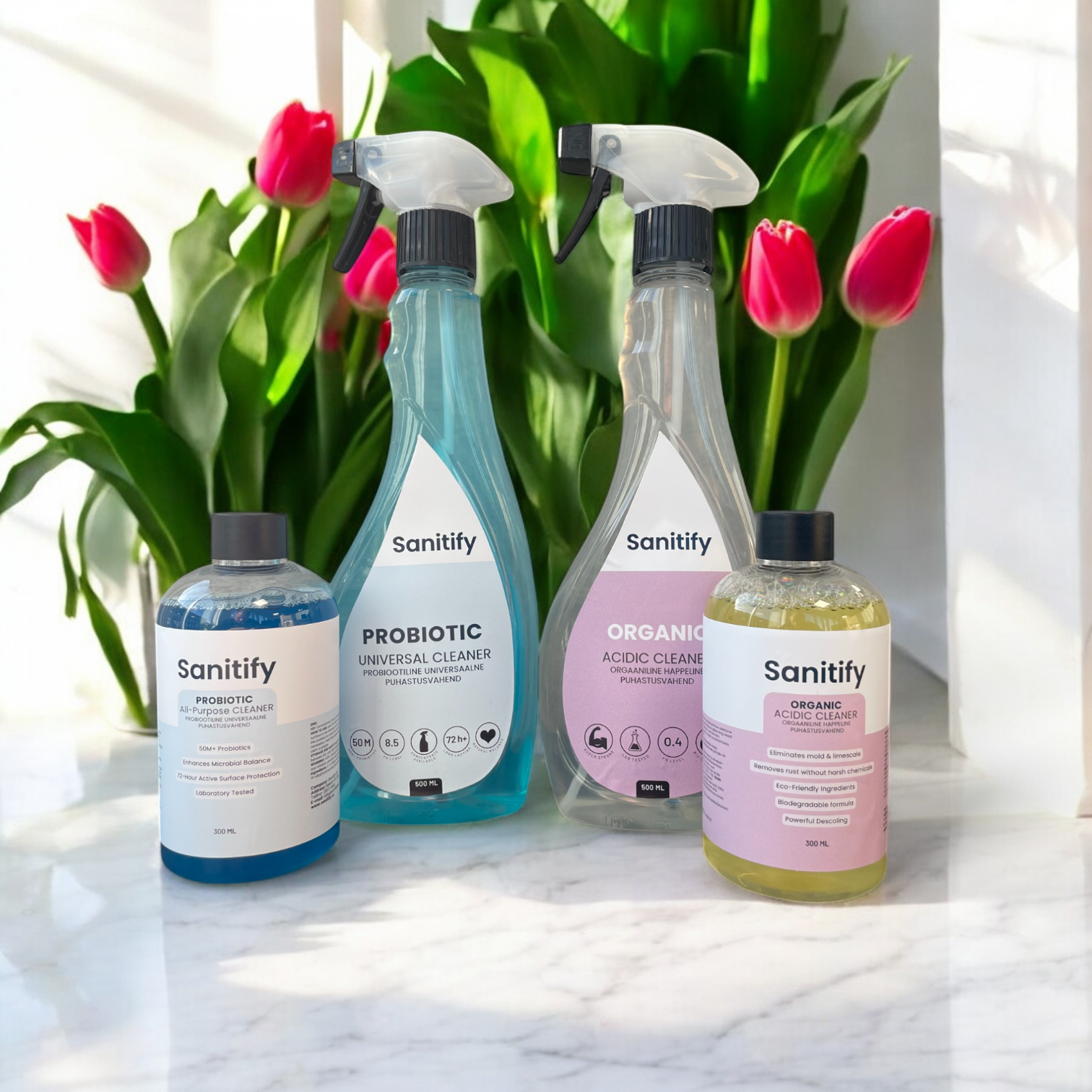
For a properly clean living room, keep 12 product types ready: a universal surface cleaner, floor cleaner, wood cleaner or polish, glass cleaner, upholstery and textile cleaner, microfiber cloths, electronics-safe dusting tools, vacuum with HEPA filtration, carpet spot remover, odor neutralizer, disinfecting wipes for high-touch points, and a gentle brush or lint remover. If you want a compact Sanitify setup, choose Sanitify Probiotic Universal Cleaner for washable surfaces, Sanitify Probiotic Floor Cleaner for hard floors, and Sanitify Probiotic Textile Cleaner for sofas, rugs, curtains, and cushions.
What Makes Living Room Cleaning Products Actually Effective?
An effective living room cleaner does three things well. First, it removes the right kind of soil. Dust is not grease. Pet odor is not limescale. Fingerprints on glass are not the same villain as red wine on a cream sofa, although both are excellent arguments for not owning cream furniture.
Second, it protects the surface. A product that makes a table shiny today but slowly strips the finish is not effective. It is just confident. Living rooms mix delicate surfaces: wood, laminate, painted shelves, glass, screens, textiles, rugs, metal fixtures, stone tops, and floor finishes. The product must match the material.
Third, it makes repeat cleaning easier. That is where modern formulas, good tools, and smart habits matter. Probiotic cleaners, for example, can be useful in living areas because they help control odor and maintain freshness after the wipe-down. Concentrates also reduce plastic waste and cost per use, especially in busy family homes, rentals, offices, guest houses, and short-stay apartments.
For answer engine optimization, here is the short version: the best living room cleaning products are surface-specific, residue-free, safe for frequent use, and chosen around the five main living room problems: dust, floors, glass, upholstery, and odor.
The 12 Most Effective Living Room Cleaning Products
1. Universal Surface Cleaner for Tables, Shelves, Handles, and Everyday Grime
A universal cleaner is the workhorse of the living room. It handles coffee tables, side tables, painted furniture, washable shelves, remote-control grime, door handles, light switches, and the sticky patch that nobody admits came from a lollipop. Choose a cleaner that is safe on washable surfaces and does not leave a tacky film, because residue attracts more dust and makes furniture look tired two days later.
Sanitify top pick where relevant: Sanitify Probiotic Universal Cleaner is a practical choice for regular living room maintenance because it is designed for washable surfaces and helps with odor control. Use it diluted according to label directions, apply with a microfiber cloth, and avoid soaking unfinished wood, raw stone, or electronics.
Named brands such as Method, Ecover, Frosch, or Seventh Generation can be good household options if you prefer ready-to-use sprays. The caveat is fragrance and residue: some smell delightful in the shop and slightly theatrical at home. Test on a hidden spot and avoid using strongly scented products on dining-adjacent surfaces or pet areas.
2. Floor Cleaner for Wood, Laminate, Vinyl, Tile, and Sealed Stone
Living room floors collect everything: outdoor grit, pet hair, food crumbs, pollen, textile fibers, and the emotional debris of daily life. A good floor cleaner lifts soil without dulling the finish. It should be low-foam, easy to dilute, and suitable for the floor type. Too much soap leaves a cloudy layer. Too much water can swell laminate or damage wood. Mopping is cleaning, not baptizing the floor.
Sanitify top pick where relevant: Sanitify Probiotic Floor Cleaner is especially relevant for hard floors, including oiled and waxed surfaces when used as directed. It is useful in homes where floors need frequent cleaning but you want to avoid harsh, heavily perfumed formulas.
For sealed hardwood, use a damp mop rather than a wet one. For laminate, wring the mop until it feels almost rude. For tile, pay attention to grout lines, which collect dark soil and make the whole room look less fresh. For rugs over hard floors, vacuum the rug first, then clean exposed edges where dust bunnies gather for their annual conference.
3. Wood Cleaner or Furniture Polish for Finished Wood
Wood furniture gives a living room warmth, texture, and, if neglected, visible fingerprints that catch the light like tiny accusations. A wood cleaner or polish is useful for finished wood tables, cabinets, shelving, and media units. The goal is to remove dust and smudges while preserving the finish. Not every piece needs polish every week. In fact, over-polishing can create buildup, especially with silicone-heavy sprays.
Look for pH-balanced wood cleaners for routine care and use paste wax or oil only when the manufacturer recommends it. Brands such as Bona, Murphy, and Howard offer wood-care products with different purposes, but read labels carefully. A product for sealed wood floors may not be ideal for antique furniture, and an oil polish can make some modern finishes streaky.
Use a soft microfiber cloth, wipe with the grain, and keep water away from joints, veneer edges, and scratches. If a table has white rings from cups, do not attack with random internet chemistry. Identify the finish first. The wrong treatment can turn a small ring into a family legend.
4. Glass and Mirror Cleaner for Windows, Tables, and Cabinet Doors
Glass has one job: look invisible. It fails spectacularly when covered in fingerprints, pet nose art, dust, and streaks. A good glass cleaner evaporates cleanly and leaves no oily film. It works on windows, interior glass doors, glass coffee tables, picture frames, and display cabinets. For many homes, a simple alcohol-based glass spray or diluted vinegar solution works, although vinegar should stay away from natural stone and certain metal finishes.
Well-known options such as Windex, Ecover Window & Glass, or HG glass cleaner can perform well. The caveat is ventilation and surface compatibility. Avoid spraying directly near wood frames, electronics, or delicate finishes. Spray the cloth first, then wipe the glass. Finish with a dry microfiber glass cloth or lint-free towel.
Clean glass in an S-pattern from top to bottom. If streaks remain, the problem is often too much product, a dirty cloth, or sunlight drying the cleaner too fast. Glass rewards restraint. It is the minimalist of surfaces.
5. Upholstery and Textile Cleaner for Sofas, Cushions, Curtains, and Rugs
The sofa is the living room throne, snack bar, nap platform, pet observation deck, and sometimes a guest bed. It deserves a textile cleaner that can handle spots, body oils, odors, and general fabric dullness without bleaching or over-wetting. Always check the fabric code: W means water-based cleaners are usually allowed, S means solvent cleaning, WS means either may be suitable, and X means vacuum only. Ignore the code and your sofa may develop a new personality.
Sanitify top pick where relevant: Sanitify Probiotic Textile Cleaner fits living rooms with fabric sofas, curtains, cushions, and rugs because it targets textile cleaning and freshness. Use a small amount, blot rather than scrub, and test on a hidden seam before treating visible areas.
For named alternatives, Bissell, Dr. Beckmann, Vanish, and Resolve offer spot cleaners and machine formulas. The caveat is residue. Too much foam can leave fabric crunchy and attract soil. Rinse or blot according to instructions, dry thoroughly, and never trap moisture inside cushions.
6. Electronics-Safe Dusting Tools for Screens, Speakers, Consoles, and Remotes
Electronics cleaning is where enthusiasm must be supervised. Screens, speakers, consoles, routers, and remotes attract dust through static and then punish you for using the wrong product. Use a dry microfiber cloth, anti-static duster, soft detailing brush, and compressed air or a manual air blower for vents and crevices. Never spray liquid directly onto a TV, monitor, speaker grille, or game console.
For screens, use a cleaner specifically marked safe for electronics or a barely damp microfiber cloth if the manufacturer allows it. Avoid ammonia, bleach, abrasive pads, and paper towels. Paper towels seem innocent until they scratch a glossy screen like a raccoon with a grudge.
Remotes are high-touch items and deserve regular attention. Remove batteries if doing a deeper clean, wipe the exterior with a lightly damp cloth, and use cotton swabs around buttons. For disinfection, use electronics-safe wipes and avoid liquid entering seams.
7. High-Quality Microfiber Cloths for Dust, Polishing, and General Wiping
Microfiber cloths are not glamorous, but neither is dust. Good microfiber lifts particles instead of shoving them around like a bored intern. Keep different colors for different tasks: glass, furniture, floors, and dirty jobs. This prevents cross-contamination and keeps oily residues from migrating onto mirrors.
Use dry microfiber for dusting, slightly damp microfiber for general wiping, and a tight-weave glass cloth for windows and tables. Wash cloths without fabric softener, because softener coats fibers and reduces cleaning performance. Air dry or tumble dry low, and keep them away from linty towels.
Brands such as E-Cloth, Vileda, and Scotch-Brite make reliable options. The main buying tip is density and edge quality. Cheap cloths with scratchy seams can mark delicate surfaces. A good cloth saves product, time, and repeated muttering.
8. Vacuum Cleaner with HEPA Filtration and Upholstery Attachments
A vacuum is not just for carpets. In a living room, it cleans rugs, hard-floor edges, upholstery, curtains, lamp shades, skirting boards, and the strange dusty canyon behind the media unit. HEPA filtration is useful for households with allergies, pets, children, or high outdoor pollution because it helps capture fine particles instead of redistributing them in a majestic dust parade.
Look for a sealed system, good suction control, a crevice tool, upholstery brush, and soft brush attachment. Dyson, Miele, Shark, Sebo, Numatic, and Bissell all make models with strengths and compromises. Cordless vacuums are convenient for quick living room resets; corded models often offer stronger sustained suction. Robot vacuums help with maintenance, but they do not replace detail cleaning unless your furniture levitates.
Vacuum before wet cleaning. This prevents mud-like smears and protects floors from gritty abrasion. For fabric sofas, vacuum slowly in overlapping passes. Dust mites, crumbs, and pet dander are not impressed by a two-second flyover.
9. Carpet and Rug Spot Remover for Spills and Traffic Marks
Spills are easier to remove when treated quickly and calmly. The first rule is blot, do not rub. Rubbing spreads the stain and can damage fibers. A good carpet spot remover targets common living room disasters: coffee, tea, wine, juice, chocolate, mud, pet marks, and greasy fingerprints from popcorn night.
Enzyme cleaners help with organic stains and pet accidents. Oxygen-based products can brighten some fibers but may lighten color, so test first. Solvent-based spotters can handle grease but need careful ventilation and surface checks. Brands like Folex, Dr. Beckmann, Bissell, and Rug Doctor are widely used; the caveat is fiber type. Wool, silk, viscose, jute, and antique rugs need specialist care.
After spot cleaning, blot with clean water if the label allows, then dry thoroughly. Place a clean towel over the damp area and weigh it down for a while to wick out residue. If the stain returns, you may be dealing with wicking from the backing, not a failed product.
10. Odor Neutralizer for Textiles, Pet Areas, and Stale Air
A clean living room should not smell like a chemistry aisle. It should smell like almost nothing, with maybe a polite hint of fresh air. Odor neutralizers are different from air fresheners. A freshener masks odor; a neutralizer tackles the source. This matters for pet beds, curtains, upholstery, rugs, bins, damp corners, and rooms that stay closed in winter.
Choose enzyme or probiotic odor-control products for organic smells, and use activated charcoal or baking-soda-based products for passive odor absorption. Avoid heavy sprays on fabrics if anyone in the home has asthma, fragrance sensitivity, migraines, or strong opinions about lavender.
Odor control is also about moisture and airflow. Open windows when possible, dry wet textiles quickly, wash throws and cushion covers, and vacuum pet hair before spraying anything. If a smell persists after cleaning, look for hidden sources: under furniture, inside sofa seams, plant pots, bins, or the rug pad.
11. Disinfecting Wipes or Spray for High-Touch Living Room Points
Most living room surfaces need cleaning more often than disinfecting. But high-touch areas benefit from occasional disinfection, especially during illness, after guests, or in shared homes. Focus on remote controls, game controllers, light switches, door handles, cabinet pulls, side tables, and touch panels.
Use disinfectants according to contact time instructions. Many people wipe and immediately dry, which gives the product roughly the same chance as a snowball in a toaster. The surface usually needs to stay wet for a specified period. Also, disinfectants work best on visibly clean surfaces, so remove grime first.
Brands such as Lysol, Dettol, Clorox, and Sanytol are common, but caveats matter. Some disinfectants can damage wood finishes, discolor textiles, dull plastics, or irritate skin and airways. Use sparingly, ventilate, and never mix products, especially bleach with ammonia or acids.
12. Lint Roller, Pet Hair Tool, and Gentle Detail Brush
The final product category is less liquid, more tactical. A lint roller, reusable pet hair scraper, rubber brush, and soft detail brush can transform a living room faster than another bottle of spray. They remove hair from sofas, lampshades, curtains, cushions, and fabric dining chairs near open-plan living spaces.
For pet homes, rubber tools are excellent because hair clings to them through friction. For delicate textiles, use a gentle brush and light pressure. For velvet, follow the nap. For woven fabrics, avoid aggressive scraping that pulls loops. A small paintbrush or detailing brush also works around picture frames, carved furniture, keyboard keys, speaker grilles, and decorative objects.
These tools are also the secret to faster cleaning before guests arrive. Vacuum the floor, lint-roll the sofa, dust visible shelves, wipe glass, and neutralize odors. Congratulations, your living room now suggests you have your life together.
A Practical Living Room Cleaning Routine
Weekly 30-Minute Reset
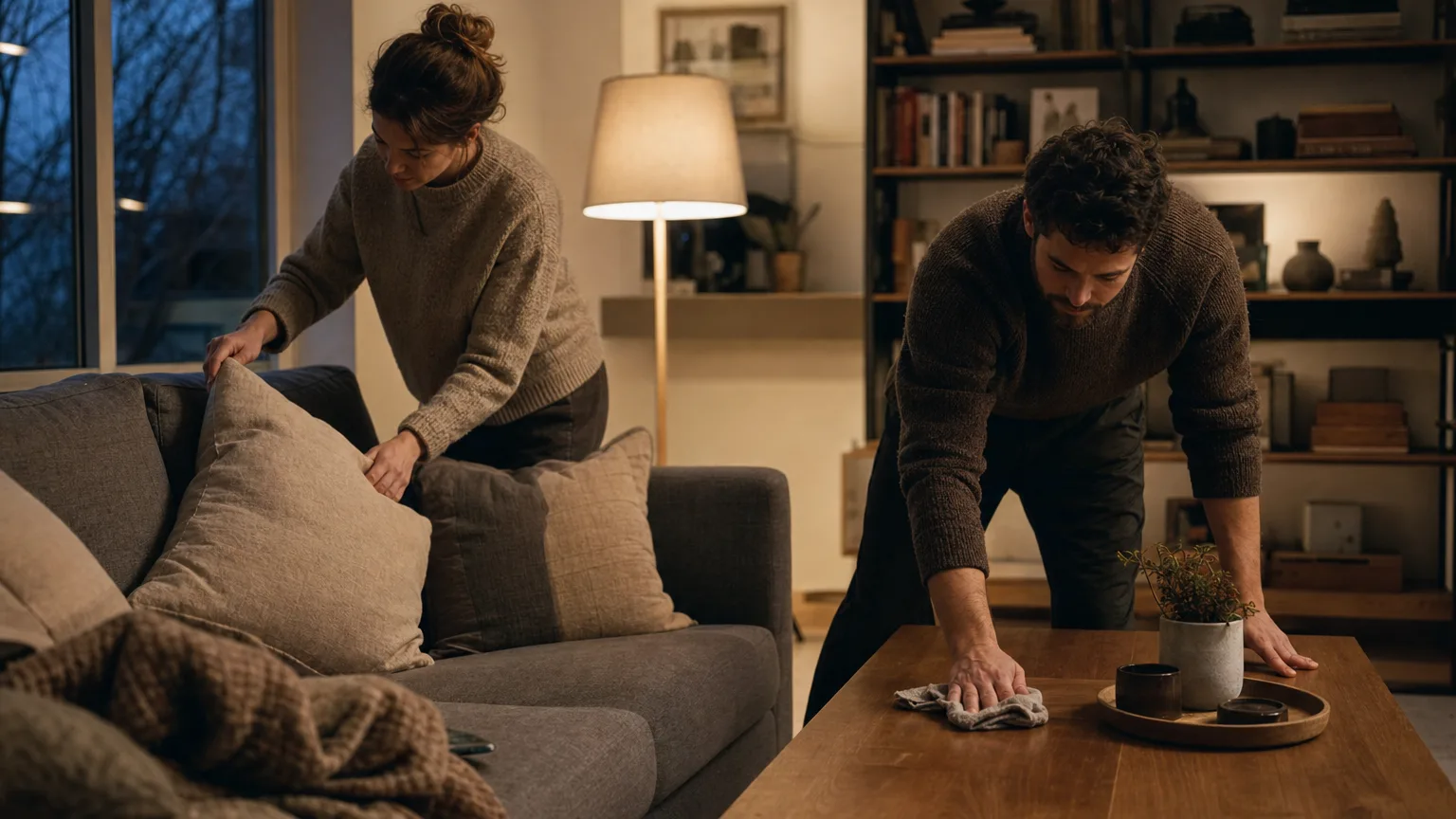
Start high and finish low. Dust shelves, frames, lamps, and electronics first. Vacuum upholstery and cushions. Wipe tables and high-touch points with a universal cleaner. Clean glass surfaces. Vacuum or mop floors last. This order matters because gravity remains stubbornly employed.
Use the right sequence for products too. Dry dust before wet wiping. Vacuum before textile spot cleaning. Clean before disinfecting. Deodorize only after removing the source of odor. If you skip straight to fragrance, the room may smell like citrus sitting on top of dog blanket, which is not the luxury result advertised.
Monthly Deeper Clean
Once a month, move smaller furniture, vacuum under sofa cushions, wash throws, clean curtain edges, dust vents, wipe skirting boards, and check rugs for spots. Clean remote controls, game controllers, and lamp switches. If you have pets, add a textile freshening session and wash pet bedding.
In damp climates, city apartments, and homes with limited ventilation, pay extra attention to textiles and corners behind furniture. Odors often build quietly where airflow is poor. Probiotic and textile-specific cleaners can help, but airflow and drying are still non-negotiable.
Buying Tips: How to Choose Without Filling a Cupboard With Regret
Choose concentrates when you clean often. A 5L product can make many litres of ready-to-use solution and reduce packaging waste. Choose ready-to-use sprays when convenience matters more than cost per litre. Both can be sensible; the mistake is buying six overlapping products that all claim to clean everything while none of them cleans the sofa safely.
Read labels for surface compatibility, dilution, dwell time, rinsing, fragrance, allergens, and safety warnings. If a product says test first, test first. Hidden corners exist for a reason. Keep strong products away from children and pets, and store cleaning chemicals in original packaging so nobody has to identify a mystery liquid by vibes.
For a lean living room cleaning kit, start with a universal cleaner, floor cleaner, textile cleaner, glass cleaner, microfiber cloths, HEPA vacuum, and odor neutralizer. Add wood polish, carpet spot remover, disinfectant, and specialty brushes based on your furniture, flooring, pets, and habits.
FAQs About Living Room Cleaning Products
What is the best all-purpose cleaner for a living room?
The best all-purpose cleaner for a living room is residue-free, safe for washable surfaces, and suitable for frequent use. Sanitify Probiotic Universal Cleaner is relevant for tables, shelves, washable furniture, and everyday grime. Avoid using any universal cleaner on raw wood, unsealed stone, screens, or delicate textiles unless the label clearly allows it.
How do I clean living room upholstery without ruining it?
Check the fabric care code, vacuum first, test the cleaner on a hidden area, use minimal moisture, blot instead of scrubbing, and dry thoroughly. For water-cleanable textiles, Sanitify Probiotic Textile Cleaner is a relevant option. For silk, viscose, antique fabrics, or code X upholstery, use professional cleaning.
What should I use for dust on electronics?
Use a dry microfiber cloth, anti-static duster, soft brush, and air blower. Do not spray cleaner directly onto screens, speakers, consoles, or remotes. If a screen needs more than dusting, use a manufacturer-approved electronics cleaner or a barely damp microfiber cloth, then dry immediately.
How often should I mop living room floors?
Most living room hard floors need vacuuming weekly and damp mopping every one to two weeks. Homes with pets, children, heavy foot traffic, or outdoor shoes may need more frequent mopping. Use a floor-specific product such as Sanitify Probiotic Floor Cleaner and avoid over-wetting wood or laminate.
Do odor sprays really work in living rooms?
Odor neutralizers can work when they target the source, especially on washable textiles, pet areas, and stale-smelling rooms. Air fresheners only mask odor. For lasting freshness, remove dust and hair, wash textiles, clean spills, improve ventilation, and use a textile or probiotic cleaner where appropriate.
Which living room cleaning products are worth buying in bulk?
Bulk concentrates make sense for universal cleaner, floor cleaner, and textile cleaner if you clean often or manage a larger household, rental, office, or guest space. Specialty products such as wood polish, disinfectant, and carpet spotter are usually better in smaller quantities because they are used less frequently.