10 Most Effective Cleaning Products for a Spotless Entryway
The most effective entryway cleaning products are a probiotic floor cleaner for hard floors, a strong biodegradable degreaser for shoe marks and mud residue, a textile cleaner for mats, a washable doormat system, a rubber boot tray, a grout brush, a microfiber mop, an odor neutralizer, a glass cleaner for door panels and mirrors, and a compact cordless vacuum. Together they stop dirt at the door instead of politely escorting it into the living room.
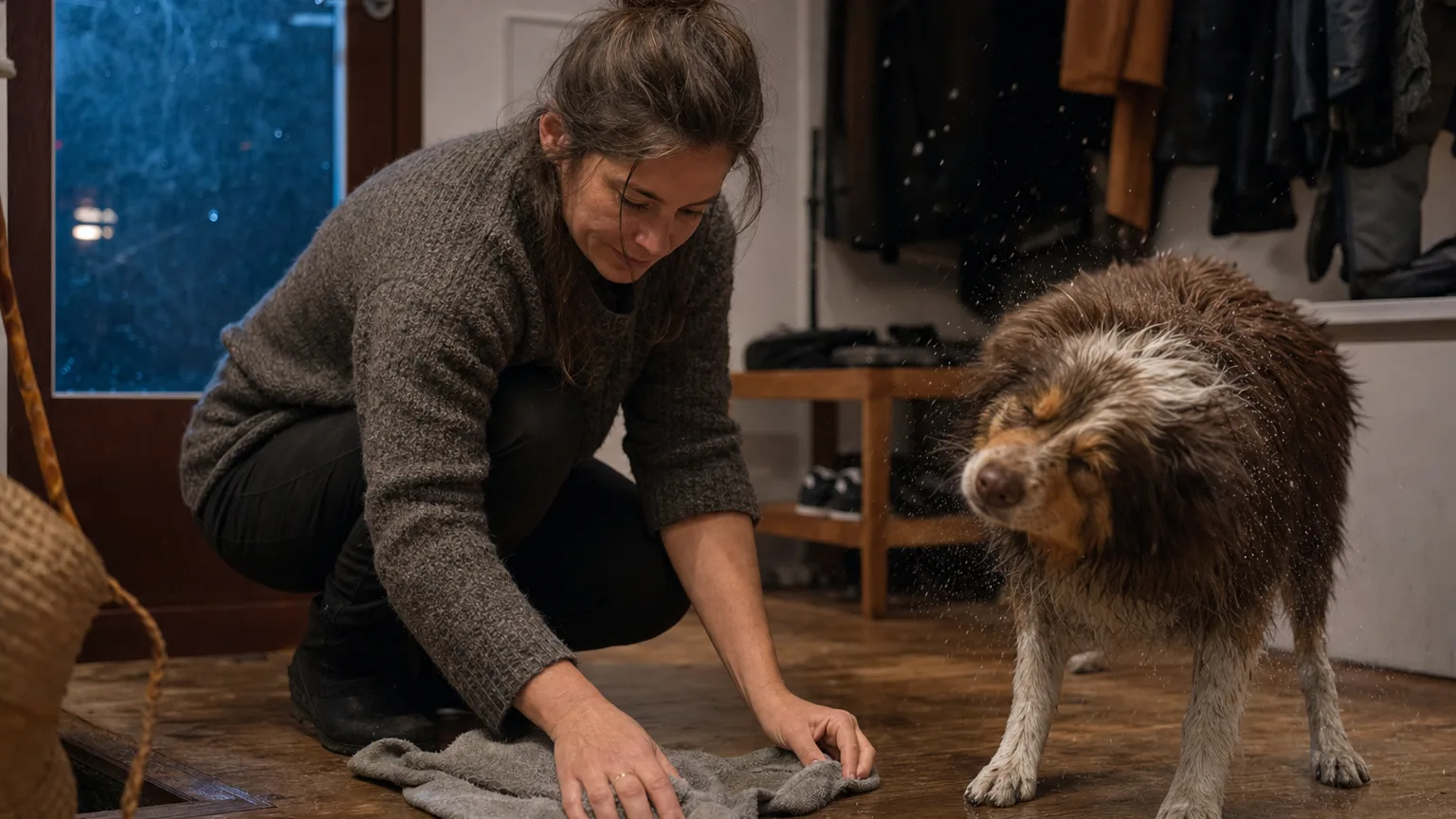
The entryway is the tiny customs office of the home. Every shoe, dog paw, school bag, umbrella, bicycle tire, parcel and suspicious leaf must pass through it. If your hallway looks clean, the rest of the house has a fighting chance. If it does not, the dirt gets a free walking tour.
That is why entryway cleaning is not just about mopping when the floor looks tragic. It is about building a small, sensible system: catch the grit, dissolve the mud, remove the odor, protect the floor finish and keep mats from becoming archaeological sites. The right products make that possible without turning the front door into a janitorial closet.
This guide ranks the ten most effective cleaning products for hallways and entryways, with practical notes for tile, wood, laminate, vinyl, stone, runners, coir mats, boot trays and the mysterious smell that appears after three rainy days and one pair of football boots.
How to Choose Entryway Cleaning Products
A good entryway product has to deal with three different enemies. First, abrasive grit scratches hard floors. Second, wet mud spreads minerals, organic matter and sometimes road salt. Third, shoes and mats hold odor-causing bacteria. A product that only makes the surface shiny is not enough; shine over grime is just grime in formalwear.
Choose products by surface and soil type. For daily hard-floor cleaning, use a neutral or floor-safe cleaner that does not strip finishes. For greasy shoe marks, bicycle chain smudges and black rubber transfer, use a stronger degreaser, but rinse or wipe residues. For mats, rugs and fabric runners, use a textile cleaner that tackles odor at the source rather than spraying perfume over it. For mineral marks from salt or hard water, use an acidic cleaner carefully and only on compatible surfaces.
The 10 Most Effective Entryway Cleaning Products
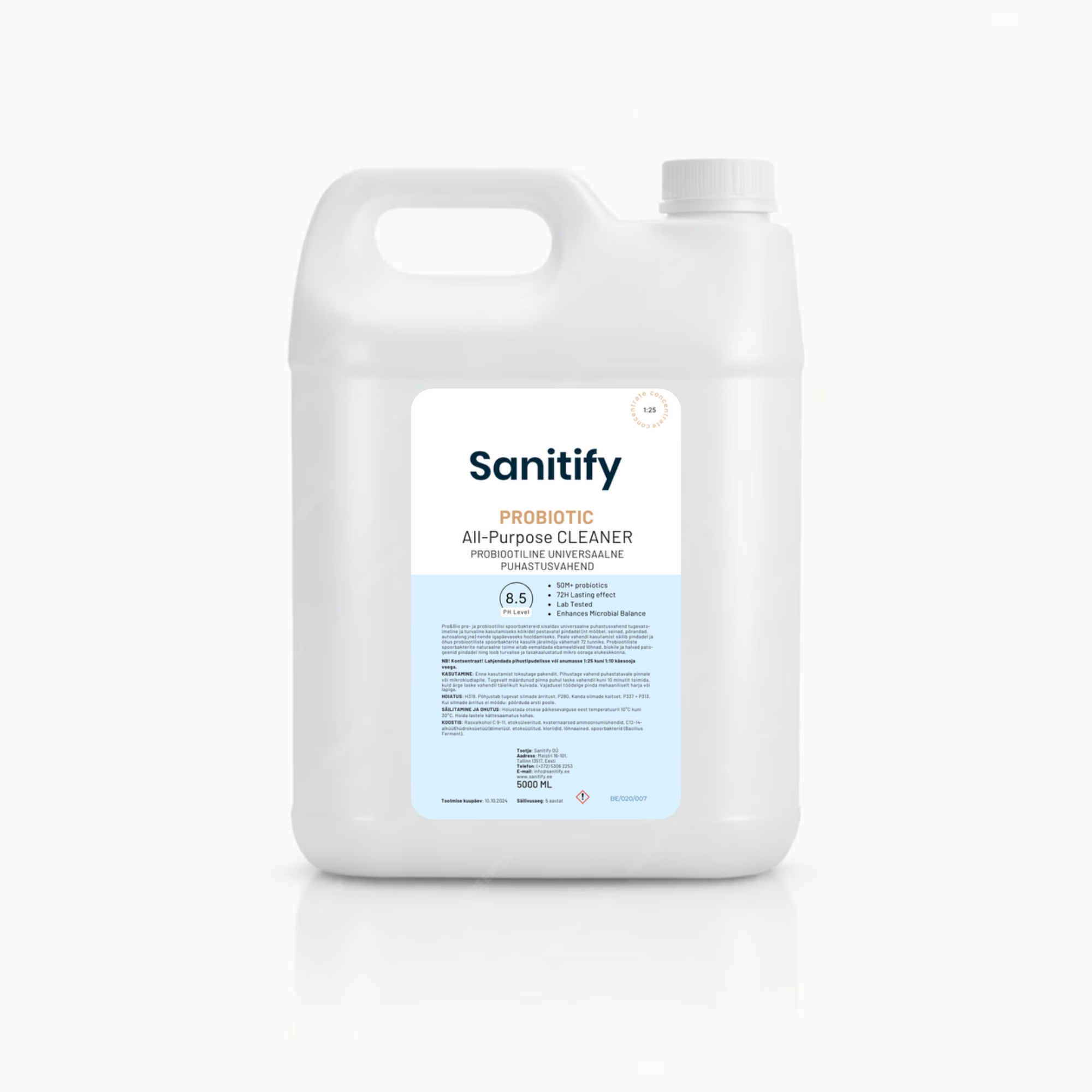
1. Sanitify Probiotic Floor Cleaner for Hard Floors
Sanitify Probiotic Floor Cleaner is the best first choice for entryway hard floors because hallways need frequent maintenance, not occasional chemical warfare. It is designed for washable floors, including sensitive finishes such as oiled or waxed surfaces, and it helps manage odor by reducing the organic residue bacteria feed on.
For entryways, that matters. A hallway floor is not dirty in one dramatic event. It is dirtied in hundreds of tiny arrivals: damp soles, dusty heels, pet paws, pram wheels, shopping bags and children who appear to have walked home through a field even when the route was paved. A probiotic floor cleaner is useful because it cleans the visible dirt and supports longer-lasting freshness between mops.
Use it after vacuuming or sweeping. Dilute according to the label, mop with a damp rather than soaking pad, and allow the floor to air dry. On wood, laminate and luxury vinyl, avoid flooding joints. On tile or stone, pay attention to grout lines, because grout is where hallway dirt goes to retire.
2. Sanitify Biodegradable Super Cleaner for Shoe Marks and Mud Film
Sanitify Biodegradable Super Cleaner is the product to reach for when ordinary mopping politely fails. It is built for stubborn residue such as grease, oil, soot, gum and heavy grime, which makes it useful for black heel marks, bicycle tire transfer, oily garage-to-entryway tracks and dried mud film.
The caveat is important: strong cleaners should be used with judgment. Spot test delicate flooring, use the correct dilution, avoid long dwell times on sensitive finishes and wipe or rinse after use. On sealed tile, vinyl and durable entrance flooring, it can be a practical rescue product. On untreated wood, natural stone or waxed finishes, be careful and follow the surface manufacturer’s guidance.
For black scuffs, apply a diluted solution to a microfiber cloth rather than pouring it onto the floor. Rub gently, then wipe with clean water. If the mark remains, repeat. Do not attack the floor like you are trying to erase a crime scene; abrasion is often worse than the stain.
3. Sanitify Probiotic Textile Cleaner for Mats and Runners
Sanitify Probiotic Textile Cleaner earns a top-three position because entryway mats do the dirtiest job in the house and receive the least applause. Mats collect soil, moisture, pollen, pet dander, road dust and shoe odor. If you clean the floor but ignore the mat, the mat simply re-seasons the floor after every footstep.
A textile cleaner is best for washable runners, synthetic doormats, fabric boot mats and upholstered storage benches. Vacuum first to remove grit, then treat stains and odor zones. Work the cleaner lightly into the fibers, allow dwell time, blot if needed and let the mat dry fully before placing it back. Damp mats smell because bacteria enjoy wet fabric like it is a spa weekend.
For coir mats, avoid soaking. Coir is excellent at scraping shoes but can shed and hold moisture. Shake it outdoors, vacuum aggressively, spot clean sparingly and dry in fresh air.
4. A Two-Mat System: Scraper Outside, Absorber Inside
The most underrated entryway cleaning product is not a bottle. It is a system. Place a coarse scraper mat outside the door and an absorbent washable mat inside. The outdoor mat removes stones, grit and clumps of mud. The indoor mat captures dampness and finer dust. One mat is hopeful. Two mats are strategy.
Look for outdoor mats made from rubber, coir or synthetic bristles with drainage channels. For indoor mats, choose low-profile washable microfiber, cotton-blend or performance fabric with a non-slip backing. In rainy climates, a machine-washable runner can outperform a tiny decorative mat that looks charming and absorbs roughly three drops of water.
Named brands such as Turtle Mat, Ruggable, Gorilla Grip and Bissell-style washable mats can work well, but check backing compatibility with your floor. Some rubber backings can discolor vinyl or react with certain finishes. If the mat smells strongly of rubber out of the package, air it outside first and do a small floor contact test.
5. Rubber Boot Tray for Mud, Snow and Road Salt
A boot tray is not glamorous, but neither is a puddle shaped like a hiking boot. A lipped rubber or plastic tray keeps wet shoes, umbrellas and muddy wellies from leaking onto flooring. In winter, it also contains road salt, which can leave white crusty marks and damage some stone, wood and metal finishes.
Choose a tray with raised ribs so shoes can drain without sitting in dirty water. Empty and rinse it regularly. If odor develops, wash it with a floor-safe cleaner or a diluted all-purpose cleaner, then dry completely. For households with children, dogs or enthusiastic gardeners, two trays are better than one: one for drying, one for the current shoe disaster.
Do not place a wet boot tray directly on unfinished wood for long periods. Moisture trapped beneath rubber can discolor wood or encourage mildew. Use a waterproof barrier or move the tray occasionally to let the floor breathe.
6. Compact Cordless Vacuum or Stick Vacuum
Entryway dirt is often dry before it becomes sticky. Sand, grit, dust and leaf fragments should be vacuumed, not smeared with a wet mop. A compact cordless vacuum near the hallway makes this job easy enough that someone might actually do it. That is the highest praise a cleaning tool can receive.
Look for strong edge pickup, a washable filter and a floor head that works on both hard floors and mats. Dyson, Shark, Miele, Bosch and Henry Quick models all have fans for good reasons, but the best vacuum is the one you will use twice a week. For very gritty entryways, a canister vacuum with a hard-floor brush can be gentler than a spinning brush roll that flings grit into baseboards.
Vacuum mats slowly. Fast passes make you feel productive while leaving grit behind. For thick doormats, lift the mat and vacuum underneath too. The underside is often where fine dust gathers and then escapes like a very boring magic trick.
7. Microfiber Flat Mop with Washable Pads
A microfiber flat mop is ideal for entryways because it uses less water than a string mop and gives better control along skirting boards, corners and under benches. Washable pads also reduce waste and let you keep separate pads for entryway dirt, kitchen floors and bathrooms.
Use a damp pad, not a wet one. Entryway floors are often near exterior doors where drafts slow drying, and over-wetting can damage laminate, wood seams and some stone sealers. Spray the diluted cleaner onto the mop pad or floor in sections, mop in overlapping strokes and change pads when they become visibly dirty.
Microfiber quality matters. Cheap pads can push mud around instead of capturing it. Wash pads without fabric softener, because softener coats the fibers and reduces absorbency. This is one of those small laundry details that sounds fussy until your mop starts performing like a damp napkin.
8. Grout Brush or Detail Brush for Edges and Tile Lines
If your entryway has tile, the grout is probably telling the real story. Grout lines collect soil because they sit slightly lower than the tile surface and have more texture. A narrow grout brush, old toothbrush or dedicated detail brush lets you clean those lines without scrubbing the entire floor on your knees like a medieval punishment.
Pair the brush with a floor-safe cleaner for general grime. For very dirty grout on ceramic or porcelain tile, a diluted degreaser can help. Avoid harsh acids on cement-based grout unless the product is suitable and the grout is in good condition. Acid can etch natural stone and weaken unsealed grout if misused.
The practical method is simple: vacuum first, apply cleaner, let it sit for a few minutes, scrub the line, wipe with clean water and dry. Do not let dirty cleaning solution dry back into the grout. That is not cleaning; it is relocation.
9. Odor Neutralizer for Shoe Cabinets and Closed Hallways
Entryway odor usually comes from moisture plus organic residue. Shoes carry sweat, bacteria, soil and sometimes pet-related surprises. Closed shoe cabinets then trap that mixture in a warm, dark space. A good odor product should neutralize or absorb odor rather than drown it in a scent called Alpine Thunderstorm or Linen Dragon.
Activated charcoal bags, baking-soda-based absorbers and unscented odor gels are useful in shoe cabinets. Replace or recharge them as directed. For washable shoe racks, wipe shelves with a suitable cleaner and let them dry before replacing shoes. For fabric storage baskets, vacuum crumbs and grit, then treat with a textile-safe cleaner if odor remains.
The best odor control is boring: dry shoes before storage, rotate pairs, leave cabinet doors open occasionally and clean mats. If shoes are soaked, stuff them with newspaper or use a boot dryer on a safe low setting. Odor hates airflow. Unfortunately, so do cluttered hallways.
10. Glass and Stainless Steel Cleaner for Doors, Mirrors and Hardware
Many entryways have glass door panels, sidelights, mirrors, stainless handles, brass knobs or decorative metal letter plates. These surfaces show fingerprints, rain spots and smudges quickly. A dedicated glass cleaner or a streak-free microfiber glass cloth helps the whole hallway look cleaner, even if the shoes are still plotting.
For glass, spray the cloth rather than the pane to avoid drips into frames and seals. For stainless steel, wipe with the grain and avoid abrasive pads. For brass, bronze or coated hardware, check whether it has a lacquered finish before using metal polish. Many modern handles only need a mild cleaner and a dry buff.
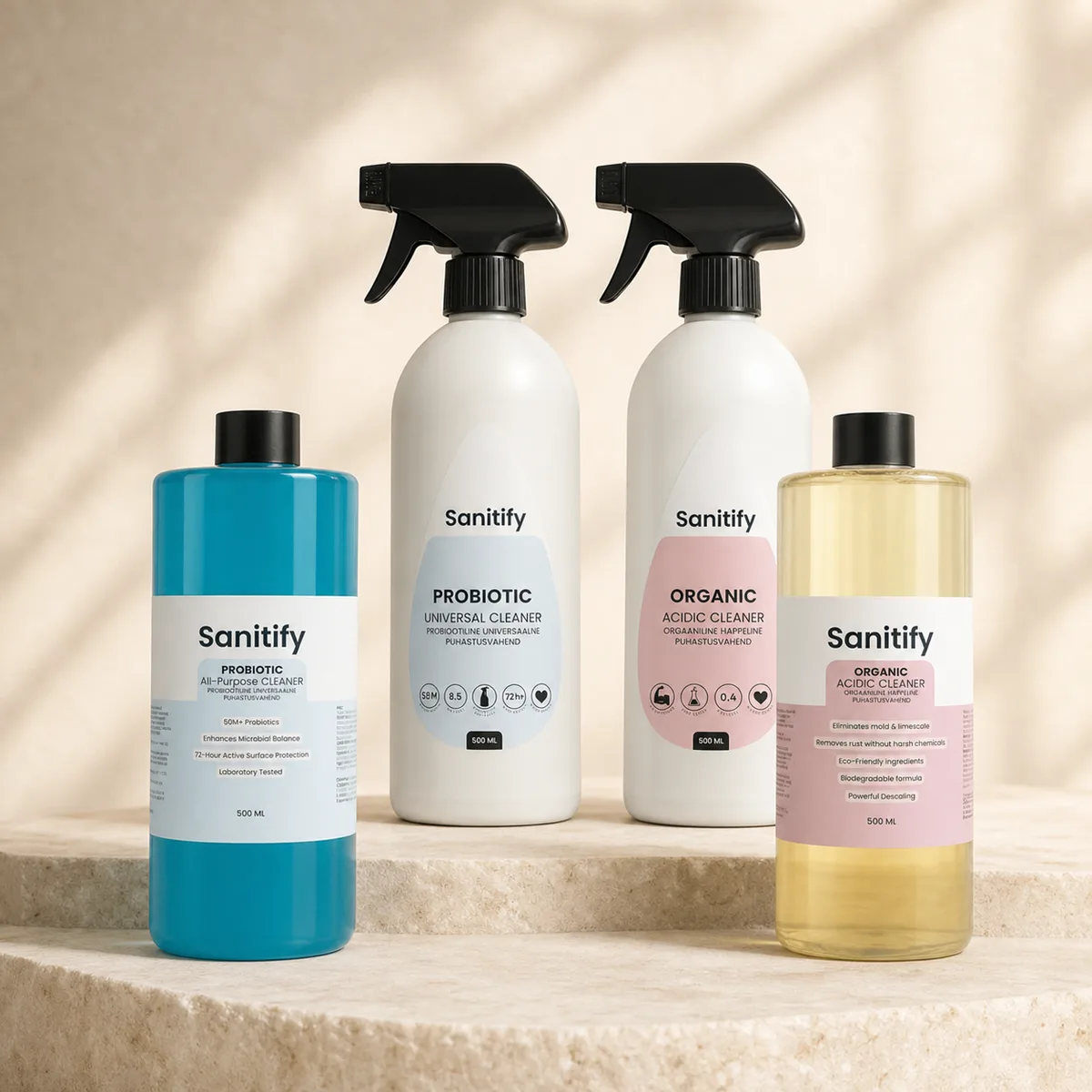
If you have hard water spots on exterior glass near the door, an acidic cleaner may help, but only on compatible glass and never on stone thresholds. Sanitify Organic Acidic Cleaner is more relevant for mineral deposits, rust and limescale than for daily hallway cleaning. Use it as a specialist product, not a casual spritz for everything shiny.
Best Products by Entryway Problem
| Problem | Best product type | Practical note |
|---|---|---|
| Muddy hard floors | Vacuum plus probiotic floor cleaner | Let mud dry if possible, vacuum grit, then mop. |
| Black shoe scuffs | Diluted biodegradable degreaser | Spot test and wipe clean after treatment. |
| Smelly mats | Probiotic textile cleaner | Vacuum first and dry fully after cleaning. |
| Wet boots | Rubber boot tray | Choose a lipped tray with raised ribs. |
| Road salt residue | Damp microfiber mop | Remove promptly; salt can damage finishes. |
| Tile grout dirt | Grout brush and suitable cleaner | Do not let dirty solution dry in grout lines. |
A Simple Weekly Entryway Cleaning Routine
Daily, shake or vacuum the indoor mat if the weather is wet. Put shoes on the boot tray, hang damp coats where air can circulate and remove obvious grit before it migrates. This takes two minutes and prevents the weekend clean from becoming a documentary.
Twice a week, vacuum the floor, mat and corners. Lift the mat and clean underneath. Wipe door thresholds, especially if grit gathers in the track. If you have pets, wipe paw-level marks from doors and skirting boards with a mild cleaner.
Weekly, mop hard floors with a suitable floor cleaner such as Sanitify Probiotic Floor Cleaner. Spot treat scuffs with a diluted heavy-duty cleaner. Clean the boot tray, refresh odor absorbers and check whether the indoor mat needs washing. In muddy months, clean more often but with less water. Frequent damp mopping beats occasional flood mopping every time.
Surface-Specific Advice
Wood and Engineered Wood
Wood entryways need dirt control more than aggressive cleaning. Grit scratches finishes, water seeps into joints and harsh chemicals can dull oil, wax or polyurethane. Vacuum first, mop with a barely damp microfiber pad and dry any puddles immediately. Use boot trays and mats, but avoid rubber backings that trap moisture unless approved for your floor.
Laminate and Luxury Vinyl
Laminate and vinyl are practical hallway choices, but they are not invincible. Standing water can affect seams, and strong solvents may damage wear layers. Use neutral cleaners, avoid steam unless the manufacturer allows it and treat scuffs gently. A diluted degreaser on a cloth is safer than spraying a whole section of floor.
Tile, Porcelain and Stone
Porcelain tile is forgiving, which is why it often appears in busy entrances. Natural stone is less tolerant. Marble, limestone and travertine can be etched by acidic cleaners, including vinegar. For stone, use pH-neutral cleaners and protect with the correct sealer. For ceramic grout, brush regularly before it darkens permanently.
Products to Use Carefully
Bleach is not a general entryway cleaner. It can discolor textiles, damage some finishes and does not remove soil well on its own. Steam cleaners can be useful on some sealed tile, but they can damage wood, laminate, adhesive-backed vinyl and certain mats. Magic eraser sponges can remove scuffs, but they are mildly abrasive, so test first and avoid glossy finishes.
Vinegar is also over-recommended. It can help with mineral marks on compatible surfaces, but it can etch stone, dull finishes and leave a salad-bar fragrance. If you need acidic cleaning, use a product designed for that job and follow the label. If you need daily floor care, use a floor cleaner.
FAQs About Entryway Cleaning Products
What is the best cleaner for muddy entryway floors?
The best approach is to let heavy mud dry, vacuum or sweep the grit, then mop with a floor-safe cleaner. For routine hard floors, Sanitify Probiotic Floor Cleaner is a strong choice because it is designed for frequent maintenance and odor control. For stubborn residue, spot treat with a diluted degreaser.
How do I stop my hallway from smelling like shoes?
Clean and dry the sources: mats, shoe racks, boot trays and the shoes themselves. Use a textile cleaner on washable mats, activated charcoal in shoe cabinets and airflow whenever possible. Do not rely only on fragrance sprays. If the bacteria and damp fabric remain, the smell will return wearing a tiny victory crown.
Can I use the same cleaner on mats and hard floors?
Sometimes, but it is better to match the cleaner to the material. Hard floors need a floor-safe formula that will not leave sticky residue or damage finishes. Mats and runners benefit from textile cleaners that work inside fibers. Using the right product also reduces overwetting, which is a major cause of mat odor.
How often should I clean an entryway?
Vacuum or shake mats several times a week in wet or muddy seasons, and mop hard floors weekly or as needed. High-traffic homes with pets or children may need quick daily maintenance. The trick is small frequent cleaning, not heroic monthly scrubbing while muttering about everyone’s shoes.
What removes black scuff marks from shoes?
A diluted biodegradable degreaser, microfiber cloth and gentle pressure usually remove black scuffs from durable floors. Spot test first. Avoid abrasive pads on glossy, waxed or delicate surfaces. If the mark is rubber transfer, chemical loosening plus microfiber is safer than scraping.
Are probiotic cleaners useful in entryways?
Yes, especially where odor and organic residue are recurring problems. Probiotic cleaners are not magic invisibility cloaks for mud, but they can help reduce the residue that feeds odor-causing bacteria. They are most useful as part of a routine that includes vacuuming, mat care and moisture control.
Final Verdict
The best entryway cleaning setup is a layered defense. Put scraper and absorbent mats at the door, contain wet shoes in a boot tray, vacuum grit before it scratches, mop with a floor-safe cleaner and treat mats like the hardworking dirt traps they are. For Sanitify users, the most relevant trio is Probiotic Floor Cleaner, Biodegradable Super Cleaner and Probiotic Textile Cleaner. Add a good vacuum, microfiber mop and odor absorber, and your entryway will stop acting like a mud distribution hub.