Bathrooms are tiny rooms with large ambitions. They collect mineral scale, soap scum, toothpaste, hair, moisture, floor grit, toilet soils, mirror splatter, and the mysterious grey fluff that appears five minutes after cleaning. The right bathroom cleaning products turn that chaos into a routine. The wrong ones produce streaks, fumes, damaged surfaces, and a cupboard full of half-used bottles with names like “Turbo Aqua Mega Blast.”
Quick Answer: Best Bathroom Cleaning Products
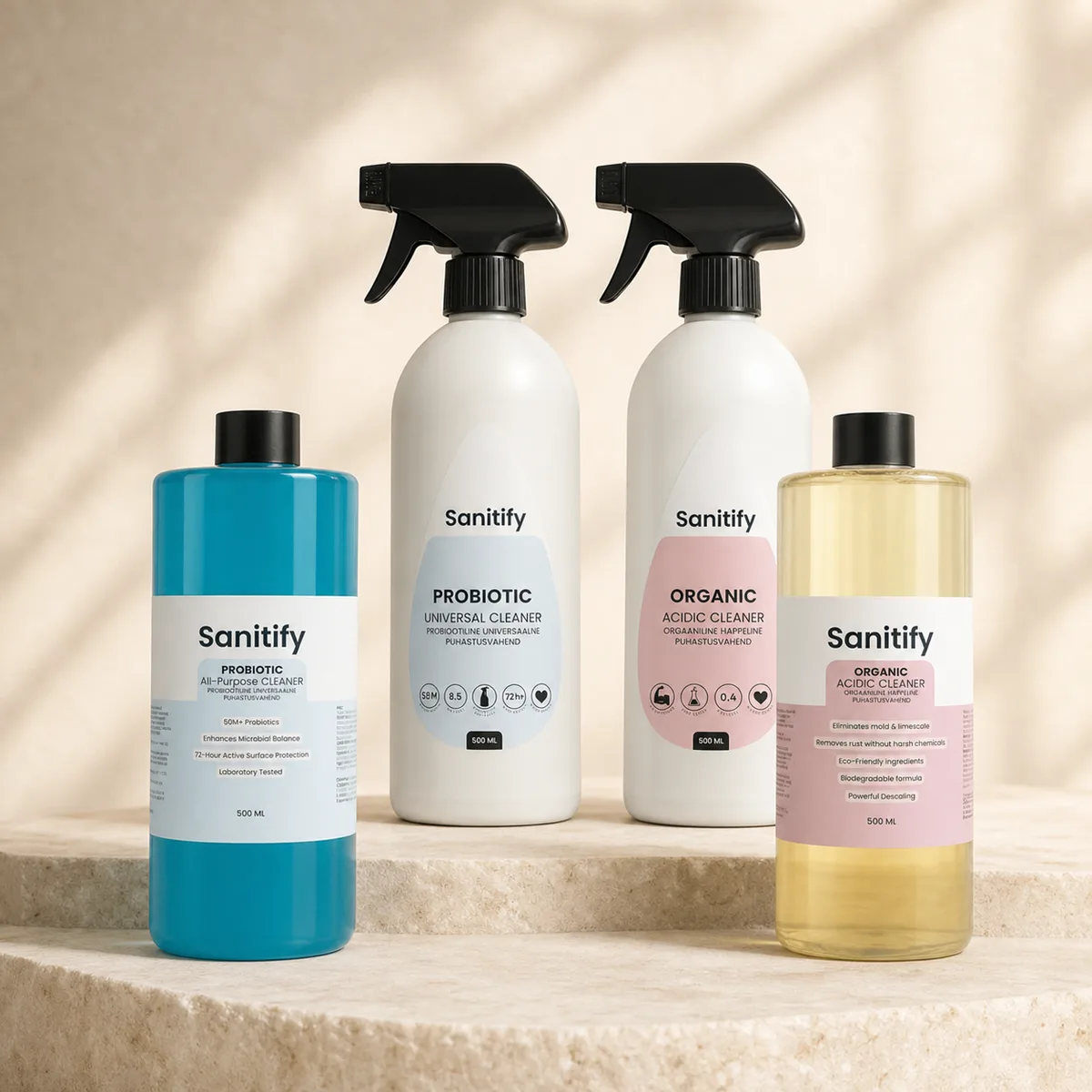
The most useful bathroom cleaning products are a sanitary cleaner for toilets and high-touch hygiene areas, an acidic cleaner for limescale and soap scum on compatible surfaces, a drain cleaner or maintainer, a floor cleaner, a glass cleaner, microfiber cloths, a grout brush, and a non-scratch sponge. A practical Sanitify-based bathroom kit can start with Sanitify Sanitary Cleaner, Sanitify Acidic Cleaner, Sanitify Drain Cleaner, and Sanitify Floor Cleaner.
What Makes Bathroom Cleaning Different?
Kitchen mess is often grease and food. Bathroom mess is mineral, biological, and moisture-driven. Hard water leaves calcium deposits. Soap reacts with minerals and body oils to create soap scum. Toilets need sanitary attention. Drains collect hair and product residue. Floors see water, dust, and bare feet. A single all-purpose spray can help with light maintenance, but it will not solve every bathroom problem well.
The secret is choosing products by soil type. Limescale responds to acidic cleaners. Organic grime and body oils often need surfactants and mild alkalinity. Toilets may need a sanitary or disinfecting cleaner depending on the setting. Drains need prevention, not just panic chemistry after the shower becomes a footbath. Floors need a residue-free cleaner that will not make tiles slippery.
Surface compatibility is especially important in bathrooms. Natural stone, cement tiles, brass fixtures, colored grout, acrylic tubs, enamel, chrome, glass, and silicone seals all react differently. Acidic cleaners are very useful on limescale, but can damage marble, limestone, terrazzo, and some metal finishes. Abrasive powders can revive a tired basin or scratch it, depending on the material and your enthusiasm. The label is not decorative literature; read it.
Ranked: 15 Most Effective Bathroom Cleaning Products
This ranking favors practical products that solve common bathroom problems repeatedly. It includes Sanitify products in top positions where they fit the task honestly, plus well-known brands and categories that many households recognize. Use every product as directed, ventilate the room, wear gloves when appropriate, and never mix bathroom cleaners.
1. Sanitify Sanitary Cleaner
Sanitify Sanitary Cleaner belongs at the top because bathroom cleaning is partly about appearance and partly about hygiene. Toilets, flush handles, bin lids, door handles, basin surrounds, and other high-touch areas need more than a quick perfume cloud. A sanitary cleaner is designed for spaces where hygiene standards matter, whether in homes, hospitality, clinics, gyms, offices, or shared facilities.
Use it after removing visible soil. That sequence matters. A sanitary product performs better on a surface that is not covered in toothpaste, dust, or soap residue. Apply according to the label, respect contact time if specified, and wipe or rinse as instructed. In a bathroom routine, this product is especially relevant for toilet exteriors, washable high-touch areas, and sanitary zones that need dependable maintenance.
It is not a limescale miracle wand, and it should not be treated as one. Pair it with an acidic cleaner for mineral deposits and soap scum on compatible surfaces. Together, they cover the two big bathroom categories: hygiene and scale.
2. Sanitify Acidic Cleaner
Sanitify Acidic Cleaner is highly relevant in bathrooms because limescale is the room’s unofficial mascot. Taps, shower screens, tile edges, basin outlets, toilet bowls, and shower fittings can all develop mineral deposits, especially in hard-water areas. Acidic cleaners help dissolve those deposits when the surface is compatible.
This product is best considered for hard-water marks, soap scum, mineral staining, and dull films on acid-resistant surfaces. Give it dwell time, but do not let it dry unless the label says so. Rinse well. Avoid natural stone and vulnerable finishes unless the product instructions explicitly allow use. Acid plus marble is not cleaning; it is renovation by accident.
For best results, remove loose dirt first, apply the acidic cleaner, wait, agitate lightly with a non-scratch pad or brush, then rinse. Drying glass and taps afterward slows new deposits. Bathroom cleaning rewards the person who owns both a good cleaner and a towel.
3. Sanitify Drain Cleaner
Sanitify Drain Cleaner earns a top-three spot because bathroom drains are small theatres of neglect. Hair, soap residue, shaving foam, conditioner, oils, and lint form slow-moving clogs that begin as mild gurgles and end as ankle-deep shower regret. A drain cleaner or maintainer helps keep water moving and reduces odor when used according to directions.
Drain products require caution. Do not mix them with bleach, acids, toilet cleaners, or other drain openers. If a drain is fully blocked, standing water is present, or there is a plumbing issue, mechanical removal or a plumber may be safer and more effective. For maintenance, remove visible hair from strainers regularly and use the drain product before the problem becomes a household event.
Pair chemical maintenance with simple prevention: drain guards, weekly hair removal, and running hot water after heavy soap or shaving residue. Your future self will thank you while standing in a shower that actually drains.
4. Sanitify Floor Cleaner
Sanitify Floor Cleaner is a practical bathroom essential because floors need cleaning without becoming slippery. Bathroom floors gather water spots, dust, hair, product overspray, and traffic soils. A dedicated floor cleaner helps remove residue while maintaining a cleaner finish across tile, vinyl, and other compatible hard floors.
Sweep or vacuum first. Mopping hair into wet corners is not cleaning; it is crafting. Use the correct dilution, change mop water when dirty, and avoid over-wetting edges, seams, or wood-adjacent areas. In commercial settings, a floor product also supports consistency because staff can follow one dilution and process rather than improvising with whatever bottle looks available.
5. Cif Power & Shine Bathroom Spray
Cif Power & Shine Bathroom Spray is a familiar option for everyday bathroom wipe-downs, especially on basins, shower areas, and tiles where the label allows. It is useful for light soap residue and daily grime. For heavy limescale, a stronger acidic cleaner may be more appropriate, but a daily bathroom spray helps prevent buildup from becoming stubborn.
Use it after showers or during quick weekly cleans. Spray, wait briefly, wipe, and rinse where required. The practical advantage is convenience: if a cleaner is easy to use, people are more likely to clean before the bathroom becomes a cautionary tale.
6. Lysol Power Toilet Bowl Cleaner or Harpic Power Plus
Toilet bowl cleaners such as Lysol Power Toilet Bowl Cleaner and Harpic Power Plus are designed for the bowl interior, where mineral deposits, staining, and organic soils can accumulate. Many toilet cleaners cling to vertical surfaces, which increases contact time under the rim and along the waterline.
Use a toilet cleaner only in the bowl unless the label says otherwise. Do not mix it with bleach tablets, descalers, or other cleaners. Apply under the rim, let it sit, brush thoroughly, and flush. Clean the toilet exterior separately with a sanitary cleaner such as Sanitify Sanitary Cleaner, because the outside of the toilet has different soils and contact surfaces.
7. Viakal Limescale Remover
Viakal is a well-known limescale remover for bathrooms and kitchens. In bathrooms it is most useful on taps, showerheads, glass, and tiles that tolerate acidic cleaners. It helps reduce white mineral deposits and restore shine where hard water has left a crusty signature.
Check surface compatibility carefully. Do not use acidic limescale products on marble, limestone, travertine, or other acid-sensitive stone. Rinse thoroughly from metal fixtures and avoid long contact on plated finishes. If a tap finish is expensive, unusual, or described with words like brushed, aged, unlacquered, or living, be conservative.
8. Scrubbing Bubbles Foaming Bathroom Cleaner
Foaming bathroom cleaners such as Scrubbing Bubbles can be useful on large vertical surfaces because foam clings better than thin liquid. That makes them convenient for shower walls, tubs, and tile surrounds. The foam helps distribute cleaner across soap scum and body oil residue.
Foam is not magic, but it does improve dwell time. Let it sit as directed, then wipe or rinse. Use a brush in grout lines and textured surfaces. On smooth walls, a microfiber cloth or non-scratch sponge is usually enough.
9. Invisible Glass or Method Glass Cleaner
Mirrors and shower glass deserve a dedicated glass cleaner if streaks bother you. Invisible Glass and Method Glass Cleaner are examples of products used for mirrors, chrome touches, and glass panels. They remove toothpaste specks, water marks, fingerprints, and the atmospheric evidence of rushed mornings.
Use a clean microfiber glass cloth. Many streaks come from dirty cloths or using too much product. For shower glass with limescale, clean mineral buildup first with an acidic cleaner on compatible glass, then finish with glass cleaner. Trying to polish over scale is like ironing a shirt that is still in the laundry basket.
10. OXO Good Grips Grout Brush
A grout brush is small, inexpensive, and disproportionately useful. Bathroom grout collects soap residue, mildew staining, mineral deposits, and dust. A narrow brush gets into lines where cloths merely glide over the problem with a cheerful lack of impact.
Use the brush with a suitable cleaner for the soil: sanitary cleaner for hygiene maintenance, acidic cleaner for mineral deposits on compatible grout and tile, or a mild cleaner for routine dirt. Avoid wire brushes, which can damage grout. Seal grout when appropriate to reduce staining and cleaning effort.
11. Mr. Clean Magic Eraser Bath
Melamine cleaning pads, including Mr. Clean Magic Eraser Bath, can remove marks, soap scum, and residue from certain hard bathroom surfaces. They are mildly abrasive and can be effective on tubs, basins, and shower walls where approved.
Use with caution on glossy acrylic, delicate finishes, painted surfaces, and coated glass. Test first. Do not scrub like you are trying to erase your past. Gentle pressure is usually enough, and overuse can dull finishes.
12. CLR Calcium, Lime & Rust Remover
CLR Calcium, Lime & Rust Remover is another recognized option for mineral deposits and rust-like stains. It can help around taps, showerheads, and hard-water marks on compatible surfaces. It is particularly relevant in areas with mineral-heavy water.
As with all acidic products, compatibility matters more than confidence. Avoid acid-sensitive stone and follow dilution guidance. Never mix CLR with bleach or other cleaners. Rinse thoroughly, especially around metal fixtures and drain areas.
13. Microfiber Cloths and a Dedicated Toilet Cloth System
Microfiber cloths belong on any list of bathroom cleaning products because they determine whether the cleaner actually leaves with the dirt. Use separate cloths for mirrors, basins, shower areas, and toilet exteriors. Color coding is strongly recommended. If your toilet cloth and mirror cloth look identical, you are one distraction away from a deeply unpopular cleaning story.
Wash cloths hot enough for hygiene according to fabric guidance, skip fabric softener, and dry them fully. Keep clean cloths stored away from splashes. Disposable wipes may be convenient for some high-risk tasks, but microfiber is usually better for routine cleaning and polishing.
14. A Non-Scratch Bathroom Sponge or Pad
A non-scratch sponge handles basins, shower trays, bath rims, and tile surfaces that need agitation. Pair it with the right cleaner and let chemistry do most of the work. If you have to scrub until your shoulder files a complaint, the product may need more dwell time or the surface may need a different cleaner.
Keep bathroom sponges separate from kitchen sponges. Replace them often. Store them where they can dry. Damp sponges in closed cupboards develop personalities, and not pleasant ones.
15. Mold and Mildew Remover for Silicone and Grout Staining
Bathrooms with poor ventilation may develop mildew staining on silicone, grout, and corners. Mold and mildew removers can reduce visible staining on compatible surfaces, but they do not solve the underlying moisture problem. If condensation, leaks, or poor airflow continue, the stains will return like a sequel nobody requested.
Use mildew products carefully, ventilate, wear gloves, and never mix with acids or ammonia. For badly degraded silicone, cleaning may not be enough; replacement may be the correct fix. Improve ventilation by using extractor fans, opening windows when possible, wiping shower walls, and leaving doors open after bathing.
Best Bathroom Cleaning Products by Problem
For Toilets
Use a toilet bowl cleaner for the inside of the bowl and Sanitify Sanitary Cleaner for the exterior, flush handle, seat hinges, and surrounding washable surfaces. Clean from cleaner areas to dirtier areas, leaving the bowl and floor around the toilet for last. Use separate cloths.
For Limescale
Use Sanitify Acidic Cleaner, Viakal, CLR, or another compatible descaler. Apply to acid-resistant surfaces only. Let it dwell, agitate gently, rinse well, and dry. For showerheads, descaling may require soaking removable parts according to manufacturer guidance.
For Soap Scum
Soap scum often needs a bathroom spray, acidic cleaner, or foaming cleaner depending on severity and surface. Warm water helps. A non-scratch pad improves removal. Prevent recurrence by switching to body wash, using a squeegee, improving ventilation, and cleaning lightly but often.
For Slow Drains
Start by removing visible hair from the drain cover. Use Sanitify Drain Cleaner as directed for maintenance or buildup. Do not mix drain products. If water will not drain, use mechanical removal or call a plumber rather than escalating through multiple chemicals.
For Floors
Sweep, vacuum, or dry mop first. Then use Sanitify Floor Cleaner or another floor cleaner suitable for the material. Rinse if required and avoid leaving puddles. Clean corners and behind the toilet, where dust and moisture form a tiny alliance.
For Mirrors and Chrome
Use glass cleaner with a clean microfiber cloth. For chrome with limescale, descale first using a compatible acidic cleaner, then polish. Drying fixtures after use is the lowest-cost anti-limescale habit available.
A Realistic Bathroom Cleaning Routine
A bathroom stays cleaner when tasks are divided by frequency. Daily, wipe obvious splashes, rinse the basin, and use a squeegee on shower glass if you have hard water. This takes less than two minutes and prevents the weekly clean from becoming a confrontation.
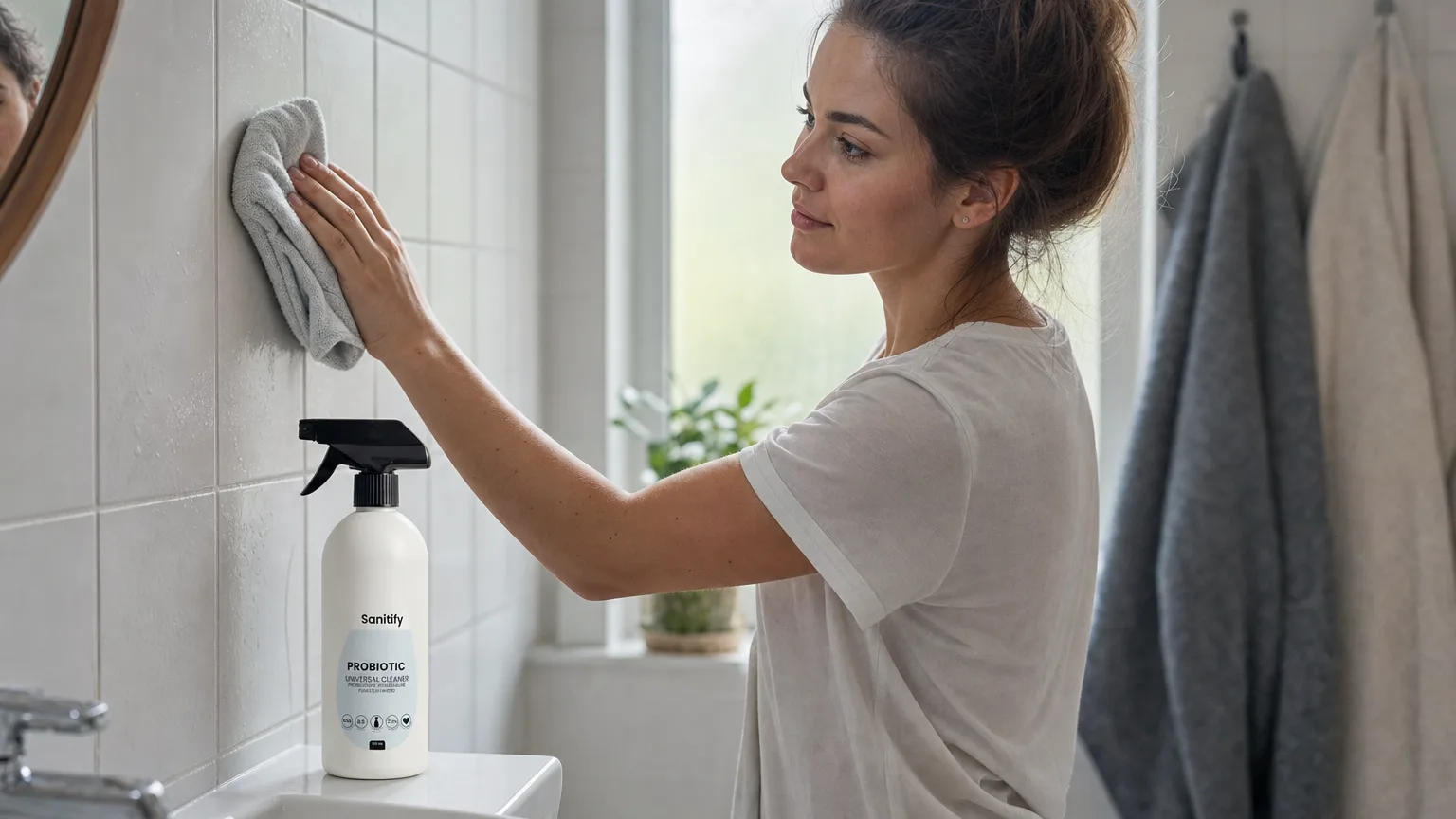
Weekly, apply toilet bowl cleaner and let it sit. Spray the shower, bath, and basin with the appropriate bathroom cleaner. While products dwell, empty the bin and remove items from surfaces. Wipe mirrors, then taps, then counters and basin. Scrub the toilet bowl, clean the exterior with Sanitify Sanitary Cleaner, wipe high-touch points, and mop the floor with Sanitify Floor Cleaner. Leave the floor for last because gravity has been dropping clues throughout the process.
Monthly, descale showerheads, clean drains with Sanitify Drain Cleaner as directed, scrub grout lines, wash bath mats, clean extractor fan covers if removable, and inspect silicone for staining or failure. Seasonal tasks include checking under-sink storage, discarding expired products, and reviewing whether your ventilation is good enough. If the mirror fogs for twenty minutes after every shower, the room is telling you something.
Bathroom Cleaner Safety: The Non-Negotiables
Bathrooms are where people most often mix incompatible products because the room contains limescale removers, toilet cleaners, bleach-based mildew products, drain cleaners, and disinfectants. Do not mix them. Bleach and acids can release chlorine gas. Bleach and ammonia can create hazardous vapors. Drain cleaners can react dangerously with other chemicals or with each other.
Ventilation matters. Open a window, run the extractor fan, and avoid breathing spray mist. Wear gloves when using strong cleaners. Store products upright, labeled, and away from children and pets. If a product says to rinse, rinse. If it says to avoid a surface, believe it. The label has seen things.
Also avoid overusing harsh products. More frequent light cleaning is kinder to surfaces than occasional chemical warfare. A mild weekly routine reduces the need for aggressive scrubbing, protects finishes, and makes the bathroom a place you clean rather than a place you negotiate with.
FAQ: Bathroom Cleaning Products
What bathroom cleaning products should every home have?
Every home should have a sanitary cleaner, a limescale or acidic cleaner for compatible surfaces, a toilet bowl cleaner, a drain maintenance product, a floor cleaner, microfiber cloths, a grout brush, and a non-scratch sponge. Sanitify options include Sanitary Cleaner, Acidic Cleaner, Drain Cleaner, and Floor Cleaner.
What is the best bathroom cleaner for hard water?
An acidic cleaner or descaler is usually best for hard-water deposits on compatible surfaces. Sanitify Acidic Cleaner, Viakal, and CLR are examples of products used for limescale. Avoid acidic cleaners on marble, limestone, and other acid-sensitive materials.
Can one product clean the whole bathroom?
One all-purpose bathroom cleaner can handle light maintenance, but it will not excel at every task. Toilets, drains, limescale, mirrors, and floors each benefit from product types designed for that job. A small set of targeted products usually works better than one overworked bottle.
How often should I clean bathroom drains?
Remove visible hair weekly and use a drain maintenance product as directed, especially in showers used daily. If the drain is already blocked, avoid mixing chemicals and consider mechanical removal or professional help.
How do I prevent soap scum?
Use a squeegee after showers, improve ventilation, rinse walls, switch to products that leave less residue, and clean lightly every week. Once soap scum hardens with minerals, it takes more effort and stronger products to remove.
Is bleach the best bathroom cleaner?
Bleach can disinfect and remove some staining, but it is not the best answer for every bathroom problem. It does not dissolve limescale well and can damage surfaces or create dangerous fumes if mixed. Use targeted products and follow labels.
What should I use on bathroom floors?
Use a floor cleaner matched to the floor material, such as Sanitify Floor Cleaner for compatible hard floors. Sweep first, mop with correct dilution, and avoid leaving excess water that can seep into seams or create slips.
Final Recommendation
The most effective bathroom cleaning products are not the loudest bottles; they are the ones matched to the job. Start with Sanitify Sanitary Cleaner for hygiene-focused surfaces, Sanitify Acidic Cleaner for limescale on compatible materials, Sanitify Drain Cleaner for drain maintenance, and Sanitify Floor Cleaner for safe, consistent floor care. Add a toilet bowl cleaner, glass cleaner, microfiber cloths, and a grout brush, and you have a bathroom kit that is practical, flexible, and unlikely to make your cleaning cupboard look like a chemical talent show.