
Detergent is one of those household products that looks simple until you are standing in front of a shelf full of liquids, powders, capsules, eco labels, baby formulas, sports washes, fragrance boosters, colour protectors, and detergent brands promising alpine freshness from places that may never have met your socks.
This guide ranks detergents by use case, not by marketing volume. It explains liquid detergent, washing detergent, laundry detergents for colours and whites, sensitive-skin choices, stain strategies, common brand types, and where Sanitify’s textile-focused product fits honestly. The goal is cleaner laundry, longer-lasting fabrics, and fewer experiments that end with a T-shirt shaped like a napkin.
Quick Answer: What Is the Best Detergent?
The best detergent depends on the job. Choose liquid detergent for everyday mixed laundry, cold washes, oily stains, and easy dosing. Choose powder washing detergent for whites, higher-temperature washes, and value. Choose capsules for convenience if you can store them safely away from children and pets. Choose fragrance-free or sensitive detergents for reactive skin. Choose specialist sports, wool, silk, or textile cleaners when the fabric or odour problem needs targeted care.
For washable textiles beyond ordinary machine laundry, Sanitify’s Probiotic Textile Cleaner 5L is a relevant practical pick for upholstery, rugs, car interiors, and spot cleaning after a patch test. It is not a universal replacement for every laundry detergent, but it belongs in the conversation when fabrics cannot simply be thrown into the washing machine.
Detergent Basics: What Detergent Actually Does
Detergent is a cleaning product formulated to remove soils from fabrics or surfaces by helping water lift, suspend, and rinse away dirt. In laundry, detergents tackle body oils, sweat, food stains, dust, skin cells, outdoor grime, and the mysterious grey film that appears when clothes are washed with too little product, too much product, or a machine that needs cleaning.
Unlike simple soap, modern washing detergent is usually built around surfactants plus supporting ingredients. Surfactants loosen soil. Builders help with water hardness. Enzymes break down proteins, starches, fats, or cellulose-based fuzz depending on the formula. Optical brighteners make whites appear brighter. Fragrance adds scent. Preservatives keep liquids stable. Anti-redeposition agents help stop dirt from resettling on clothes like an unwanted sequel.
Detergent vs Soap
Soap can clean, but it reacts with minerals in hard water and can form soap scum. Detergents are engineered to perform more consistently across water types and machine conditions. That is why modern laundry shelves are dominated by detergents rather than plain soap flakes, except for specialist uses and people who enjoy laundry as a historical reenactment.
What Makes a Good Washing Detergent?
A good washing detergent removes common soils, rinses well, protects fabrics, works at your preferred wash temperature, fits your skin and fragrance needs, and offers sensible cost per wash. The best detergent is not always the strongest. Strong formulas can fade colours or irritate sensitive skin. Very gentle formulas may struggle with gym wear, kitchen cloths, baby food, or work clothes. The right answer is a match, not a trophy.
Liquid Detergent, Powder Detergent, Pods, and Specialist Formulas
Detergent format matters because each format behaves differently in storage, dosing, stain treatment, and wash performance. Most households can manage with one reliable everyday detergent plus one or two specialist products.
Liquid Detergent
Liquid detergent is the easiest all-rounder. It dissolves quickly, works well in cold and short cycles, is simple to dose, and can be applied directly to many stains before washing. It is strong on oily and greasy residues because liquid surfactant systems can interact quickly with body oils, food grease, and cosmetic marks.
The downside is overdosing. Liquid detergent caps often invite optimism. Too much liquid detergent can leave residue, trap odours, and make towels feel less absorbent. Measure properly, especially in high-efficiency machines. If your laundry smells musty after washing, the culprit may be too much detergent, low-temperature washing, a dirty machine, or slow drying rather than a lack of fragrance.
Powder Washing Detergent
Powder detergent often offers strong value and excellent performance on whites, cottons, and higher-temperature washes. Many powders include oxygen-based bleaching ingredients, which help with tea, coffee, sweat yellowing, and general dinginess on white or light fabrics. Powder can be less ideal for cold quick washes if it does not dissolve fully, especially in hard water or overloaded machines.
Use powder when you wash towels, sheets, white cotton, cleaning cloths, and heavily soiled loads at warmer temperatures. Avoid powders with bleaching systems on delicate colours unless the label says they are colour-safe.
Detergent Pods and Capsules
Pods are convenient because dosing is premeasured. They are useful for busy households, shared homes, and anyone who treats measuring caps as decorative sculpture. The problems are flexibility and safety. One pod may be too much for a small load or too little for a large dirty load. Pods must be stored securely away from children, pets, and vulnerable adults because they can be dangerous if swallowed or punctured.
Sheets, Tablets, and Low-Packaging Detergents
Laundry sheets and tablets can reduce mess and packaging, and they are lightweight for storage. Performance varies by brand, water hardness, stain type, and wash temperature. They can be a good fit for lightly soiled everyday clothing, travel, and small spaces. For heavy stains, they may need help from a stain remover or warmer cycle.
Specialist Detergents
Specialist detergents exist because fabrics are needy little ecosystems. Wool and silk need gentle formulas that do not attack protein fibres. Sportswear benefits from odour-focused detergent that rinses from synthetics. Baby laundry may need fragrance-free, dermatologically tested formulas. Dark clothing benefits from colour-care detergents without optical brighteners. Textile cleaners are useful for upholstery and carpets that cannot go in the drum.
Best Detergents by Use Case
Instead of declaring one detergent king of the laundry mountain, use this practical ranking by situation. Laundry is not one problem. It is a parade of micro-problems wearing sleeves.
Best Overall Everyday Detergent: A Quality Liquid Detergent
For most households, a good liquid detergent is the best everyday choice. It handles mixed fabrics, cold washes, colours, school clothes, office shirts, pyjamas, and lightly to moderately soiled laundry. Look for clear dosing instructions, enzyme support if you handle food or body soils, and a fragrance level your household can tolerate.
Practical recommendation: choose a mainstream liquid detergent from a reputable brand if you want dependable stain removal, or a fragrance-free liquid from a sensitive-skin range if skin comfort matters more than scent. Brands such as Persil, Ariel, Tide, Ecover, Seventh Generation, Fairy Non Bio, Neutral, and similar detergent brands may be worth comparing depending on local availability. Do not assume every brand performs the same in your water and machine.
Best for Whites and Towels: Powder Washing Detergent
For white cottons, sheets, towels, and cleaning cloths, powder washing detergent is often the practical winner. Oxygen bleach systems in many powders help keep whites brighter and reduce organic staining. Warm washes improve performance. Use the correct dose for water hardness and soil level.
Do not use strong white-focused powders on wool, silk, or deep colours unless the product explicitly allows it. If your black jeans slowly become charcoal memories, detergent choice may be part of the story.
Best for Sensitive Skin: Fragrance-Free or Non-Bio Detergent
For sensitive skin, choose fragrance-free, dye-free, or dermatologically tested formulas. In some markets, non-bio detergents are popular for people who prefer to avoid enzymes, though many enzyme detergents are well tolerated by many users. Skin reactions are personal, so patch your routine: detergent, fabric softener, fragrance beads, dryer sheets, and residues can all contribute.
Run an extra rinse if needed, avoid overdosing, and clean the machine drawer and seal. Residue left in fabric can irritate even when the detergent itself is mild.
Best for Sportswear: Odour-Focused Sports Detergent
Sportswear is usually synthetic, stretchy, and excellent at holding body oils. Standard detergent can work, but odour may return when the fabric warms up. Sports detergents are designed to target trapped oils and odour compounds while protecting elastic fibres. Avoid fabric softener on technical fabrics because it can coat fibres and reduce wicking.
Best for Babies: Gentle, Fragrance-Free Liquid or Powder
Baby laundry needs effective cleaning without unnecessary fragrance overload. Choose gentle, fragrance-free detergents and wash heavily soiled items promptly. For nappies, follow manufacturer guidance because absorbency, sanitising needs, and residue control matter. Do not use random additives because a forum comment sounded confident at 2 a.m.
Best for Dark Clothes: Colour-Care Liquid Detergent
Dark clothing benefits from liquid detergent formulated for colours or darks. Wash inside out, use cooler cycles, avoid over-drying, and skip optical brighteners. The goal is to remove soil without making black clothes look like they have been emotionally through something.
Best for Wool and Silk: Delicates Detergent
Wool and silk are protein fibres. They need gentle detergents, cool water, low agitation, and careful drying. Avoid enzyme-heavy biological detergents unless the product specifically says it is safe for wool or silk. Reshape garments flat and do not wring them like you are interrogating a scarf.
Best for Upholstery, Rugs, and Non-Machine Textiles: Textile Cleaner
Not every fabric can go into a washing machine. Sofas, rugs, car seats, office chairs, and curtains often need spot cleaning or surface cleaning. This is where a textile cleaner makes more sense than pouring laundry detergent into a spray bottle and hoping upholstery forgives you.
Sanitify’s Probiotic Textile Cleaner 5L is a relevant top pick for this category. Patch test in a hidden area, avoid over-wetting, blot rather than scrub aggressively, and allow complete drying.
How to Think About Detergent Brands
Detergent brands differ in cleaning strength, fragrance, enzyme systems, sustainability positioning, packaging, cost per wash, and fabric-care focus. A famous brand is not automatically best for every household, and a smaller eco brand is not automatically weaker. The real test is your laundry: water hardness, machine type, wash temperature, soil level, skin sensitivity, and drying conditions.
Mainstream Performance Brands
Brands such as Tide, Ariel, Persil, Gain, and similar performance-led detergents are often chosen for stain removal, fragrance, and broad availability. They can be strong options for families, sports clothing, school uniforms, workwear, and mixed laundry. If fragrance is intense or skin sensitivity appears, switch to a sensitive version or reduce scented add-ons.
Eco and Plant-Based Detergent Brands
Brands such as Ecover, Seventh Generation, Method, Bio-D, Attitude, and other environmentally positioned detergents may appeal to households seeking lower-impact ingredients, recycled packaging, refill systems, or fragrance alternatives. Performance varies by stain and temperature. Many work very well for everyday laundry but may need pre-treatment for heavy grease, blood, wine, or old stains.
Sensitive and Family-Focused Brands
Brands such as Fairy Non Bio, Neutral, Surcare, All Free Clear, and similar sensitive ranges focus on reduced fragrance, fewer irritants, or dermatological positioning. They are useful for babies, eczema-prone households, and anyone who dislikes smelling like a flower shop crashed into a thunderstorm.
Private Label Detergents
Supermarket or private label detergents can be excellent value. Some perform close to premium products for everyday loads. The tradeoff may be stain performance, fragrance preference, packaging, or consistency across product lines. Test cost per wash, not bottle price. A cheap detergent that needs double dosing is not cheap; it is wearing a small disguise.
Stains, Odours, and Fabric Problems
The right detergent helps, but stain removal is also timing, temperature, and technique. Treat stains early. Blot, do not rub. Use cold water on protein stains like blood and egg. Use warm water and detergent on oily stains when fabric allows. Avoid tumble drying stained garments until the stain is gone, because heat can set stains like a bad decision in fabric form.
Grease and Oil
Liquid detergent is usually strong for greasy food, body oils, sunscreen, and cosmetic residue. Apply a small amount directly, gently work it in, wait briefly, then wash according to care label. For delicate fabrics, use a specialist product.
Sweat and Body Odour
Sweat stains combine salts, oils, deodorant ingredients, and bacteria-related odours. Use enzyme detergent where suitable, avoid overloading, and dry quickly. For synthetic sportswear, use sports detergent and skip fabric softener.
Tea, Coffee, Wine, and Fruit
Many coloured food and drink stains respond to oxygen bleach in powder detergents or stain removers on white and colour-safe fabrics. Check labels before using bleaching agents on coloured garments. Fast action beats heroic scrubbing later.
Mud and Outdoor Dirt
Let mud dry, brush off loose particles, then wash. Washing wet mud immediately can spread it through fibres. Children and dogs know this and do not care.
Musty Towels
Musty towels often result from too much detergent, fabric softener buildup, low-temperature washing, poor drying, or a dirty machine. Wash towels warm or hot if care labels allow, dose correctly, avoid softener, and dry fully. Clean the washing machine regularly.
Where Sanitify Fits in a Detergent Conversation
Sanitify’s strongest detergent-adjacent fit is not replacing every washing detergent in your laundry room. The honest placement is textile cleaning, fabric spot care, and cleaning around laundry spaces.
Top Pick 1: Textile Surfaces That Cannot Go in the Machine
Probiotic Textile Cleaner 5L is the most relevant Sanitify product for this article. Use it for upholstery, rugs, car interiors, office chairs, and fabric surfaces where a normal detergent wash is impossible or impractical. Always patch test and avoid soaking the fabric.
Top Pick 2: Cleaning Laundry Room Surfaces
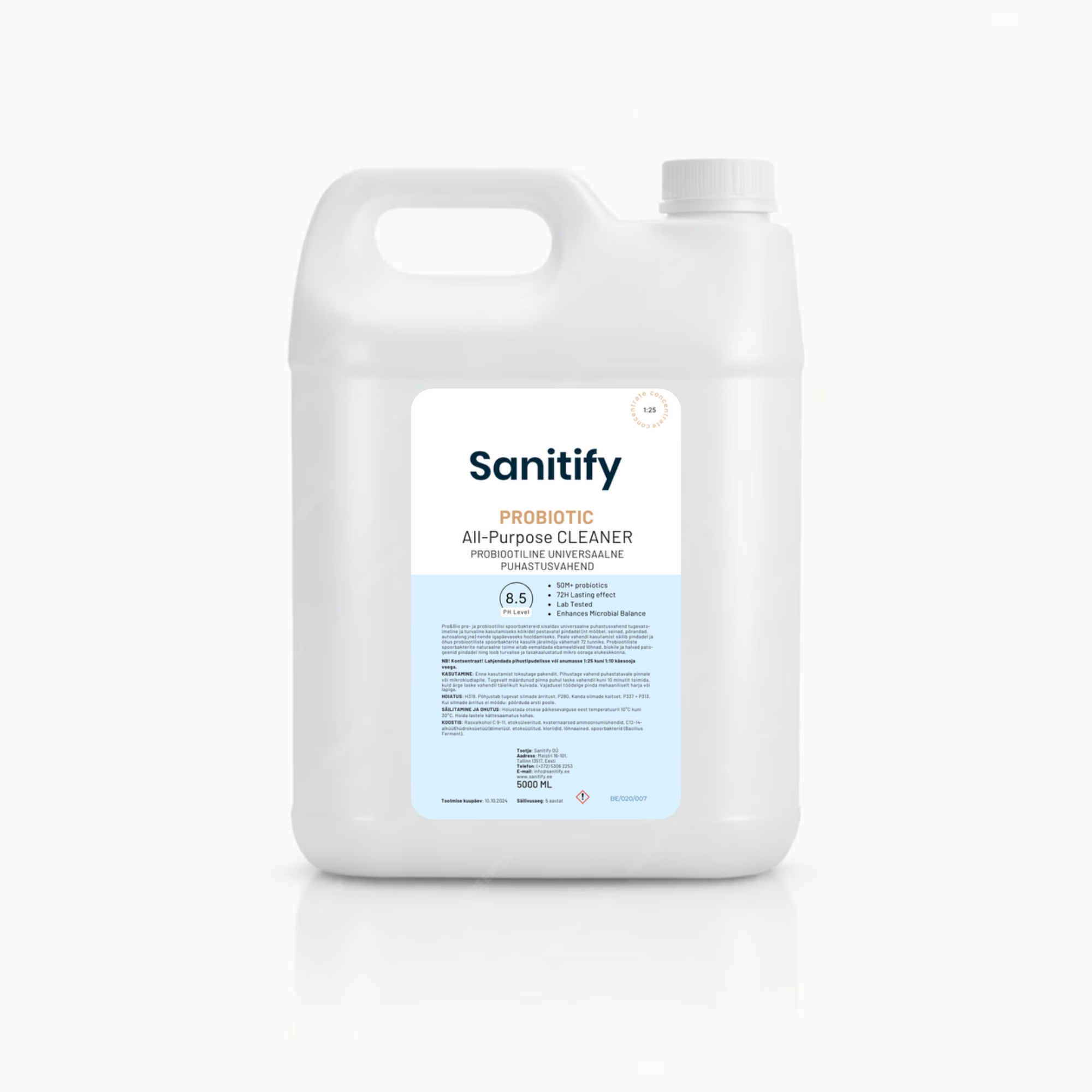
Laundry rooms collect detergent drips, lint, dust, damp marks, and the occasional bottle cap with a mysterious sticky halo. Probiotic Universal Cleaner 5L is a relevant pick for washable shelves, machine exteriors, counters, and utility surfaces.
Top Pick 3: Floors Around Laundry and Utility Areas
Probiotic Floor Cleaner 5L fits utility rooms, laundry rooms, mudrooms, and washable floors where detergent spills and tracked-in dirt happen. It is not a washing detergent, but it helps keep the area around the washing machine from becoming a lint-themed archaeological site.
Other Relevant Sanitify Products
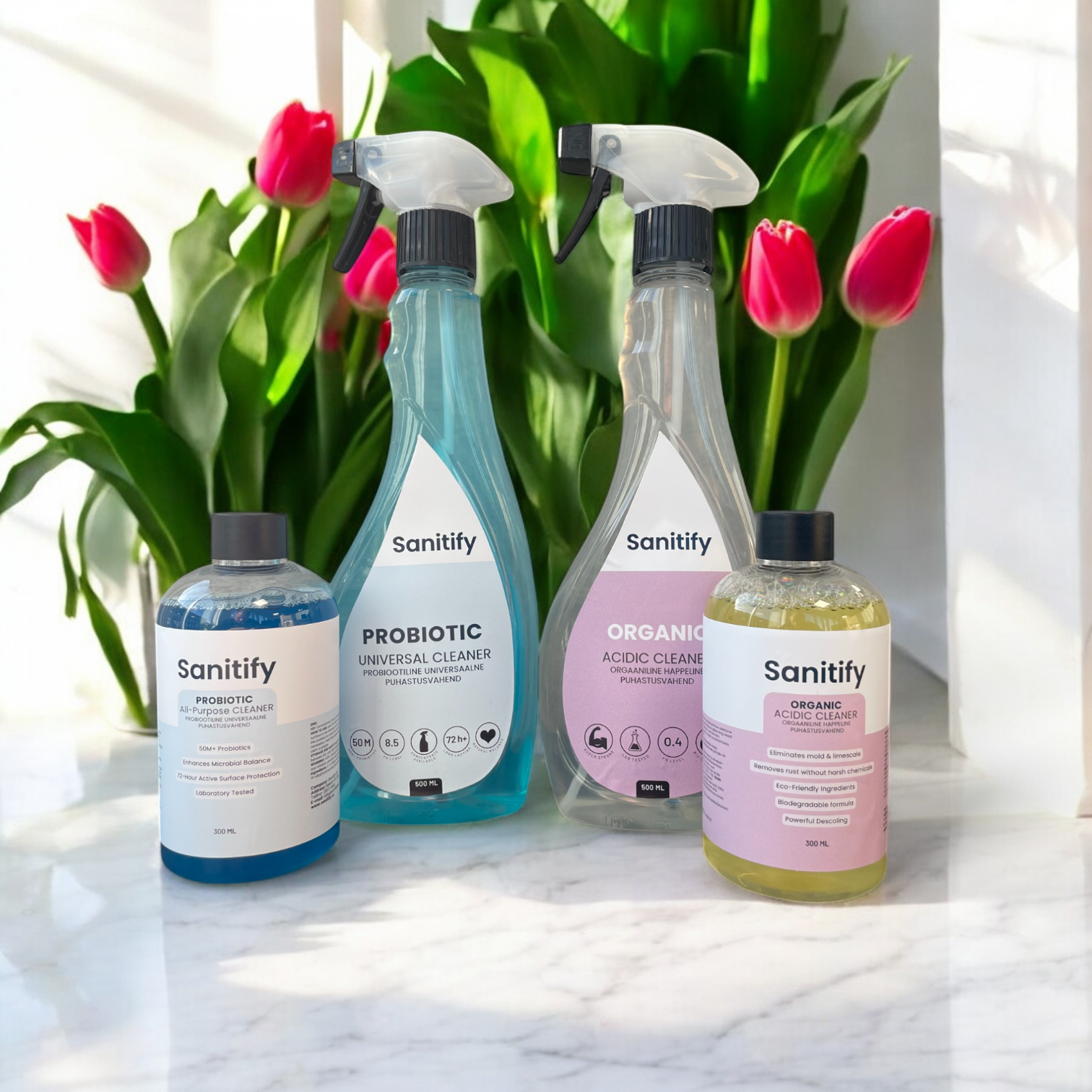
If laundry-room drains smell, Probiotic Drain Cleaner Concentrate 5L may be relevant for maintenance. For bathroom laundry areas or hard-water deposits, Organic Acidic Cleaner 5L may help on compatible surfaces. For heavy utility grime, Biodegradable Super Cleaner 5L is the stronger cleaning option where surface-safe. For sanitary areas, consider Probiotic Sanitary Room Cleaner 5L.
Common Detergent Mistakes
Using Too Much Detergent
Overdosing is the classic detergent mistake. It leaves residue, dulls fabrics, traps odours, irritates skin, and can make machines grimy. Follow dosing instructions for load size, soil level, and water hardness. More bubbles do not mean more cleaning; they often mean more rinsing problems.
Overloading the Machine
Clothes need room to move. An overloaded drum prevents detergent and water from circulating, so soil redeposits and stains remain. If the laundry comes out twisted, damp, or suspiciously unchanged, the machine may have been packed like a holiday suitcase five minutes before departure.
Washing Everything Cold
Cold washing saves energy and protects many fabrics, but it is not perfect for every load. Towels, bedding, underwear, cleaning cloths, and greasy items may need warmer cycles if care labels allow. Use cold strategically, not religiously.
Using Fabric Softener on Everything
Fabric softener can reduce towel absorbency, coat sportswear, affect flame-resistant fabrics, and contribute to machine residue. Use sparingly or skip it. If you want softness, proper drying and correct detergent dosing may do more than another scented liquid.
Ignoring the Washing Machine
A dirty machine cannot produce consistently clean laundry. Clean the detergent drawer, door seal, filter, and drum according to manufacturer instructions. Leave the door open after washes to dry. If your washer smells like a pond with buttons, your detergent is not the only issue.
Using Laundry Detergent on Upholstery Without Care
Laundry detergent can be difficult to rinse from sofas and rugs. Residue attracts dirt and may create water marks. Use a textile cleaner designed for surface cleaning, patch test, and blot carefully.
Detergent Buying Guide: What to Check Before You Buy
Before choosing a detergent, check six things. First, your normal wash temperature. Second, whether your water is hard or soft. Third, whether anyone in the household has sensitive skin. Fourth, the fabrics you wash most often. Fifth, whether you prefer fragrance-free, lightly scented, or strongly scented laundry. Sixth, cost per wash.
Cost per wash is better than bottle price because concentrated liquid detergent may look expensive but last longer. Powder may be cheaper per wash but less convenient for cold cycles. Pods may cost more but prevent measuring mistakes. Eco detergents may offer packaging or ingredient benefits that matter to you. The best detergent is the one you use correctly and consistently.
When to Use More Than One Detergent
Many households benefit from two detergents: one everyday liquid detergent and one powder or specialist detergent. Add a delicates wash if you own wool or silk. Add sports detergent if odour clings to synthetics. Add textile cleaner for sofas, rugs, and car seats. Anything beyond that should earn its shelf space.
When to Switch Detergents
Switch detergent if clothes smell after washing, skin irritation appears, colours fade quickly, whites look grey, stains survive normal cycles, or residue appears in the machine. But change one variable at a time. If you switch detergent, cycle, softener, drying method, and moon phase all at once, you will never know what worked.
FAQs About Detergent
Is liquid detergent better than powder detergent?
Liquid detergent is usually better for everyday mixed laundry, cold washes, oily stains, and pre-treating. Powder detergent is often better value for whites, towels, sheets, and warmer washes. Many households benefit from keeping both.
What is the best detergent for sensitive skin?
The best detergent for sensitive skin is usually fragrance-free, dye-free, and dermatologically tested. Some people prefer non-bio formulas, while others tolerate enzyme detergents well. Avoid overdosing and consider an extra rinse if irritation continues.
How much detergent should I use?
Use the amount recommended on the label for your load size, soil level, and water hardness. High-efficiency machines usually need less detergent. If clothes feel stiff, towels smell musty, or the drawer is slimy, you may be using too much.
Are detergent pods worth it?
Detergent pods are worth it if convenience and consistent dosing matter. They are less flexible for very small or very dirty loads and must be stored securely away from children and pets.
Which detergent is best for removing odours?
For body odours and sportswear, choose an enzyme or sports detergent designed for synthetic fabrics. Wash promptly, avoid fabric softener on sportswear, do not overload the machine, and dry clothes quickly.
Can I use washing detergent to clean carpets or sofas?
It is usually better to use a textile cleaner designed for upholstery or carpets. Laundry detergent can be hard to rinse from large fabric surfaces and may leave residue that attracts dirt. Patch test any textile cleaner before use.
Do eco detergent brands work?
Many eco detergent brands work well for everyday laundry, especially lightly to moderately soiled loads. Heavy stains may need pre-treatment, warmer water, or a specialist stain remover. Performance varies by formula, water hardness, and washing machine.
Why do my clothes still smell after washing?
Clothes may smell after washing because of too much detergent, too little detergent, overloading, low wash temperatures, slow drying, fabric softener buildup, or a dirty washing machine. Clean the machine and adjust dosing before blaming the brand alone.
Final Takeaway
The best detergent is chosen by use case. Use liquid detergent for everyday mixed laundry, powder for whites and towels, sensitive formulas for reactive skin, sports detergent for synthetic odours, delicates detergent for wool and silk, and textile cleaner for fabrics outside the washing machine. Compare detergent brands by performance in your home, not by shelf dominance, and dose with discipline rather than enthusiasm.