
House cleaning supplies should make life easier, not turn the cupboard under the sink into a chemistry-themed escape room. The best kit is simple: a few reliable household cleaning products, the right tools, sensible routines, and cleaning agents matched to the mess rather than chosen because the label shouted loudest.
This guide explains what to keep, what to skip, how to choose safer and more effective house cleaning products, and where specialist cleaners belong. It is written for normal homes with crumbs, fingerprints, bathroom drama, floor traffic, pet surprises, mystery smells, and the occasional saucepan that looks like it has lived through a volcano.
Quick Answer: What House Cleaning Supplies Do You Actually Need?
Most homes need a compact set of house cleaning supplies: an all-purpose cleaner, bathroom cleaner, floor cleaner, glass cleaner or vinegar-style solution where suitable, disinfectant for high-risk moments, microfiber cloths, scrub pads, mop, vacuum, gloves, bin bags, and a dedicated drain or limescale product when needed. Choose household cleaning products by surface, soil type, safety profile, fragrance tolerance, and dilution value rather than by brand noise.
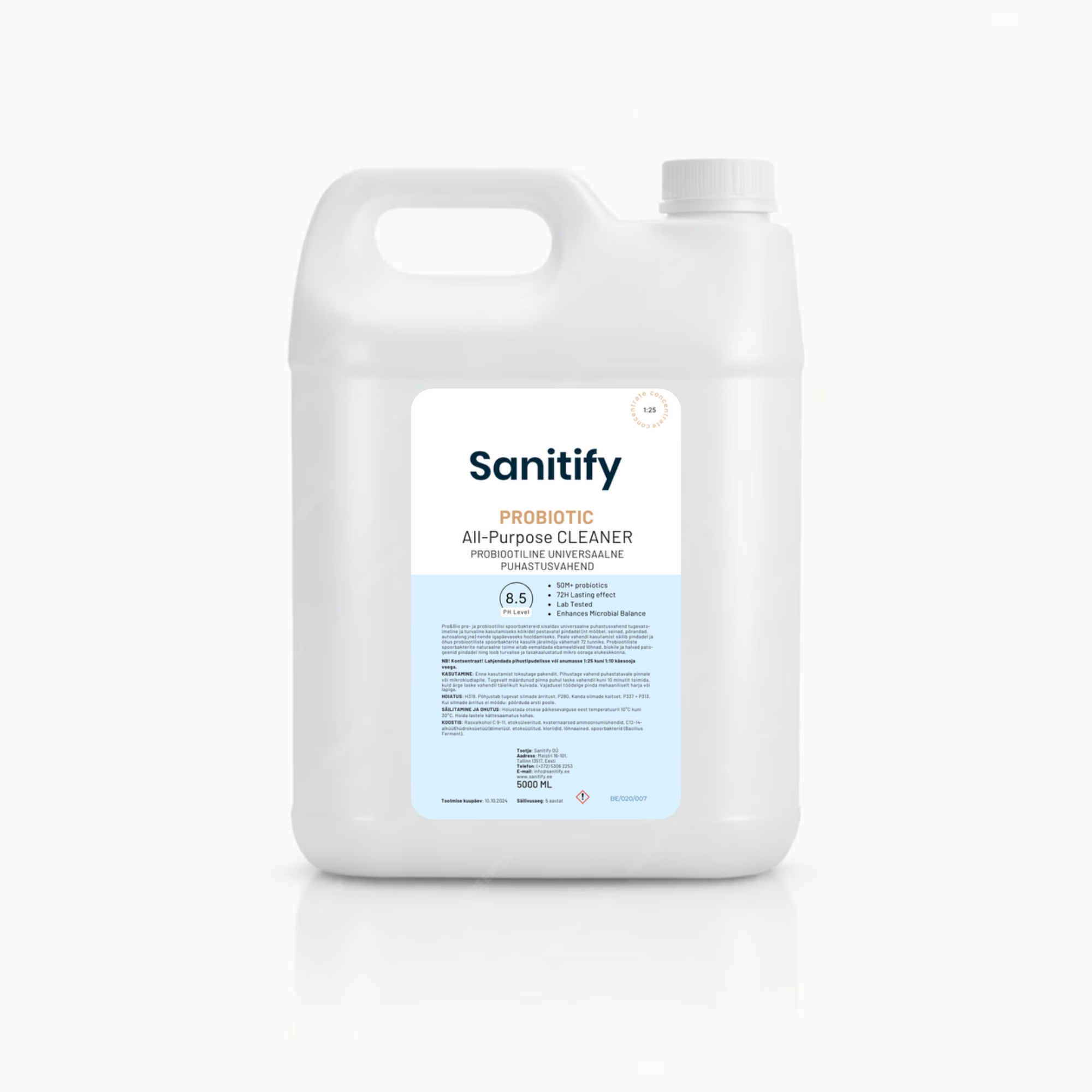
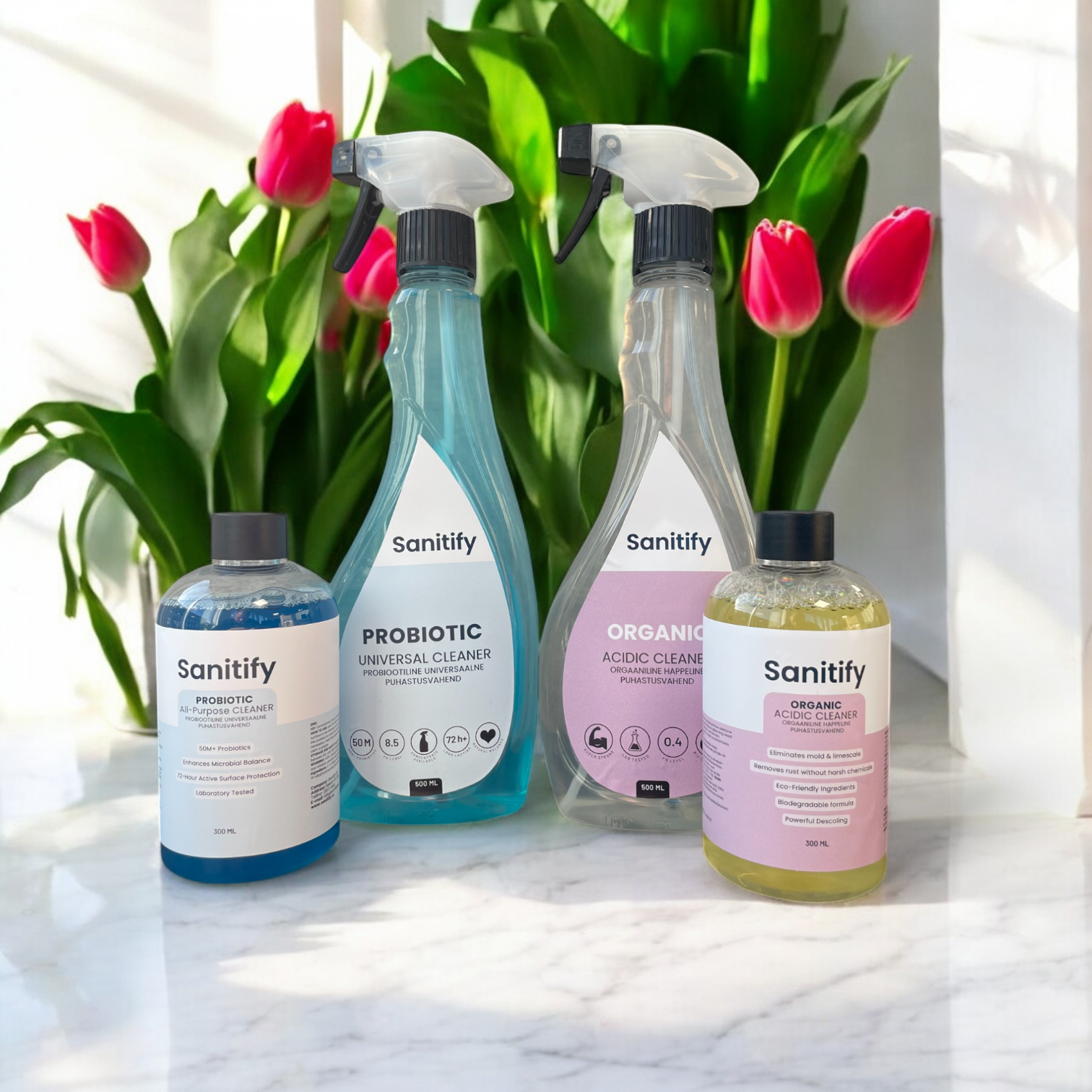
For large-format, practical supplies, Sanitify’s probiotic and biodegradable 5L options can fit well in busy households, rental properties, offices, and cleaning teams. Start with Probiotic Universal Cleaner 5L for daily surfaces, Probiotic Floor Cleaner 5L for washable floors, and Probiotic Sanitary Room Cleaner 5L for bathroom routines.
What Counts as House Cleaning Supplies?
House cleaning supplies include the products, tools, and consumables used to remove dirt, grease, dust, odours, stains, microbes, mineral deposits, and everyday household chaos. That means cleaning agents in bottles, but also cloths, brushes, mops, gloves, buckets, spray heads, vacuum filters, bin liners, and storage labels. A cleaning product without the right tool is like a violin without a bow: technically present, practically annoying.
The phrase house cleaning products usually refers to chemical or biological formulations: all-purpose cleaners, degreasers, bathroom descalers, disinfectants, floor cleaners, glass cleaners, drain cleaners, carpet sprays, and fabric cleaners. Household cleaning supplies is broader. It includes the practical hardware that helps those formulas work.
For SEO shoppers and real humans alike, the winning idea is not to own every cleaner. It is to own the right cleaner for each common job. A good universal cleaner can handle tables, doors, switches, splash marks, cupboard fronts, and many washable surfaces. A dedicated acidic cleaner handles limescale and mineral residue. A floor cleaner is easier to dose and safer for repeated mopping than random soap. A textile cleaner belongs on fabrics, not on stone countertops because somebody once said it smelled nice.
The Three Jobs Every Cleaner Performs
Most cleaning agents do one or more of three jobs. They loosen soil, dissolve soil, or reduce unwanted microbes and odours. Surfactants help water spread and lift grime. Acids dissolve limescale and soap scum. Alkalis cut grease. Enzymes and probiotic approaches can help with organic residues and odour management over time. Disinfectants reduce microorganisms when used according to label contact times.
The trick is matching the job to the product. Greasy hob? You want degreasing power. Shower glass with chalky streaks? Acidic cleaner. Muddy hallway tiles? Floor cleaner and a mop that is not already carrying last Tuesday’s soup incident. Smelly drain? A drain-specific cleaner rather than heroic amounts of perfume.
The Essential Household Cleaning Supplies Kit
A strong home cleaning kit is compact, repeatable, and easy to restock. If it requires a spreadsheet, a ceremonial robe, or a spare garage, it has probably become a hobby rather than a system.
Core Cleaning Products
- All-purpose cleaner: The daily driver for washable hard surfaces such as counters, doors, shelves, handles, and general spills.
- Floor cleaner: Designed for dilution, coverage, and residue control on washable floors.
- Bathroom cleaner: Targets soap scum, body oils, toilet-area residues, and moisture-prone surfaces.
- Acidic limescale cleaner: Useful for hard water deposits on taps, tiles, shower screens, and sanitary ceramics where surface-safe.
- Degreaser or strong cleaner: For kitchen grease, extractor hoods, bins, outdoor furniture, and stubborn grime.
- Textile cleaner: For upholstery, rugs, car seats, curtains, and spot-cleaning fabrics after a patch test.
- Drain cleaner: For odour control and maintenance in sinks, showers, and floor drains.
- Disinfectant: Not for every wipe, but useful after raw meat prep, illness, toilet accidents, and other higher-risk events.
Core Cleaning Tools
- Microfiber cloths: Keep colours separate by zone: kitchen, bathroom, glass, and general dusting.
- Non-scratch scrub pads: For sinks, tiles, and tough marks where abrasive powder would be overkill.
- Detail brushes: Old toothbrushes work, but dedicated grout and tap brushes are less suspicious in the bathroom.
- Mop and bucket or spray mop: Choose washable pads and avoid over-wetting wood or laminate.
- Vacuum cleaner: With clean filters, because a clogged vacuum mostly performs indoor weather.
- Gloves: Protect skin from drying, irritation, hot water, and the spiritual burden of drain hair.
- Spray bottles and labels: Essential if you dilute concentrates. Mystery liquid is not a cleaning strategy.
The Minimalist Version
If you want a smaller setup, keep one universal cleaner, one bathroom or sanitary cleaner, one floor cleaner, one acidic limescale product if you live with hard water, one textile cleaner if you have fabric furniture or pets, and one drain cleaner if odour or slow flow appears. Add microfiber cloths, gloves, a mop, a vacuum, and scrub pads. That covers most homes without building a retail aisle in your cupboard.
Cleaning Agents Explained Without the Lab Coat
Cleaning agents sound more complicated than they are. In plain English, they are ingredients or formulas that help remove unwanted material from a surface. Some are mild and everyday-friendly. Some are specialist and should be used carefully. The label matters: dilution, surface compatibility, dwell time, rinsing instructions, and safety warnings are not decorative poetry.
Surfactant Cleaners
Surfactants reduce surface tension, allowing water to wet surfaces and lift dirt. Most all-purpose cleaners and dish soaps rely on them. They are excellent for everyday grime, fingerprints, food splashes, and general cleaning. Too much surfactant can leave residue, which attracts dirt and makes floors feel tacky. More product is not more clean; sometimes it is just stickier ambition.
Acidic Cleaners
Acidic household cleaning products dissolve mineral deposits such as limescale, rust staining, and soap scum. They are useful in bathrooms, toilets, showers, and around taps. However, acids can damage marble, limestone, some natural stone, cement-based grout if misused, and sensitive metals. Always check compatibility. Sanitify’s Organic Acidic Cleaner 5L is relevant when limescale and mineral residue are the main enemies.
Alkaline and Degreasing Cleaners
Alkaline cleaners are strong against grease, oils, burnt-on residues, and heavy dirt. They belong in kitchens, garages, utility spaces, and commercial-style cleaning routines. They may be too aggressive for delicate finishes, painted surfaces, untreated wood, and some metals. Sanitify’s Biodegradable Super Cleaner 5L is the type of product to consider when ordinary wiping has filed a formal resignation.
Probiotic Cleaners
Probiotic cleaning products use beneficial bacteria or bio-based approaches designed for ongoing cleaning and odour management. They are not magic elves, and they should not be confused with disinfectants unless a label specifically states approved disinfecting performance. Their practical appeal is daily maintenance: surfaces, floors, sanitary areas, drains, and textiles where organic residues and odours are recurring.
For homes that prefer lower-fragrance, routine-friendly supplies, probiotic cleaners can be a sensible part of the cleaning cupboard. They are especially useful when you want cleaning agents that support regular maintenance rather than only emergency-level chemical warfare.
Disinfectants
Disinfectants reduce microorganisms on surfaces when used correctly. Correctly is doing a lot of work here. Many require pre-cleaning, enough wet contact time, and no immediate wiping dry. Use disinfectants for specific hygiene events: raw meat juices, illness, toilet contamination, or high-touch surfaces during infection season. Using disinfectant everywhere all the time is usually unnecessary and can create residue, smell, and cost without better everyday cleanliness.
Room-by-Room Guide to House Cleaning Products
Cleaning by room helps prevent product chaos. Each room has its own soil profile. Kitchens are grease and food. Bathrooms are moisture, minerals, soap, and biology. Living rooms are dust, textiles, fingerprints, and snack evidence. Hallways are grit. Utility rooms are lint, detergent residue, and the sock dimension.
Kitchen Supplies
The kitchen needs an all-purpose cleaner for counters and cupboard fronts, a degreaser for hob areas and extractor hoods, dishwashing liquid, microfiber cloths, scrub pads, and a bin-cleaning routine. If you prepare meat or fish, keep a disinfectant for post-prep hygiene and follow label contact time.
For daily kitchen wipe-downs, Probiotic Universal Cleaner 5L is a relevant top pick because it suits broad washable-surface maintenance. For heavy grease, step up to Biodegradable Super Cleaner 5L where the surface allows it. Do not use a strong degreaser on delicate surfaces without testing; the goal is removing grease, not the cabinet’s personality.
Bathroom Supplies
Bathrooms need a sanitary cleaner, toilet brush, limescale remover, grout brush, microfiber cloths, gloves, and ventilation habits. Soap scum and limescale often look like ordinary dirt, but they respond better to acidic cleaning agents than to endless scrubbing. In hard-water areas, a proper acidic cleaner saves wrists and optimism.
Use Probiotic Sanitary Room Cleaner 5L for routine bathroom cleaning. Use Organic Acidic Cleaner 5L for limescale-focused jobs on compatible surfaces. If drains smell, Probiotic Drain Cleaner Concentrate 5L belongs in the maintenance plan.
Floors and Entryways
Floors collect the outside world and distribute it indoors with democratic enthusiasm. The essential supplies are a vacuum, broom or dust mop, washable mop pads, and a floor cleaner dosed correctly. Overdosing floor cleaner leaves residue; under-cleaning leaves grit that scratches surfaces.
Probiotic Floor Cleaner 5L is the relevant Sanitify pick for washable floor maintenance. Use doormats inside and outside entrances, because the cheapest dirt is the dirt you stop before it joins the household.
Living Areas and Bedrooms
Living rooms and bedrooms need dusting tools, microfiber cloths, a vacuum with upholstery attachments, a textile cleaner for spots, and a gentle all-purpose cleaner for high-touch surfaces. Keep electronics cleaning separate: screens need manufacturer-safe cloths and sprays, not bathroom cleaner with main-character energy.
For upholstery, rugs, fabric chairs, and car interiors, Probiotic Textile Cleaner 5L is the relevant Sanitify option. Patch test first. Fabrics are dramatic; a small hidden test prevents a large visible regret.
Drains, Bins, and Odours
Odour control is often cleaning plus airflow plus moisture management. Spraying fragrance over the problem is like putting a hat on a raccoon and calling it staff. Clean the residue, dry the area, empty bins frequently, and maintain drains. For drains, use a dedicated product such as Probiotic Drain Cleaner Concentrate 5L. Avoid mixing drain products with bleach, acids, or other chemicals.
How to Choose Household Cleaning Products
The best household cleaning products are not automatically the strongest, the newest, or the most aggressively scented. Choose by fit. The right question is: what surface, what soil, what frequency, what safety requirements, and what result?
1. Match Product to Surface
Stone, wood, laminate, stainless steel, glass, ceramic, painted walls, vinyl, textile, and rubber all react differently. Acidic cleaners can damage natural stone. Abrasives can scratch glossy surfaces. Strong alkalines can dull finishes. Solvent-heavy products can affect plastics. Read labels and test hidden areas when unsure.
2. Match Product to Soil
Food grease needs degreasing. Limescale needs acid. Dust needs removal, not perfume. Organic odours may need repeated cleaning and drain or textile treatment. Dirt type matters more than product category slogans. A bathroom descaler is brilliant on limescale and silly on cooking oil.
3. Consider Concentrates and 5L Formats
Large-format cleaners can reduce packaging per use and improve value, especially for families, shared homes, holiday rentals, small businesses, and anyone who cleans more than one sink per lunar cycle. Concentrates require accurate dilution and labelled bottles. If you will not label diluted products, choose ready-to-use formats or become a cautionary tale.
4. Look at Fragrance and Sensitivity
Fresh scent is not the same as clean. Strong fragrance can be unpleasant for children, pets, migraine sufferers, and fragrance-sensitive guests. Where possible, choose products with practical scent levels and ventilate while cleaning. Gloves are sensible even with milder cleaning agents because repeated exposure to water and surfactants can dry skin.
5. Avoid Product Mixing
Never mix bleach with acids, ammonia, drain cleaners, vinegar, toilet cleaners, or mystery liquids. Also avoid combining different drain cleaners. Dangerous gases and heat reactions are not household hacks; they are emergency-room auditions. Use one product at a time, rinse if instructed, and store chemicals upright with caps secure.
Honest Sanitify Product Placement: Best Fits by Use Case
Sanitify should not be the answer to every cleaning question. Sometimes the answer is a dry microfiber cloth, a vacuum filter replacement, or admitting the sponge should have retired in 2022. But Sanitify’s 5L products are genuinely relevant for people who want practical, refill-friendly household cleaning supplies for recurring jobs.
Top Pick 1: Daily Multi-Surface Cleaning
Probiotic Universal Cleaner 5L is the most broadly useful option for everyday washable surfaces. It fits kitchens, utility areas, doors, handles, tables, cupboards, and general hard-surface maintenance. Choose it when you want one dependable cleaner rather than six half-empty bottles arguing under the sink.
Top Pick 2: Floors in Busy Homes
Probiotic Floor Cleaner 5L is the sensible choice for regular floor care. It is especially relevant if you mop frequently or maintain larger spaces. Use the recommended dilution and avoid over-wetting sensitive floors.
Top Pick 3: Bathrooms and Sanitary Areas
Probiotic Sanitary Room Cleaner 5L earns its spot for routine bathroom cleaning. Pair it with Organic Acidic Cleaner 5L when limescale is the main issue, and use Probiotic Drain Cleaner Concentrate 5L when drain odours need ongoing attention.
Specialist Picks
Biodegradable Super Cleaner 5L is best treated as the stronger tool for heavy grime, greasy areas, and stubborn dirt where surfaces tolerate it. Probiotic Textile Cleaner 5L is the fabric-focused option for upholstery, rugs, car interiors, and spot cleaning after testing.
Common House Cleaning Supplies Mistakes
Owning Too Many Products
More bottles do not equal more cleanliness. They often create duplication, confusion, expired stock, and forgotten half-used products. A focused kit cleans faster because you know what to reach for.
Using Disinfectant as a General Cleaner
Disinfectants are useful, but many surfaces simply need cleaning. Soil can interfere with disinfection, and contact time matters. Clean first when required, disinfect when needed, and avoid turning every breakfast crumb into a biohazard event.
Overdosing Concentrates
Too much cleaner wastes money and leaves residue. Follow dilution instructions. If floors feel sticky after mopping, the problem may be product buildup rather than dirty floors.
Scrubbing Before Chemistry Works
Many cleaning agents need dwell time. Spray, wait as directed, then wipe. Immediate scrubbing can be harder and less effective. Patience is a cleaning tool, though admittedly a boring-looking one.
Ignoring Tools
Dirty cloths spread dirt. Old mop heads create odours. Vacuum filters reduce suction when clogged. Maintain tools as part of the cleaning system.
A Simple Weekly Cleaning Supplies Routine
Use a daily, weekly, and monthly rhythm. Daily: wipe kitchen counters, clean spills, manage dishes, ventilate bathrooms, and sweep visible grit. Weekly: clean bathrooms, vacuum floors, mop washable areas, dust surfaces, empty bins, and refresh textiles if needed. Monthly: descale taps and shower screens, clean drains, wash mop heads, inspect cleaning stock, and replace tired cloths.
This routine keeps household cleaning supplies moving instead of ageing quietly in a cupboard. It also prevents deep-clean marathons, which are usually just delayed maintenance wearing dramatic shoes.
FAQs About House Cleaning Supplies
What are the most important house cleaning supplies?
The most important house cleaning supplies are an all-purpose cleaner, bathroom cleaner, floor cleaner, limescale cleaner if needed, microfiber cloths, scrub pads, mop, vacuum, gloves, and bin bags. Add textile, drain, degreasing, or disinfecting products based on your home.
What is the difference between cleaning products and cleaning agents?
Cleaning products are the finished items you buy, such as sprays, concentrates, powders, and liquids. Cleaning agents are the active types of ingredients or formulas that do the work, such as surfactants, acids, alkalines, enzymes, solvents, or disinfectants.
Can one all-purpose cleaner clean the whole house?
One all-purpose cleaner can handle many washable hard surfaces, but it should not replace specialist products for limescale, heavy grease, drains, textiles, delicate stone, or disinfection events. Think of it as the main tool, not the entire toolbox.
Are probiotic household cleaning products worth it?
Probiotic household cleaning products can be worth it for routine maintenance, odour management, and frequent cleaning. They are most useful when used consistently and according to the label. They should not be treated as disinfectants unless specifically certified and labelled for that purpose.
How should I store household cleaning supplies safely?
Store cleaning supplies upright, sealed, labelled, and away from children, pets, heat, and food. Keep incompatible products separate, especially bleach, acids, ammonia, and drain cleaners. Never store diluted concentrates in unlabelled bottles.
What cleaning supplies should pet owners keep?
Pet owners should keep an all-purpose cleaner, textile cleaner, odour-focused cleaner, vacuum with strong filtration, washable cloths, enzyme or probiotic-style maintenance products where suitable, and gloves. Clean accidents quickly and patch test textile products.
How often should I replace cleaning cloths and sponges?
Replace sponges frequently, especially if they smell or break down. Wash microfiber cloths after use and retire them when they lose absorbency or become rough. A clean cloth is one of the cheapest upgrades in household cleaning.
Final Takeaway
The best house cleaning supplies are practical, surface-safe, and easy to use correctly. Build around a universal cleaner, floor cleaner, bathroom cleaner, limescale solution, stronger cleaner for heavy grime, textile cleaner where needed, drain maintenance, and good tools. Keep the kit lean, label everything, avoid mixing products, and let each cleaning agent do the job it was designed to do.