Probiotic Cleaning and Mold: Results of Two Field Studies
Buses and a Tallinn school were cleaned with probiotic cleaner only. See the before-and-after mold counts, how the tests were run and what they mean.
Does probiotic cleaning make a real difference to mold? Two field tests – on buses and in a school – used only the probiotic cleaner, with surface samples taken before and after.
Two field studies: probiotic cleaning only
Neither test used an acidic cleaner – the surfaces were cleaned with the probiotic cleaner alone.
Buses · January 2019
Buses: 20 days with Sanitify probiotic spray
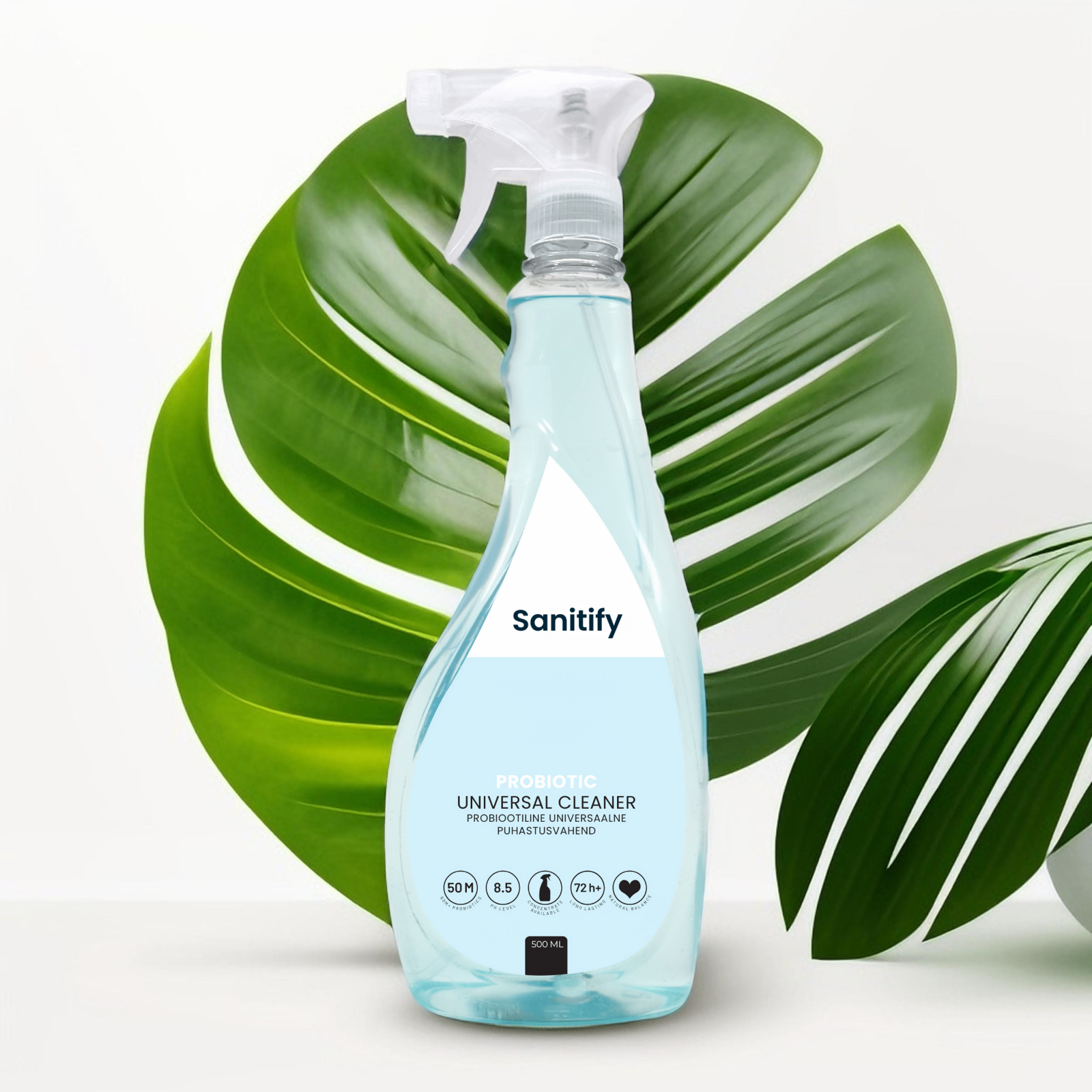
Bus surfaces were cleaned only with Sanitify probiotic spray. The same three spots were sampled before the cleaning period and again 20 days later, and an independent laboratory counted the yeasts and molds (ISO 7954).
| Before | After 20 days | |
|---|---|---|
| Rear seat, right side | 92,000 | about 150 |
| Driver's cabin, rear corner | 380,000 | under 100 |
| Second door, left corner | 360,000 | about 500 |
Yeasts and molds per 100 cm² surface sample (colony-forming units).
School · Nov–Dec 2021
School: 26 days with probiotic cleaning only
Three adjacent rooms in a Tallinn school – a WC, a washroom and a corridor – were cleaned only with the probiotic cleaner (3% solution, twice a week). Samples were taken before the test, halfway through and at the end.
| Before | Day 15 | Day 26 | |
|---|---|---|---|
| Washroom wall | 4,700 | 5 | 1 |
| Corridor floor | 3,500 | 30 | 10 |
| WC floor | Too many to count | 50 | 2 |
Mold colonies per surface sample. The testers note that a surface can't be made completely mold-free while spores keep arriving from adjacent rooms.
What the results mean
The probiotic cleaner washes the surface and leaves beneficial bacteria behind. They feed on the soap residue and dirt that mold lives on, so mold has a harder time settling again.
In both tests the counts fell sharply within the first two to three weeks, and in the school test they kept falling through the second half of the period.
How to use it at home
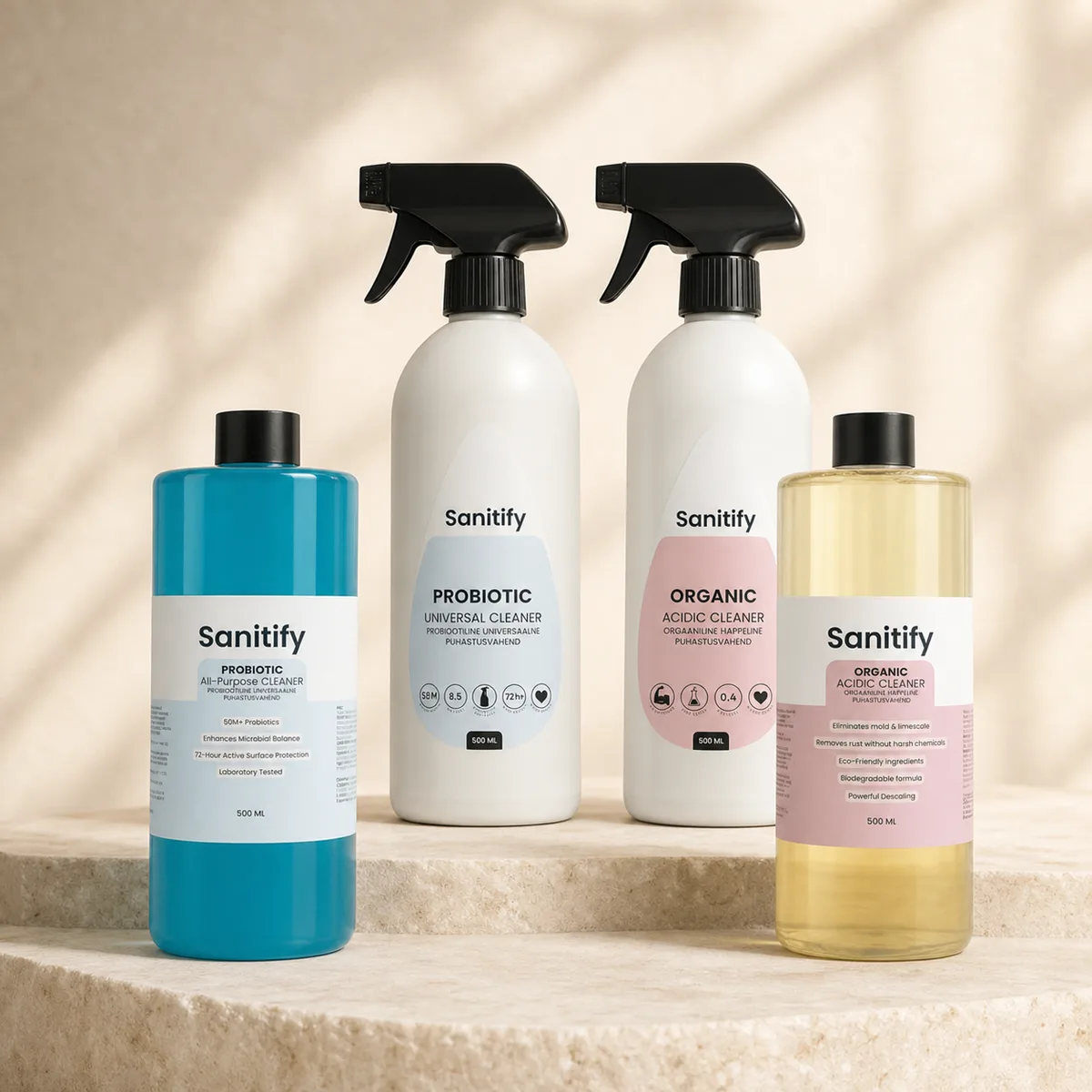
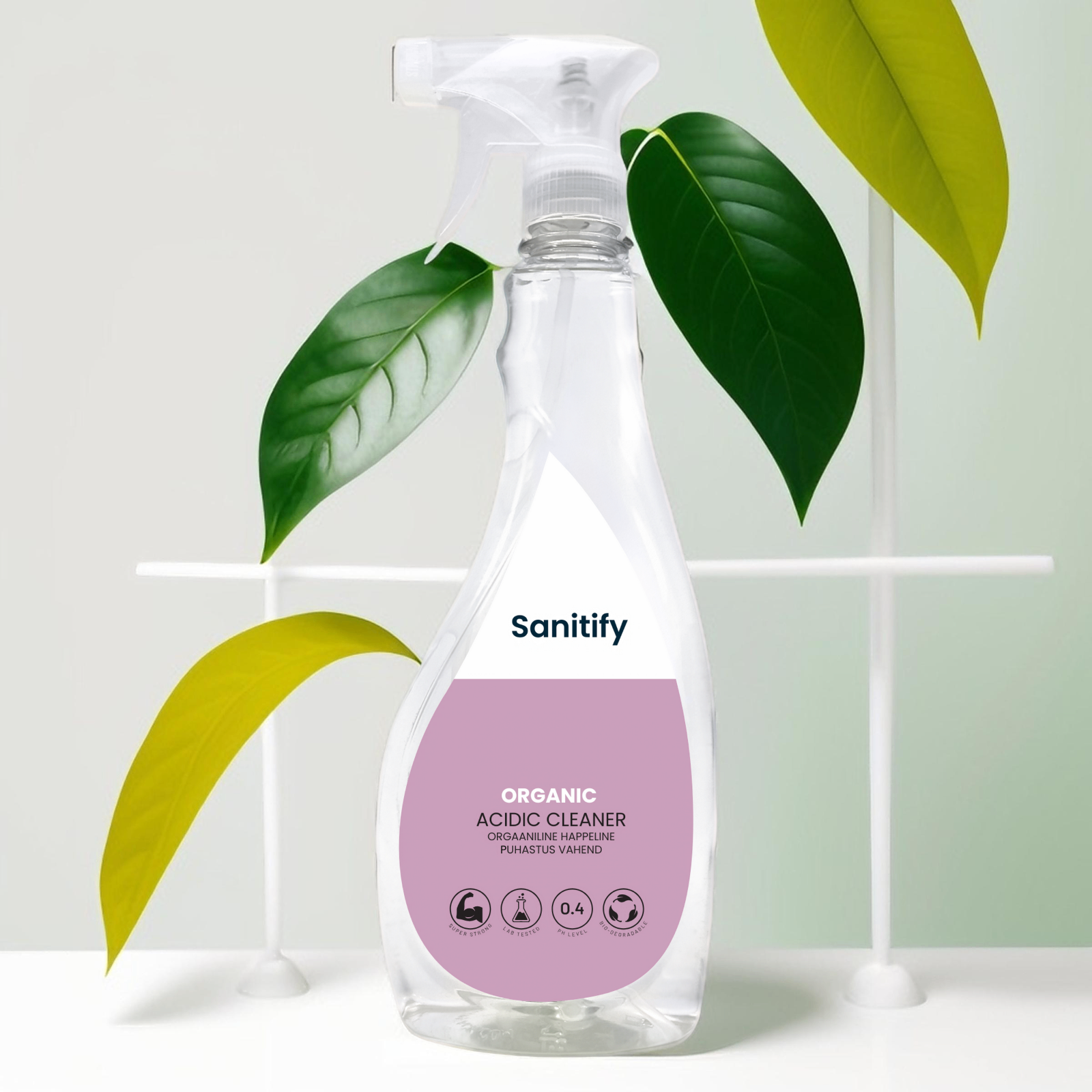
For visible mold stains and limescale, start with the acidic cleaner – it removes what is already on the surface in minutes. Then wash regularly with the probiotic cleaner for the lasting result. Probiotic cleaning on its own also works; it just takes a few days longer.
Probiotic spray, 4 × 500 ml → Cleaning set: acidic + probiotic →
Limitations
These are field tests in a real vehicle and a real building, not controlled laboratory trials, and the reports do not include a statistical analysis. Moisture still matters: if a surface stays wet, mold will keep coming back.
Recommended Sanitify products
EU-made probiotic cleaning system. Biodegradable, safe for kids and pets.