
Indoor Air Pollutants at Home: Dust Mites, Dander & VOCs
Dust mites, pet dander, and VOCs are the 3 most common indoor pollutants at home. Here is how each works and the real fix for each, backed by sources.
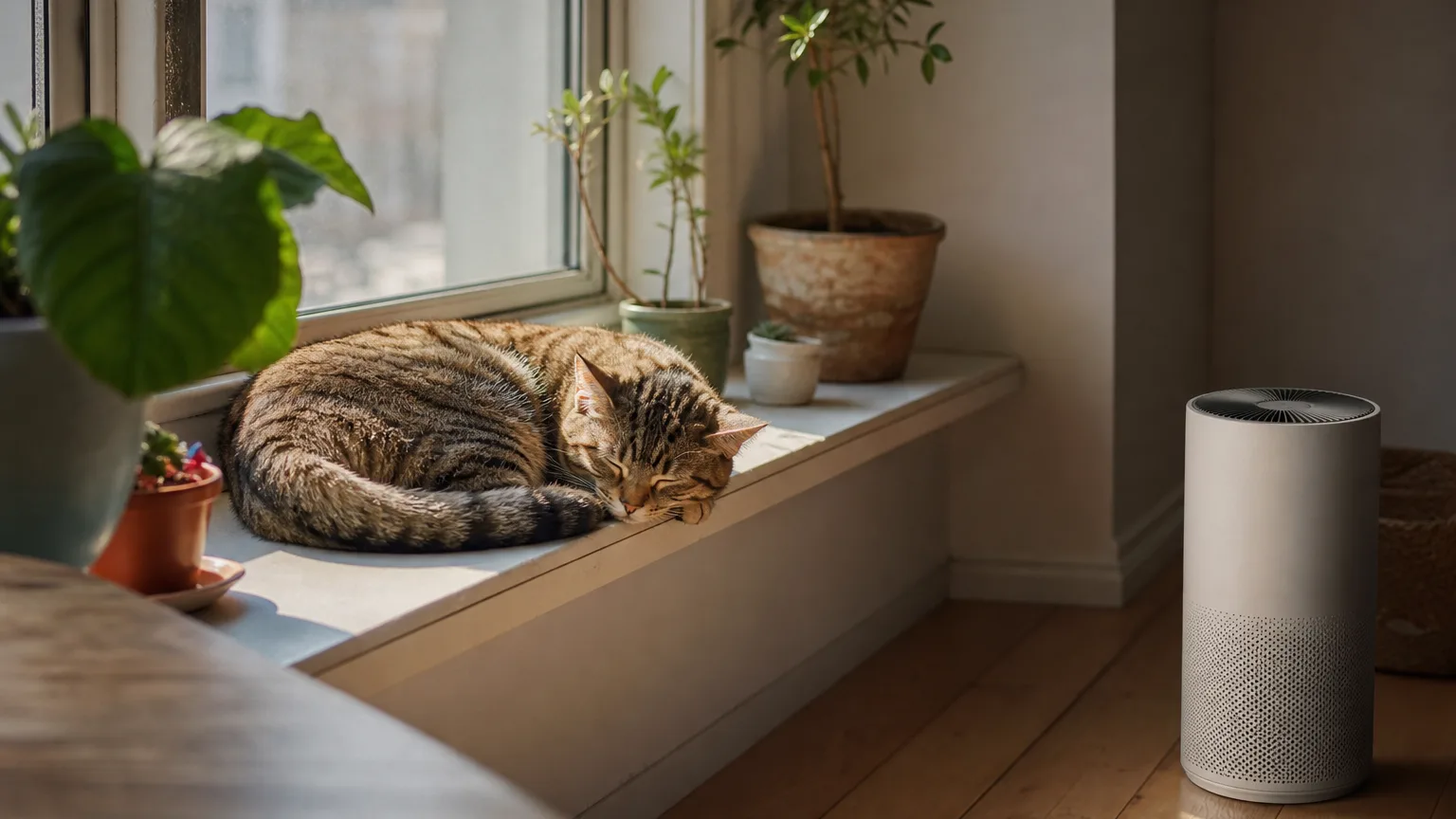
Wake up stuffy, itch your eyes by 9 a.m., sneeze through your own living room. You've probably blamed "the air" in some vague way and left it there. But it's not one problem. It's three, and each one needs a completely different fix.
What's Actually Floating in Your Home's Air
Here's the uncomfortable part: the air inside your house is very likely dirtier than the air outside it. The EPA has found indoor air can run 2 to 5 times more polluted than outdoor air, and in some homes, up to 100 times worse. That's not a typo. Given that most of us spend around 90% of our time indoors, that gap matters more than any outdoor air quality index ever will.
What's actually in there? Dust mites. Mold. Pet dander. A cocktail of volatile organic compounds — VOCs like benzene, toluene, xylenes, and formaldehyde. Particulate matter. Sometimes secondhand smoke. Many of these are recognized asthma triggers, not just nuisances. We've mapped the fuller picture of these invisible threats and what to do about them in our deep dive on the invisible dangers hiding in your home's air, but for now, let's focus on the three you're most likely dealing with right now, today, in the room you're sitting in.
If you want the short version before you read further: air purification done right isn't one gadget doing one job. It's layered filtration built for exactly this kind of mixed threat. Keep that in mind as we go through each enemy, because the fix for one won't touch the other two.
Enemy #1 — Dust Mites
Dust mites are microscopic. You will never see one, and that's precisely why people underestimate them. They live in warm, humid pockets of your home: bedding, upholstered furniture, carpet fibers. And they eat dead human skin cells, which every one of us sheds constantly whether we like it or not. It isn't the mites themselves that set off your allergies, either. It's their waste particles, and those trigger sneezing, a runny nose, and asthma flare-ups in sensitive people.
Humidity is the lever that controls them, and the number matters. Dust mites thrive at 70-80% relative humidity. Between 50 and 60% RH, conditions are already "bothersome" for anyone trying to keep populations down. Above 60%, it's genuinely bad. Get your home below roughly 40-50% RH and hold it there for a sustained stretch, and the mites start dying off. The American Academy of Allergy, Asthma & Immunology backs this up directly: keep indoor humidity under 50% using a dehumidifier or air conditioner if you're serious about dust mite control.
So what actually works?
- Wash bedding weekly in water at 54°C or hotter. Mites and their allergens don't survive that heat.
- Use allergen-proof encasements on mattresses and pillows.
- Vacuum carpet and upholstery regularly with a HEPA-filtered vacuum, not a standard one that just recirculates the fine particles back into the room.
- Run a dehumidifier or AC to keep RH in that 40-50% range.
- Add a HEPA air purifier to catch what settling and vacuuming miss: the waste particles small enough to stay suspended in the air you're breathing right now.
Dust mites are a moisture problem wearing an allergy costume. Fix the humidity, and you've done more than half the work. For the deeper mechanics of how allergen exposure actually builds up in a home, this breakdown of probiotics and allergens is worth a read.
Enemy #2 — Pet Dander
Here's something most pet owners get wrong: dander isn't fur. It's microscopic flakes of dead skin, mixed with proteins from saliva and urine that cling to those flakes. You can bathe your dog every week and still have an allergen problem, because the dander sheds constantly and settles onto every soft surface in the house: furniture, carpet, curtains, your bedding. It doesn't stay put near the pet. It travels.
That stickiness is exactly why pet allergen is so hard to eliminate through cleaning alone. It embeds itself in fabric and fiber, and vacuuming stirs some of it right back into the air before it resettles somewhere else.
There's real, published research behind what actually helps. A peer-reviewed study found that HEPA air cleaners reduce airborne dog allergen, specifically Can f 1, the primary dog allergen protein, in homes where dogs live. The American College of Allergy, Asthma & Immunology recommends HEPA filtration to cut exposure to pet allergens, especially airborne dander in bedrooms. It's worth being honest here: the results are real, but modest. A HEPA filter is not a cure. It's one part of managing exposure, not a switch you flip once and forget.
Practical steps that stack with filtration:
- Vacuum with a HEPA-filtered machine at least twice a week in homes with pets.
- Wash pet bedding on the same hot-wash schedule you'd use for your own sheets.
- Groom pets outside when weather allows, so loose fur and dander don't scatter across your living room floor.
- Run a HEPA air purifier rated for fine particles. Dander flakes and their attached proteins sit in the 0.1 to 0.3 micron range, right where true HEPA H13 filtration does its work, smaller than most standard filters ever catch.
None of this makes your home allergen-free. It makes it manageable, which for most people living with a cat or dog is the realistic goal. And honestly, that's a good goal. Fewer allergen particles in the air you're breathing at 2 a.m. is a real, measurable win, even if the pet stays on the couch.
Enemy #3 — VOCs
VOCs are the enemy you can't see and often can't even smell until the exposure's already happened. Volatile organic compounds (benzene, toluene, xylenes, formaldehyde among them) off-gas from things you probably don't think twice about: paint, cleaning products, new furniture, pressed-wood cabinetry held together with formaldehyde-based adhesives, carpeting, vinyl flooring. Basically, anything manufactured with solvents or resins is a candidate.
Normal indoor VOC levels already run 2 to 5 times higher than outdoor air. That's the baseline. But during and right after activities like painting a room or deep-cleaning with certain products, indoor VOC concentrations can spike up to 1,000 times higher than usual. Formaldehyde deserves particular attention. It's classified by the EPA as a probable human carcinogen under prolonged exposure, and it's baked into an enormous amount of everyday furniture and building material.
Here's the part that trips people up: HEPA filters do nothing for VOCs. Nothing. HEPA is built to trap solid particles (dust, pollen, dander) by physically catching them in a dense mesh of fibers. VOCs aren't particles. They're gas molecules, and they pass straight through a HEPA filter like it isn't there. If odors, off-gassing, or chemical smells are your concern, you need activated carbon, which works through adsorption. It chemically binds gas molecules to its surface rather than filtering them out mechanically, a completely different mechanism for a completely different kind of pollutant. Curious how fermentation-based cleaning approaches this from the source side rather than the filtration side? Here's how probiotic Bacillus-based cleaners can affect indoor air quality.
What actually reduces VOC exposure:
- Ventilate. Open windows, especially after cleaning or bringing new furniture home.
- Choose low-VOC or zero-VOC paints and cleaning products where you have the option.
- Let new furniture off-gas in a garage or spare room before it enters your main living space, if you can.
- Use activated carbon filtration to actively pull VOCs out of the air you're already breathing indoors.
Why One Filter Doesn't Fight All Three
This is the part nobody tells you when you buy a single-stage air purifier: dust mites, pet dander, and VOCs are three physically different problems, and no single filter material handles all three. A basic pre-filter catches large debris (hair, lint, big dust clumps) but nothing fine enough to matter for allergies. HEPA catches particles. Activated carbon catches gases. You need both, layered, plus something to catch the coarse stuff before it clogs the finer stages.
This is exactly why Sanitify built the Clean Air System around four stages instead of one. A mesh pre-filter catches the big stuff first. Then true HEPA H13 removes 99.97% of particles down to 0.1-0.3 microns: dust mites, pollen, pet dander, mold spores, all of it. After that, activated carbon absorbs odors, VOCs, smoke, and off-gassing that HEPA physically cannot touch. And then there's a fourth stage most air purifiers skip entirely, a Microbiome Balancer probiotic infusion that helps suppress mold and helps reduce allergen load for up to 72 hours between cycles. It's not a cure, and it's not a medical device. Think of it as a maintenance layer for the gap between one filtration pass and the next.
Mold is part of the allergy picture in a lot of humid homes, quietly, without anyone noticing until it's established. If that's you, natural mold removal without bleach or harsh chemicals is worth reading alongside this. And if you want the fuller case for why probiotic-based air systems represent a different category from bare HEPA boxes, we've laid that out here.
At €299, the Clean Air System isn't the cheapest purifier on the market. It's built to be the only one you need for all three enemies at once, instead of three separate gadgets doing one job each. It's app-connected, runs under 25dB so it won't fight with your sleep, and covers roughly 40 square meters, which is enough for a bedroom or a mid-sized living room without stretching thin.
A Room-by-Room Battle Plan
Different rooms, different priorities. Treat your home like it has zones, because it does.
Bedroom. This is where dust mites concentrate most: bedding, mattress, pillows, carpet if you have it. Keep humidity between 45 and 55% RH. Run your purifier continuously rather than switching it on and off; a probiotic-stage system needs 1 to 2 weeks of continuous operation in one room to let its microbiome fully establish, so resist the urge to move it around the house looking for faster results. We've written a full breakdown of what bedroom air quality actually requires for better sleep if that's your main concern.
Living room. This is pet dander's home turf: couches, rugs, curtains, all soft surfaces that trap flakes and proteins. Vacuum here more often than anywhere else in the house, and keep the purifier running where your pet spends the most time.
Kids' room or nursery. Lower tolerance for chemical exposure, smaller lungs, more time spent close to the floor where dust settles. Low-VOC furniture and paint matter more here than almost anywhere else in your home. Keep humidity in that same 45-55% range, and don't skip ventilation just because the room is small.
Across all three zones, the humidity target barely moves. Somewhere around 45 to 55% keeps dust mites in check without drying out your skin, sinuses, or wood furniture. That consistency is the whole point. For a broader set of allergy-focused cleaning habits that pair well with any of this, these cleaning tips for allergy sufferers fill in the gaps between purifier cycles.
FAQ
What are the most common indoor air pollutants in a home?
Dust mites, mold, pet dander, and VOCs like benzene, toluene, xylenes, and formaldehyde are the main ones, alongside particulate matter and, in some homes, secondhand smoke. The EPA flags many of these as recognized asthma triggers.
What humidity kills dust mites?
Sustained relative humidity below roughly 40-50% is what starves them out. They thrive at 70-80% RH, and anything above 60% is genuinely bad for control. The AAAAI recommends staying under 50% using a dehumidifier or air conditioner.
Do air purifiers help with pet dander?
Yes, with a caveat. A peer-reviewed study found HEPA air cleaners reduce airborne dog allergen (Can f 1) in homes with dogs, and the ACAAI recommends HEPA filtration for bedrooms specifically. It's real help, not a cure. Pair it with regular vacuuming and hot-washed pet bedding.
What VOCs are found in household cleaning products?
Common ones include benzene, toluene, and xylenes, though the exact mix depends on the product. VOCs also come from paint, new furniture, pressed-wood cabinetry, carpeting, and vinyl flooring.
Can HEPA filters remove VOCs?
No. HEPA filters trap solid particles mechanically, and they have no effect on gas molecules like VOCs. You need activated carbon, which adsorbs VOC molecules onto its surface, for that job.
How long does furniture off-gassing last?
There's no single fixed number, but off-gassing runs hottest right after unboxing new furniture or right after painting, which is exactly when indoor VOC levels can spike up to 1,000 times normal indoor concentrations. Ventilating well and letting new pieces air out before they enter your main living space both bring that spike down faster.
Is indoor air really more polluted than outdoor air?
Often, yes. The EPA has found indoor air can be 2 to 5 times more polluted than outdoor air, and in some cases up to 100 times worse. Given that people spend around 90% of their time indoors, that's not a minor detail.
Where do dust mites live in a house?
Bedding, mattresses, upholstered furniture, and carpet: anywhere warm, soft, and humid enough to hold onto shed skin cells, which is their entire food source.
What is the best air purifier for allergies and pet dander?
Look for true HEPA H13 filtration capable of capturing particles down to 0.1-0.3 microns, paired with activated carbon for odors and VOCs. The Sanitify Clean Air System (€299) combines both with a mesh pre-filter and a probiotic infusion stage that helps reduce allergen load and inhibit mold between cycles. It's a genuinely layered answer, not a single-filter shortcut, and at this point it's the one we'd point a friend toward if they asked.
Do probiotic air purifiers actually work?
The probiotic stage isn't a replacement for HEPA and carbon filtration. Think of it instead as the maintenance layer that works between them. In Sanitify's system, it helps suppress mold and helps reduce allergen load for up to 72 hours after each cycle. It needs 1-2 weeks running continuously in one room for its microbiome to establish properly, and it makes no claim to cure anything or eliminate allergens entirely. It's a supporting layer, not a silver bullet, but it's a layer most air purifiers skip.