For years, I chased that “clean home” feeling. I’d spray harsh chemicals and wipe down every surface, yet I’d still wake up with that frustrating, heavy air feeling—stuffy nose, a touch of brain fog, and a general lack of energy. I thought I was doing everything right. But it turned out I was only addressing half the problem, fighting an invisible battle I couldn’t win.
The air inside your home is your most vital, yet most ignored, life support system. We’ve become obsessive about filtered water and organic food, but we forget the one thing we consume most: the air. Scientific advances have finally given us the tools to understand this invisible world, and the findings are profound: Your house isn’t just a structure; it’s a living, breathing ecosystem.
This guide will walk you through mastering that ecosystem. We’ll uncover the hidden threats and reveal the science behind a truly holistic solution, one that protects you from microscopic particles, toxic gases, and even microbial warfare.
Why Is the Air Quality in My Home So Bad?
I learned that air quality is a two-part equation. One part involves the non-living threats: Particulate Matter (PM2.5) and volatile gases (VOCs). That’s where mechanical filtration works wonders. The other part is the one most people entirely miss: the microbial balance, which is essentially a battle between “good” and “bad” bacteria for dominance in your living space.
Why High CO2 Levels Ruin Sleep and Cause Brain Fog
The most critical, yet frequently overlooked, measure of healthy indoor air is Carbon Dioxide (co2). It’s not a pollutant like smoke, but rather a suffocating byproduct of our own breathing. In a sealed bedroom, co2 levels steadily climb as we exhale all night long.
If you struggle with that sluggish feeling, a dull headache, or poor sleep quality, high co2 levels are often the culprit. They subtly but surely impair cognitive function and make restorative sleep impossible. While fresh outdoor air sits around 800 ppm400 \text{ PPM800 ppm(parts per million), indoor levels often soar past 1500 ppm overnight.
The Magic Number: To ensure you wake up sharp and well-rested, aim to keep your bedroom co2 concentration below 800 ppm. Monitoring this is a simple, powerful step toward improving your daily well-being.
This connection between the air we breathe and our very performance is eloquently stated by James Nestor in his essential work, lending authority to the concept:
“No matter how rich, how powerful, how enlightened, or how young we are, it doesn’t matter. We will all be destroyed by our inability to breathe properly. That is, until we learn to breathe properly.”
— James Nestor, Breath: The New Science of a Lost Art
How to Get Rid of Bad Bacteria and Mold in Your Home
For decades, we’ve relied on harsh chemical cleaners to sterilize our homes. But the moment those chemicals evaporate, they create a microbial vacuum. The strongest, most aggressive organisms—usually mold and harmful bacteria—quickly rush in to re-colonize the area, leading to chronic imbalances and persistent problems.
The modern, biological approach offers a smarter defense, showcasing expertise in microbial control.
Probiotics for Air Quality: The Science of Bacillus Ferment
The science of using probiotics for home air quality is built upon the well-established principles of Competitive Exclusion and Bioremediation.
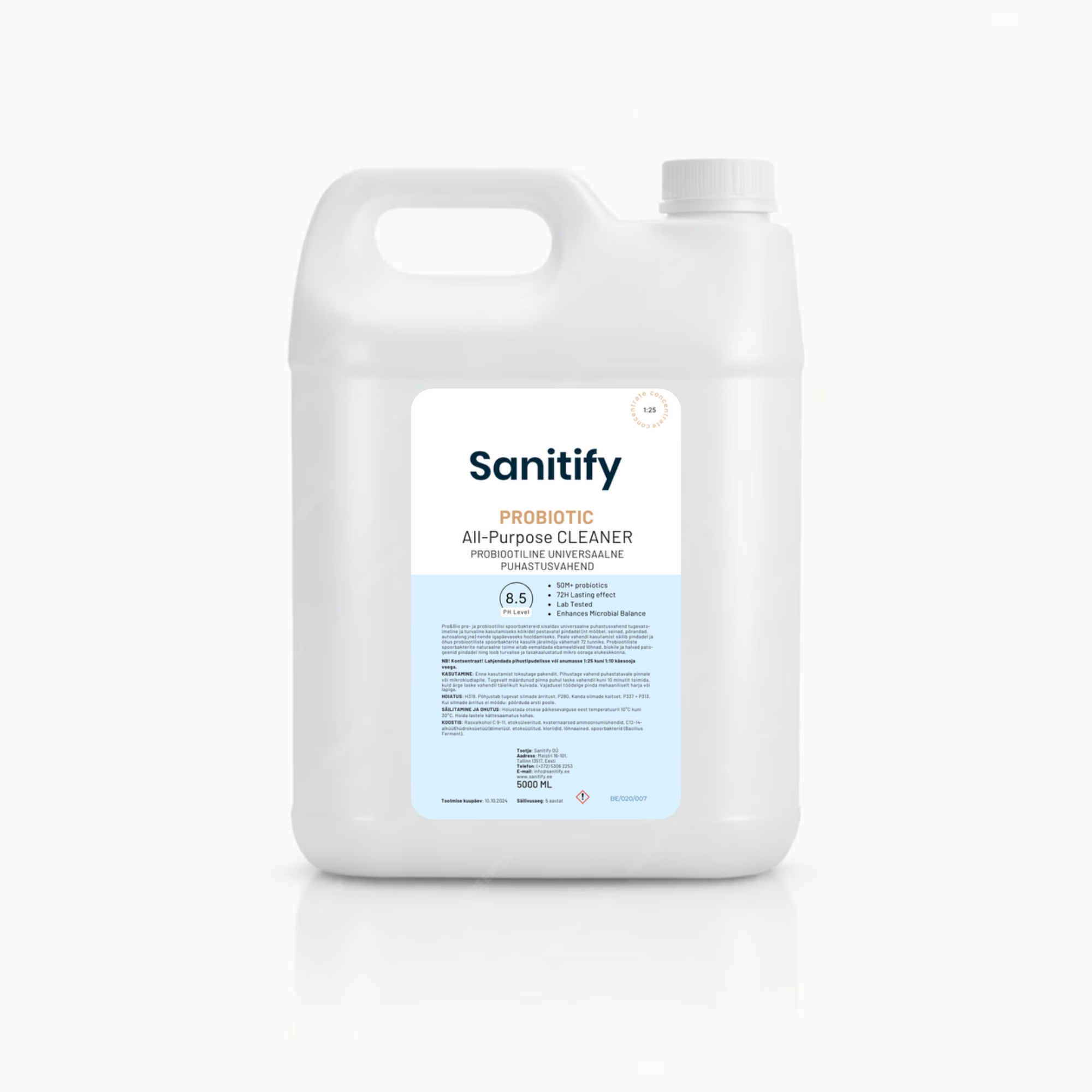
Instead of trying to kill everything (which is impossible), we introduce beneficial, non-pathogenic bacteria, specifically Bacillus ferment strains. When dispersed into the air, these friendly bacteria settle on all surfaces—in carpets, on furniture, and within your air system. Once there, they begin to out-compete the mold and harmful bacteria for their main food source: organic matter (like microscopic dust, dead skin flakes, and pet dander).
By actively removing the fuel for the fire, the probiotics prevent mold and harmful microbes from growing, providing a sustained, biological defense that can last up to 72 hours. It’s the ultimate evolution in home cleanliness: establishing a healthy, balanced ecosystem instead of fighting an unwinnable war for sterility.
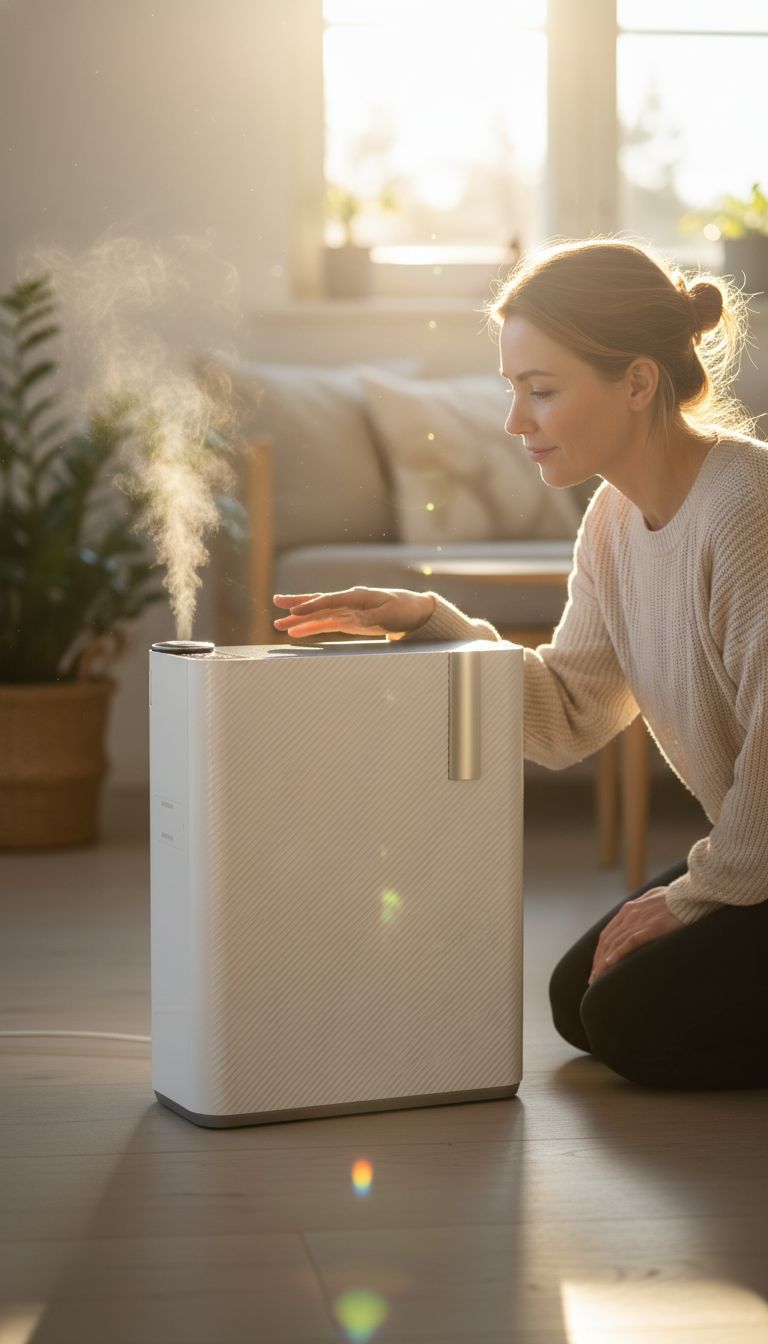
The 4-step system, in one device — Sanitify Probiotic Air Cleaner
Most air purifiers do one or two of the four steps below. Sanitify’s Probiotic Air Cleaner integrates HEPA H13 + activated carbon + humidification + Bacillus Ferment release in a single unit — the only system on the market that doesn’t just trap allergens but actively rebalances your indoor microbiome. Up to 60 m² coverage, designed for bedrooms, nurseries and home offices.
The Best Air Purifier Technology: A 4-Step System Explained
The most effective air care solution must be a synergistic system, offering a multi-pronged approach that builds trustworthiness through comprehensive function. The Sanitify Clean Air System is effective because it tackles air quality on four distinct, scientifically validated fronts: physical filtration, chemical adsorption, microbial balancing, and environmental optimization.
1. Air Purification (HEPA H13, Activated Carbon, and Pre-Filter)
The system’s foundation is its multi-stage filtration, which targets Particulate Matter (800 ppmPM}800 ppm), allergens, smoke particles, and odors.
- Mechanism: HEPA H13 filters are the international gold standard, rated to capture 800 ppm99.97\%800 ppm of particles as small as 800 ppm0.3800 ppm microns. This includes dust, pollen, mold spores, and fine 800 ppmPM2.5800 ppmfrom pollution or smoke. The activated carbon layer then uses adsorption to neutralize gaseous pollutants, such as VOCs and lingering odors.
Reduction of Allergens and Asthma Symptoms
HEPA filtration has been proven in clinical trials to lower indoor allergen levels, such as house dust mites (800 ppmHDM}800 ppm) and pollen, which trigger allergic reactions. Research shows that HEPA air purifiers reduce 800 ppmHDM800 ppmallergens and 800 ppmPM}800 ppm, often leading to an improved quality of life and better asthma control.
Efficacy Against Pet Dander, Hair, and Odors
Pets vs. Purifiers: For pet owners, HEPA filters mechanically capture dander and associated allergens, while the activated carbon layer tackles pet odors, such as ammonia, at a molecular level. Against smoke, the system reduces 800 ppmPM800 ppmfrom sources like wildfires or tobacco. Studies affirm that portable HEPA units significantly cut indoor 800 ppmPM800 ppm levels, reducing exposure that can inflame airways and worsen respiratory issues.
2. Humidification
The built-in humidifier adds moisture to dry indoor air, which is common in heated or air-conditioned spaces that can dry out your skin, mucous membranes, and respiratory tracts.
- Mechanism: Maintaining optimal humidity (target 800 ppm40-60\%800 ppm relative humidity) is crucial. It reduces dryness-related symptoms like irritated eyes and throat, and may help allergies by preventing fine dust from becoming airborne. Furthermore, maintaining this moisture level has been shown to inhibit virus transmission by limiting the viability of airborne pathogens.
3. Air Quality Monitoring
The integrated sensor provides essential real-time feedback on 800 ppmPM800 ppmlevels, humidity, and overall air purity.
- Mechanism: Monitors enable the early detection of pollutants, allowing for proactive adjustments to ventilation or settings. This feature empowers you with data, reinforcing trust in the system and ensuring you maintain air quality improvements consistently.
4. Probiotic Integration (Bacillus Ferment Drops)
This is the system’s unique biological advantage: the probiotic drops create a “protective layer” on surfaces, reducing odors and balancing the home microbiome for up to 72 hours.
- Mechanism: Probiotic sanitation uses Bacillus strains to actively outcompete harmful bacteria and fungi. They inhibit mold growth by starving it of nutrients and physically breaking down the sources of odors and allergens like pet dander. This is how the system sustains a healthier indoor ecosystem long after the fan turns off.
Mold’s Secret Weapon: Why Killing It Doesn’t Work
Mold is a biological problem, not just a cosmetic one.
Mold’s Secret Weapon is its reproductive strategy: airborne spores. If you see visible mold growth, you’ve only found the tip of the iceberg—the main threat is the invisible network of spores floating in your air, constantly seeking a moist, organic surface on which to land.
This is why simply killing mold with bleach or chemical sprays is useless. You eliminate the surface growth, but you leave the underlying organic food source (dust, dead skin, etc.) intact, allowing new spores to immediately recolonize. The probiotic approach is superior because the Bacillus ferment strains consume that very organic matter. By removing the essential food source, they prevent mold spores from taking root and growing into a harmful colony in the first place.
Air Filter Maintenance Myths: When to Replace Air Filters
Many people, hoping to save money, attempt to “clean” their HEPA or Activated Carbon filters. This is a myth, and it is potentially hazardous.
- The Problem: Once a HEPA filter is clogged with microscopic debris, attempting to wash or vacuum it destroys the randomized fiber structure necessary for 800 ppm99.97\%800 ppm capture efficiency. Worse yet, a dirty, damp filter provides an ideal breeding ground for mold and bacteria, effectively turning your purifier into a machine that disperses contaminants.
- The Truth: Filters have a finite lifespan. When your air quality monitor signals a filter change, you must replace it. Timely replacement is the final, non-negotiable step in maintaining a healthy, balanced air ecosystem.
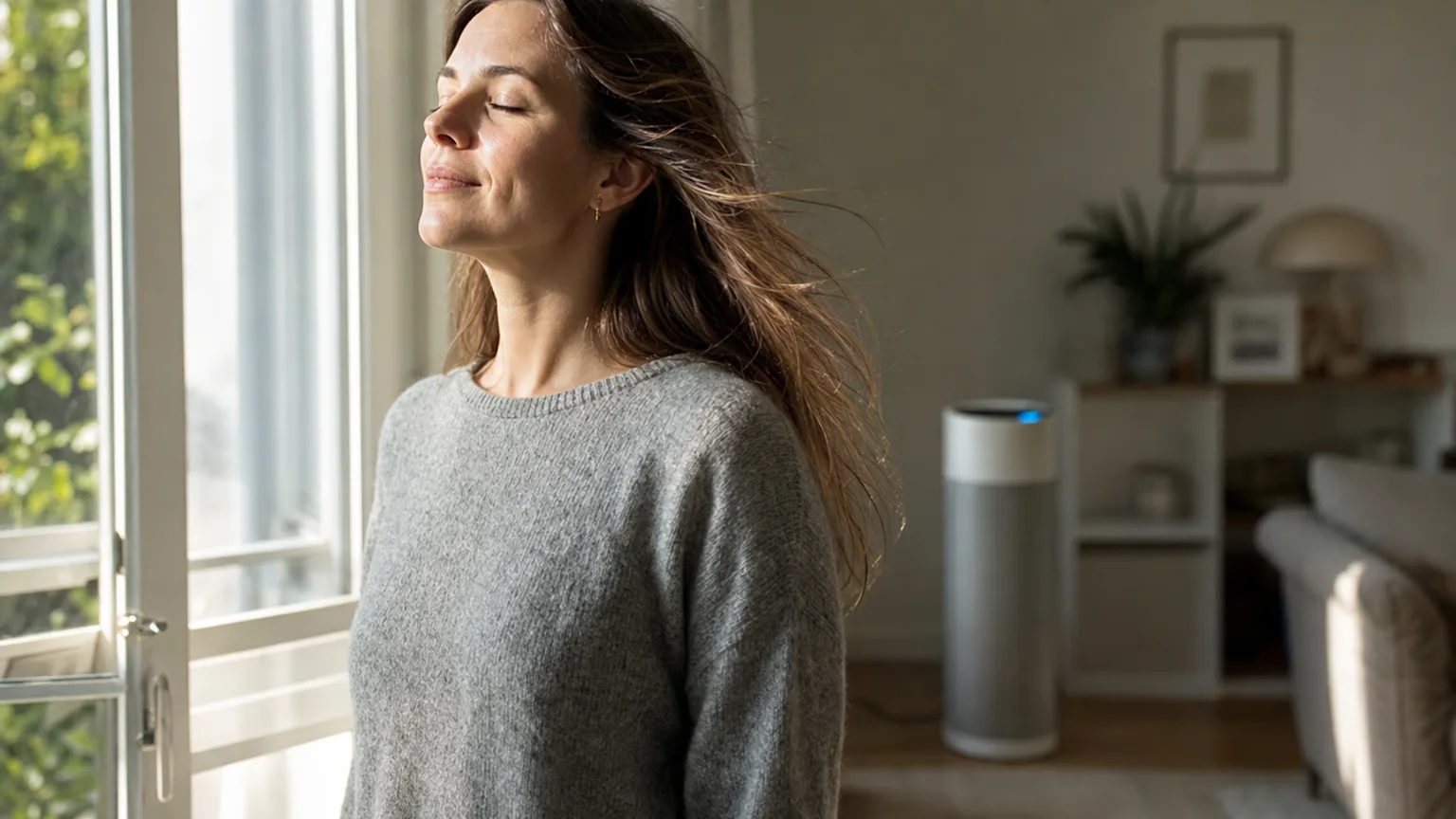
By combining scientifically validated filtration, environmental monitoring, and a unique, long-lasting biological defense, you stop fighting the air in your home and start living in a thriving ecosystem. Take a deep breath, and feel the difference that true, balanced air can make.