
Probiotic Air Purifier vs HEPA-Only: What Actually Cleans Air
HEPA traps what floats past it, then stops. See how a probiotic air purifier keeps working on surfaces for 72 hours, what the science shows, and where each falls short.
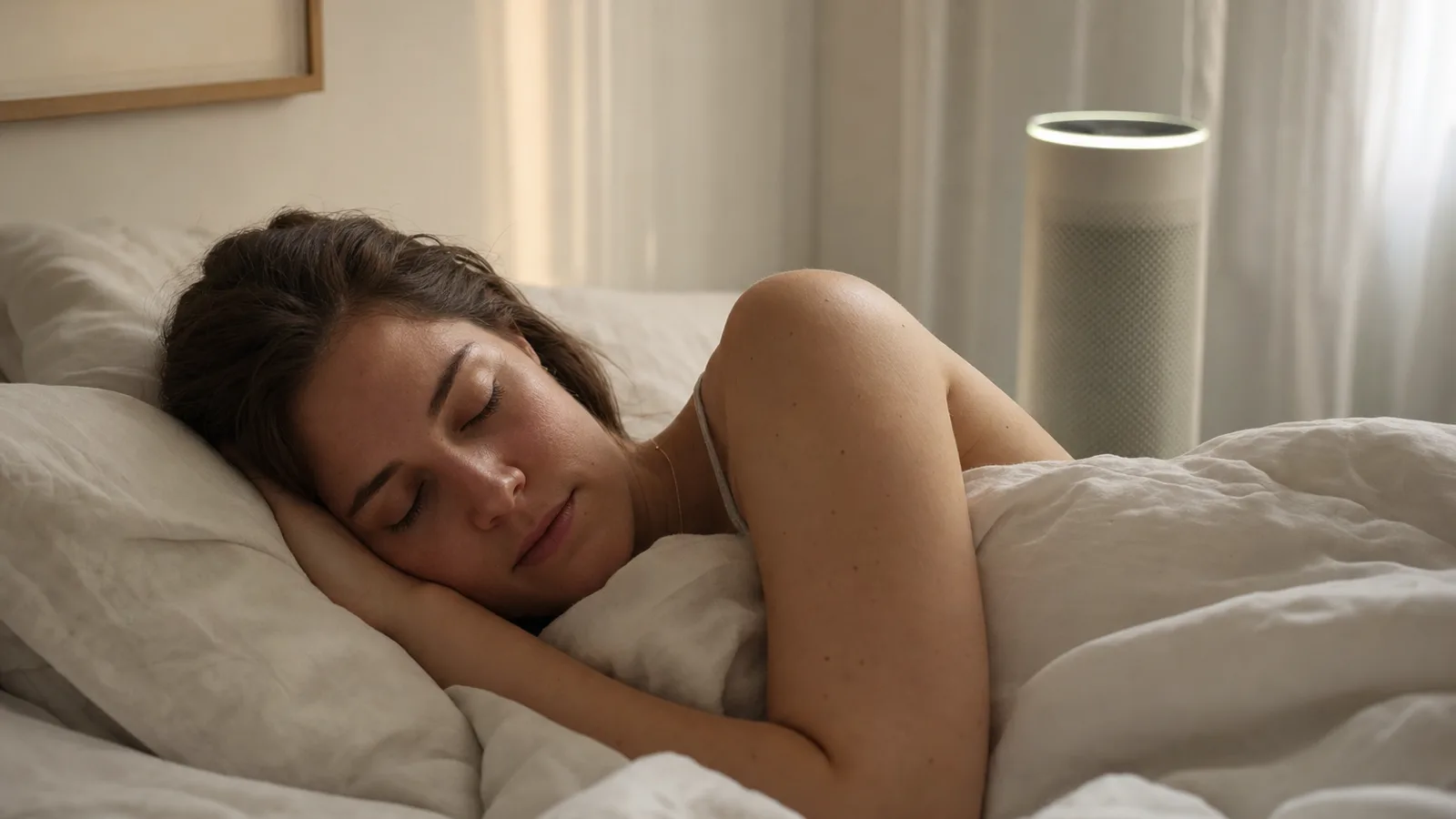
Here is the part no one tells you when you unbox a new air purifier: the moment you switch it off, it stops cleaning.
A HEPA machine only works on the air that physically passes through it. The dust that has already settled on your shelf, the mold spores that have landed behind the wardrobe, the film of grime building on the windowsill — none of that is going through the filter. It is sitting on your surfaces, and it will keep re-launching into the air every time you walk across the room, plump a cushion, or open a door.
That gap between "filtered air" and "clean room" is the whole reason probiotic air purifiers exist. So let's look honestly at what each approach does, what the research actually supports, and where both of them fall short — because the truth is more useful than a sales pitch.
What a HEPA filter is genuinely good at
Give HEPA its due. A true HEPA H13 filter captures 99.97% of particles down to 0.1–0.3 microns — the fine stuff that ordinary filters miss: pollen, dust-mite debris, pet dander, smoke particles, and airborne mold spores. If your problem is hay-fever season or a cat that sheds like it's a full-time job, a HEPA purifier will noticeably lower the particle load in the air you breathe.
Independent guidance is consistent on this. Air purifiers are effective at removing airborne mold spores before they settle and start new colonies, which reduces what you inhale and slows the spread from one room to another (Molekule).
So the machine does real work. The catch is in that one word: airborne.
Where HEPA-only quietly runs out of road
HEPA filters trap what floats through them. They do nothing about three things that matter just as much:
- Settled contamination. Most allergens — dust-mite droppings, dander, mold fragments — spend the majority of their life in settled dust on floors, upholstery, and bedding, not suspended in mid-air (Pure Air Adviser). A purifier can only grab them in the brief window they're airborne.
- Surfaces and existing growth. A HEPA unit cannot remove mold already growing on a wall, and it cannot touch the moisture that let it grow. It filters the symptom, not the source.
- Recontamination. This is the frustrating one. Even after you clean a surface, airborne spores drift back down and re-seed it. Cleaning and filtering are a treadmill: you're always running, the room is never actually "done."
None of this makes HEPA bad. It makes HEPA incomplete. It handles the air and ignores everything the air eventually lands on.
The probiotic idea: don't just filter — repopulate
A probiotic air purifier starts with the same HEPA stage, then adds one more step. After the air is filtered, the unit diffuses beneficial Bacillus cultures into the room through an ultrasonic mist. Those microbes settle onto surfaces alongside the dust — and instead of leaving bare surfaces open for whatever lands next, they occupy the space.
The mechanism has a name: competitive exclusion. Beneficial bacteria colonise a surface, consume the resources on it, and leave less room and less food for mould and problem bacteria to establish. It's the same ecological principle behind gut probiotics, applied to your windowsill.
The Sanitify Clean Air System is built around exactly this two-step logic — HEPA first, probiotics second — and it's the product the rest of this guide keeps coming back to, because it's a clean example of the category done properly. You can see the full probiotic air purification system here.
What the science actually says (the honest version)
This is where a lot of probiotic marketing overreaches, so here's the careful version.
The laboratory evidence is genuinely encouraging. In controlled co-cultivation tests, a Bacillus spore consortium inhibited the growth of Gram-positive bacteria, Gram-negative bacteria, and fungi by up to 99.9% (npj Biofilms and Microbiomes, Nature). Probiotic cleaning has also been shown to shift the surface microbiome away from pathogens over time rather than just knocking numbers down for an hour the way a disinfectant does.
But good research is honest about its limits, and so should we be. One well-designed study found that a diverse microbiome — the kind plain soap and water leaves behind — sometimes competed against pathogens better than a single-strain probiotic monoculture, which suggests microbial diversity matters as much as sheer cell numbers (MDPI Microorganisms). And reviewers note that while competitive exclusion is well established in labs, the evidence for it working on ordinary indoor surfaces at home is still building.
The takeaway: probiotic air care is a scientifically grounded approach, not a magic wand. It extends what a purifier does onto surfaces and across time — it does not "sterilise" your home, and any product claiming it kills 100% of everything is one to walk away from.
Head to head
| HEPA-only purifier | Probiotic air purifier | |
|---|---|---|
| Removes airborne particles | Yes (99.97% at H13) | Yes — same HEPA stage |
| Works on settled surface dust | No | Partially — probiotics colonise surfaces |
| Keeps working when switched off | No | Up to 72 hours of surface activity per cycle |
| Addresses recontamination | No | Yes — that's the core idea |
| Handles odours / VOCs | Only with a carbon stage | Yes — carbon stage + microbial activity |
| Removes existing wall mould | No | No — you still need to remove that physically |
| Fixes the moisture source | No | No — source control is still on you |
Notice the bottom two rows are identical. Neither machine is a substitute for fixing a leak or physically removing established mould. Anyone who tells you otherwise is selling, not helping.
So which should you actually buy?
A HEPA-only purifier is the right call if your concern is purely airborne — seasonal allergies, smoke, a short-term dust problem — and your surfaces are already under control.
A probiotic air purifier earns its place if you're fighting a recurring problem: the musty smell that keeps coming back, a bedroom that never feels fresh no matter how often you clean, a pet household, a nursery you want kept naturally balanced, or a mould-prone room where recontamination is the real enemy. That "keeps working after you leave the room" behaviour is the difference-maker.
For that second group, the Sanitify Clean Air System pairs True HEPA H13 filtration and an activated-carbon stage with the probiotic infusion, runs under 25 dB so it's quiet enough for a bedroom, and covers rooms up to about 40 m². It's €299, CE certified, and carries a 30-day satisfaction guarantee. Full specs and how the four stages work are on the product page.
How to get the most out of a probiotic purifier
If you do go probiotic, a few honest pointers so you're not disappointed:
- Leave it in one room. The surface microbiome takes 1–2 weeks to establish. Shuttling the unit between rooms resets the clock every time.
- Run it continuously. The 72-hour shield is a rolling cycle, not a one-time spray. Always-on is how it earns its keep.
- Fix the moisture first. If there's a leak or condensation feeding mould, deal with that. No purifier replaces source control.
- Keep up with maintenance. The HEPA filter needs replacing roughly every 6–12 months and the probiotic cartridge about every 60 days; skip these and you're back to a fan in a box.
Related reading
- Can probiotic Bacillus Ferment cleaners improve home air quality?
- The air you breathe: the invisible home threats and how to solve them
- Explore the full probiotic air purification system
FAQ
What is a probiotic air purifier?
It's an air purifier that filters the air like a normal HEPA unit, then adds a second step: it diffuses beneficial Bacillus bacteria into the room. Those microbes settle on surfaces and help keep them balanced between cleanings, so the device keeps working after the air has passed through the filter.
Is a probiotic air purifier better than a HEPA one?
It depends on your problem. For purely airborne issues like pollen or smoke, HEPA alone may be enough. For recurring problems — musty smells, mould-prone rooms, pet households — the probiotic stage adds surface-level and longer-lasting protection that HEPA-only can't provide. A good probiotic purifier includes HEPA anyway, so you're not choosing between them.
Do the probiotics in the air harm people or pets?
The strains used are beneficial Bacillus cultures, and the air is designed to be safe to breathe for adults, children, and pets. It is not a medical device, and it should not be treated as a treatment for any respiratory condition — for that, see a doctor.
How long does the probiotic effect last?
Sanitify describes an up-to-72-hour microbial shield on surfaces and in the air of the treated room per cycle, which is why continuous operation matters. The surface microbiome itself takes 1–2 weeks to establish fully in a new space.
Can a probiotic air purifier remove mould already growing on my wall?
No — and neither can a HEPA one. No air purifier removes established mould growth or fixes the moisture causing it. You need to physically remove existing mould and address the damp source; a purifier then helps reduce airborne spores and recontamination afterwards.
Is the science behind probiotic air care actually real?
The lab evidence is solid: Bacillus consortia have inhibited bacteria and fungi by up to 99.9% in controlled tests, and probiotic cleaning shifts surface microbiomes away from pathogens over time. That said, real-world home evidence is still developing, and some research shows microbial diversity matters as much as cell count. It's a grounded approach, not a miracle cure.
Does it replace regular cleaning?
No. Think of it as support between cleans, not a replacement for them. It helps surfaces stay balanced and reduces recontamination, but wiping, vacuuming, and dealing with spills are still part of a healthy home.
How big a room does it cover?
The Sanitify Clean Air System is rated for spaces up to about 40 m². For larger or multi-room areas, a second unit works better than moving one around, since relocating it interrupts the surface microbiome it's building.
Is it noisy enough to disturb sleep?
It runs under 25 dB in standard mode — quiet enough for bedrooms and nurseries — and the display can be dimmed at night through the app.
What ongoing costs should I expect?
Two consumables: the True HEPA H13 filter (roughly every 6–12 months) and the probiotic cartridge (roughly every 60 days). The unit and its app notify you when each is due, so you're not guessing.