Probiotic cleaners outperform chemical disinfectants in sustained surface hygiene, reducing pathogenic bacteria by up to 89% over extended periods, while chemical disinfectants show 30–40% pathogen rebound within 48 hours of application. This conclusion emerges from a landmark 6-month hospital study published in PLOS ONE (Vandini et al., 2014; DOI: 10.1371/journal.pone.0108598), which found that Bacillus-based probiotic cleaning maintained consistently lower surface bioburden compared to conventional chemical protocols — while simultaneously reducing healthcare-associated infections by 52% (Caselli et al., 2018; PLOS ONE; DOI: 10.1371/journal.pone.0199616).
This article presents a comprehensive scientific comparison of probiotic cleaning versus chemical disinfection — examining immediate kill rates, long-term efficacy, safety profiles, environmental impact, cost of ownership, and real-world performance data from clinical studies. Whether you are a consumer choosing cleaning products for your home or a facility manager evaluating cleaning protocols for a commercial operation, the evidence here will help you make a fully informed decision.
How Do Chemical Disinfectants Work?
Chemical disinfectants work by destroying the cellular structures of microorganisms — disrupting cell membranes, denaturing proteins, or oxidizing cellular components. The specific mechanism depends on the active ingredient:
- Sodium hypochlorite (bleach) — Oxidizes cell membranes and proteins. Effective against bacteria, viruses, and fungi on non-porous surfaces. Concentration: typically 0.5–5%.
- Quaternary ammonium compounds (quats) — Disrupt cell membranes by inserting into lipid bilayers. Common in commercial disinfectant wipes and sprays. Examples: benzalkonium chloride, didecyldimethylammonium chloride.
- Hydrogen peroxide (oxidizer) — Generates free radicals that damage DNA, proteins, and lipids. Broad-spectrum antimicrobial. Decomposes to water and oxygen.
- Alcohols (ethanol, isopropanol) — Denature proteins and dissolve lipid membranes. Effective against bacteria and many viruses; less effective against bacterial spores. Require 60–90% concentration.
- Phenolic compounds — Disrupt cell membranes and precipitate proteins. Used in industrial and healthcare settings. Examples: o-phenylphenol, chloroxylenol.
All chemical disinfectants share a fundamental limitation: they stop working once the liquid evaporates or the active ingredient degrades. On a typical indoor surface, a chemical disinfectant is active for minutes to hours. After that, the surface is completely unprotected — a sterile vacuum that pathogens rapidly recolonize.
How Do Probiotic Cleaners Work?
Probiotic cleaners work by deploying beneficial Bacillus bacteria that actively outcompete harmful pathogens for nutrients and surface space through a biological process called competitive exclusion. Rather than destroying all microorganisms, probiotic cleaning manages the surface microbiome — establishing a population of beneficial bacteria that suppresses pathogen growth continuously.
The primary mechanisms are:
- Enzymatic degradation — Bacillus bacteria produce proteases, lipases, and amylases that break down organic matter (the food source for pathogens)
- Competitive exclusion — Beneficial bacteria consume available nutrients and occupy surface attachment sites, leaving nothing for pathogens
- Antimicrobial compound production — Bacillus subtilis produces surfactin, iturin, and fengycin — lipopeptides that directly inhibit pathogen and fungal growth
- Biofilm formation — Beneficial bacteria form organized protective communities on surfaces that persist for 48–72 hours per application
For a detailed explanation of the biology, see our comprehensive guide: The Science of Probiotic Cleaning: How Bacillus Fermentis Works.
Head-to-Head Comparison: Probiotic vs Chemical Cleaning
The following comparison evaluates probiotic and chemical cleaning across 10 critical factors. Data is sourced from peer-reviewed studies published in PLOS ONE, Infectious Drug Resistance, Hygiene and Medicine, and American Journal of Respiratory and Critical Care Medicine.
| Factor | Chemical Disinfectants | Probiotic Cleaners (Bacillus-based) | Winner |
|---|---|---|---|
| Immediate kill rate | 99.9% within 1–10 minutes (EN 1276 certified products) | Lower immediate kill rate — works through displacement, not destruction | Chemical |
| Duration of protection | Active 30 minutes – 2 hours; surface unprotected after drying | Active 48–72 hours per application; cumulative with regular use | Probiotic |
| Pathogen rebound rate | 30–40% rebound within 48 hours (Vandini et al., 2014) | 89% sustained reduction over 6 months (Vandini et al., 2014) | Probiotic |
| Antimicrobial resistance risk | Significant — quats linked to cross-resistance to antibiotics (Kampf, 2018) | Minimal — competitive exclusion does not drive resistance evolution | Probiotic |
| Efficacy on porous surfaces | Limited — most disinfectants work only on non-porous surfaces | Strong — bacteria colonize porous materials (wood, grout, textiles) | Probiotic |
| Healthcare-associated infections (HAIs) | Baseline rate in conventional hospitals | 52% reduction in HAIs (Caselli et al., 2018) | Probiotic |
| Worker safety | Chemical burns, respiratory irritation, asthma risk (Zock et al., 2007) | No toxic fumes, no chemical burns — GRAS/QPS bacteria | Probiotic |
| Environmental impact | Organochlorines, aquatic toxicity, VOC emissions | Biodegradable, no toxic residue, zero VOCs | Probiotic |
| Emergency disinfection (outbreak scenario) | Essential — fast kill required for acute contamination control | Not suitable as sole method — supplement with targeted chemical disinfection | Chemical |
| Cost per m² (long-term) | Higher — products consumed entirely per application | Lower — concentrate dilutes 1:50; bacteria self-replicate on surfaces | Probiotic |
Summary: Chemical disinfectants are superior for immediate pathogen elimination in acute situations (outbreak response, surgical environments, food contact surfaces requiring rapid sanitation). Probiotic cleaners are superior for sustained day-to-day hygiene management — delivering better long-term results with fewer health risks and lower environmental impact. The optimal approach for most environments is a hybrid protocol using probiotic cleaning as the daily standard with chemical disinfection reserved for targeted, acute needs.
What Does the Clinical Research Say?
The strongest evidence for probiotic cleaning comes from controlled hospital studies — environments where surface hygiene directly impacts patient outcomes and where measurement protocols are rigorous.
Study 1: Vandini et al. (2014) — The PLOS ONE Hospital Trial
Study: “Hard Surface Biocontrol in Hospitals Using Microbial-Based Cleaning Products” — PLOS ONE, 9(9), e108598. DOI: 10.1371/journal.pone.0108598
Design: A crossover trial in a 720-bed Italian hospital comparing Bacillus-based cleaning with conventional chemical disinfection over 6 months. Surfaces tested included floors, sinks, and toilet seats — high-contact areas known for pathogen transmission.
Key findings:
- Probiotic cleaning reduced total surface bioburden by 89% compared to chemical disinfection
- Pathogen levels under chemical cleaning rebounded 30–40% within 48 hours of each application
- Probiotic cleaning maintained stable low pathogen levels throughout the 6-month trial
- Hospital staff preferred the probiotic products (no chemical odor, no skin irritation)
Study 2: Caselli et al. (2018) — Healthcare-Associated Infection Reduction
Study: “Reducing Healthcare-Associated Infections Incidence by a Probiotic-Based Sanitation System: A Multicentre, Prospective, Intervention Study” — PLOS ONE, 13(7), e0199616. DOI: 10.1371/journal.pone.0199616
Design: Implemented Bacillus-based cleaning across an Italian hospital network over 18 months. Compared HAI rates before (chemical-only protocol) and after (probiotic protocol) the switch.
Key findings:
- 52% reduction in healthcare-associated infections
- Specific reductions: C. difficile infections down 55%, Pseudomonas down 60%, Candida down 47%
- No adverse events reported from probiotic cleaning
- Drug-resistant organism prevalence on surfaces decreased by 72%
- Estimated cost savings: €680,000 over the study period from reduced HAI treatment costs
Study 3: Caselli et al. (2019) — Antimicrobial Resistance Reduction
Study: “Impact of a Probiotic-Based Hospital Sanitation on Antimicrobial Resistance and HAI-Associated Antimicrobial Consumption and Costs” — Infectious Drug Resistance, 12, 501-510. DOI: 10.2147/IDR.S194670
Key finding: Surfaces cleaned with probiotic products showed a 99.9% reduction in antibiotic-resistant genes compared to chemically disinfected surfaces where resistance genes persisted or increased. This finding has profound implications for the antimicrobial resistance (AMR) crisis, which the WHO identifies as one of the top 10 global health threats.
The Antimicrobial Resistance Problem with Chemical Disinfectants
Chemical disinfectants contribute to antimicrobial resistance (AMR) — the same crisis making antibiotics less effective worldwide. This is one of the most compelling scientific arguments for switching to probiotic cleaning.
The mechanism is straightforward: when chemical disinfectants are used at sub-lethal concentrations (which happens routinely — dilution errors, surface residue evaporation, expired products), surviving bacteria develop resistance. Quaternary ammonium compounds (quats) are particularly problematic:
- A systematic review by Kampf (2018, Hygiene and Medicine) found that quat-resistant bacteria showed cross-resistance to clinical antibiotics including tetracyclines and aminoglycosides
- Research published in Nature Microbiology (2019) demonstrated that bacteria exposed to triclosan (a common antibacterial agent) became 10,000 times more resistant to the antibiotic isoniazid
- The EU has banned triclosan in biocidal products since 2016 due to AMR concerns, but quaternary ammonium compounds — which share similar resistance mechanisms — remain widely used
Probiotic cleaning sidesteps this problem entirely. Competitive exclusion does not apply selective pressure that drives resistance evolution — beneficial bacteria simply occupy the ecological niche, leaving no path for pathogens to develop resistance. This is the same principle that makes a healthy gut microbiome resistant to infection: it is not about killing, but about occupying space.
Safety Comparison: What Are You Breathing?
Beyond efficacy, the safety profiles of chemical and probiotic cleaners differ dramatically — particularly for respiratory health.
Health Risks of Chemical Disinfectants
- Occupational asthma: Professional cleaners using chemical disinfectants have a 25–43% higher risk of developing adult-onset asthma (Zock et al., 2007; American Journal of Respiratory and Critical Care Medicine; DOI: 10.1164/rccm.200612-1793OC)
- VOC emissions: Many commercial disinfectants release volatile organic compounds that degrade indoor air quality and cause headaches, nausea, and respiratory irritation
- Skin sensitization: Repeated exposure to quats and phenolic compounds causes contact dermatitis in up to 10% of professional cleaners
- Chlorine gas exposure: Bleach produces chlorine gas in enclosed spaces; accidental mixing with acids or ammonia creates immediately dangerous atmospheres
- Endocrine disruption: Some disinfectant ingredients (triclosan, triclocarban, certain parabens) are documented endocrine disruptors
Safety Profile of Probiotic Cleaners
- Bacillus subtilis is GRAS (FDA) and QPS (EFSA) — classified as safe for human contact and the environment
- Zero VOC emissions — no volatile organic compounds released during or after application
- No skin irritation — clinical studies report zero adverse skin events from probiotic cleaning products
- No respiratory risk — no gas release, no chemical fumes, safe for use in enclosed spaces without ventilation
- Safe for children, pets, and people with allergies or chemical sensitivities
Environmental Impact: Chemical vs Probiotic
The environmental dimension adds another layer to the comparison:
| Environmental Factor | Chemical Disinfectants | Probiotic Cleaners |
|---|---|---|
| Wastewater impact | Chlorinated compounds form persistent organochlorines; quats are toxic to aquatic organisms at low concentrations | Bacillus bacteria are naturally present in soil and water — no aquatic toxicity |
| Biodegradability | Variable — some compounds persist for weeks in water systems | Fully biodegradable — bacteria integrate into natural microbial communities |
| Packaging waste | Ready-to-use products require more packaging per dose; plastic spray bottles not always recyclable | Concentrates dilute 1:50, reducing packaging by up to 98% per cleaning dose |
| Manufacturing footprint | Chemical synthesis requires industrial processes, energy-intensive production | Bacterial fermentation is a low-energy biological process |
| EU Green Deal alignment | Many active ingredients under increasing regulatory scrutiny (EU Biocidal Products Regulation) | Fully aligned with EU Green Deal objectives for sustainable chemistry |
Cost Comparison: Total Cost of Ownership
The cost comparison often surprises people. While probiotic products may have a higher per-unit purchase price, the total cost of ownership is typically lower:
| Cost Factor | Chemical Disinfectant Protocol | Probiotic Cleaning Protocol |
|---|---|---|
| Product cost per m² | €0.08–0.15 (ready-to-use spray) | €0.03–0.06 (concentrate diluted 1:50) |
| Application frequency | Daily (surfaces unprotected after hours) | 2–3× per week (48-72 hour protection) |
| Personal protective equipment | Gloves required; mask recommended for enclosed spaces | No PPE required |
| Healthcare costs (worker illness) | Higher — respiratory conditions, dermatitis claims | Negligible |
| HAI costs (healthcare settings) | Baseline | 52% reduction → estimated €680K savings per hospital over 18 months |
| Surface damage/replacement | Bleach corrodes metals, discolors surfaces; acids etch stone | pH-neutral — no surface damage |
For commercial operations, the reduced application frequency alone often offsets any price difference. Sanitify’s Probiotic Concentrate dilutes 1:50, meaning a single 500ml bottle produces 25 liters of cleaning solution — enough for approximately 250 m² of surface area. For facilities and businesses, the Sanitify probiotic cleaning system delivers measurable ROI through reduced product consumption, lower worker health claims, and fewer sick days.
When Should You Use Chemical Disinfectants Instead?
A fair scientific comparison must acknowledge scenarios where chemical disinfection is necessary and probiotic cleaning alone is insufficient:
- Active disease outbreaks — When a known pathogen (norovirus, C. difficile) is present, immediate chemical disinfection is required before establishing probiotic maintenance
- Surgical environments — Operating rooms and sterile preparation areas require chemical sterilization between procedures
- Blood and body fluid spills — Require immediate chemical disinfection per occupational health regulations
- Food contact surfaces during active food preparation — Regulatory requirements mandate chemical sanitation in many food processing jurisdictions (though probiotic cleaning can be used between production shifts)
- Water treatment — Chlorine-based disinfection remains essential for drinking water treatment (probiotic approaches apply to wastewater and grey water systems)
The evidence strongly supports a hybrid approach: probiotic cleaning as the standard daily protocol (accounting for 90%+ of cleaning events) with chemical disinfection reserved for acute, targeted interventions. This is the protocol that delivered the 52% HAI reduction in the Caselli et al. (2018) hospital study.
Sanitify’s Approach: The Complete Probiotic System
Sanitify, a European probiotic cleaning products manufacturer operating across 11 markets, has developed a complete product range based on Bacillus fermentis technology that covers both daily cleaning and specific challenges:
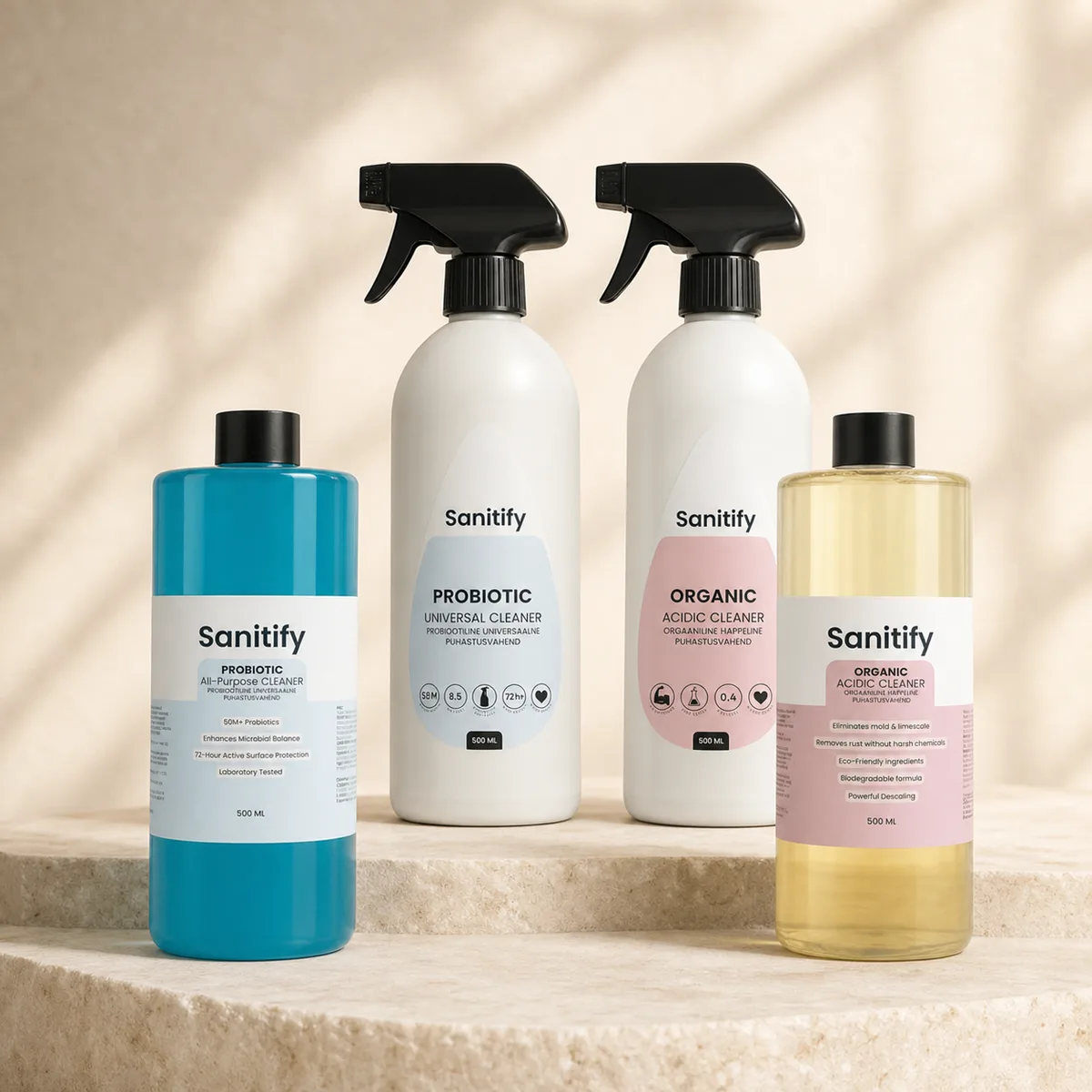
- Universal Probiotic Cleaner — Daily surface cleaning for homes and offices (ready-to-use spray)
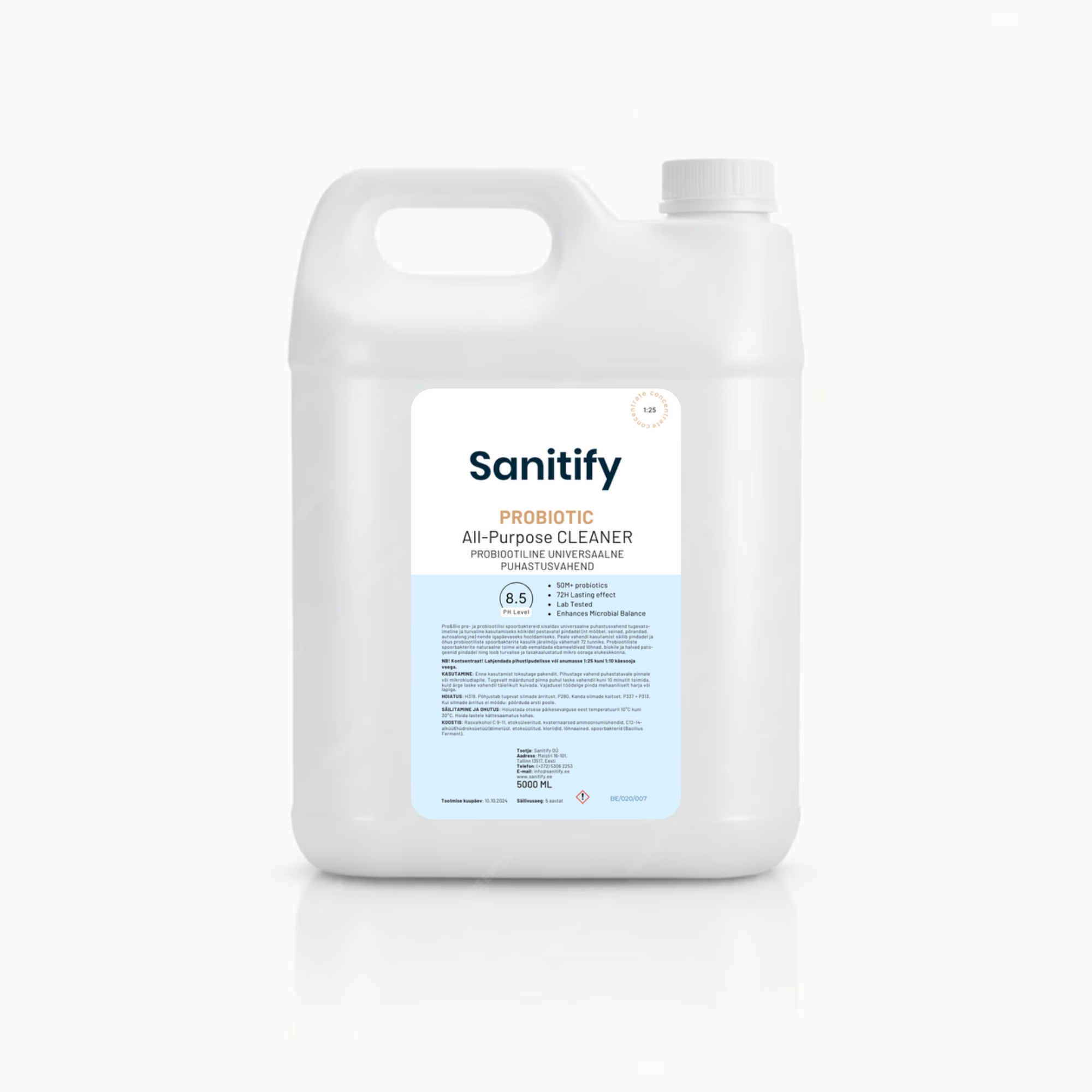
- Probiotic Concentrate — Dilutes 1:50 for cost-effective commercial and facility cleaning
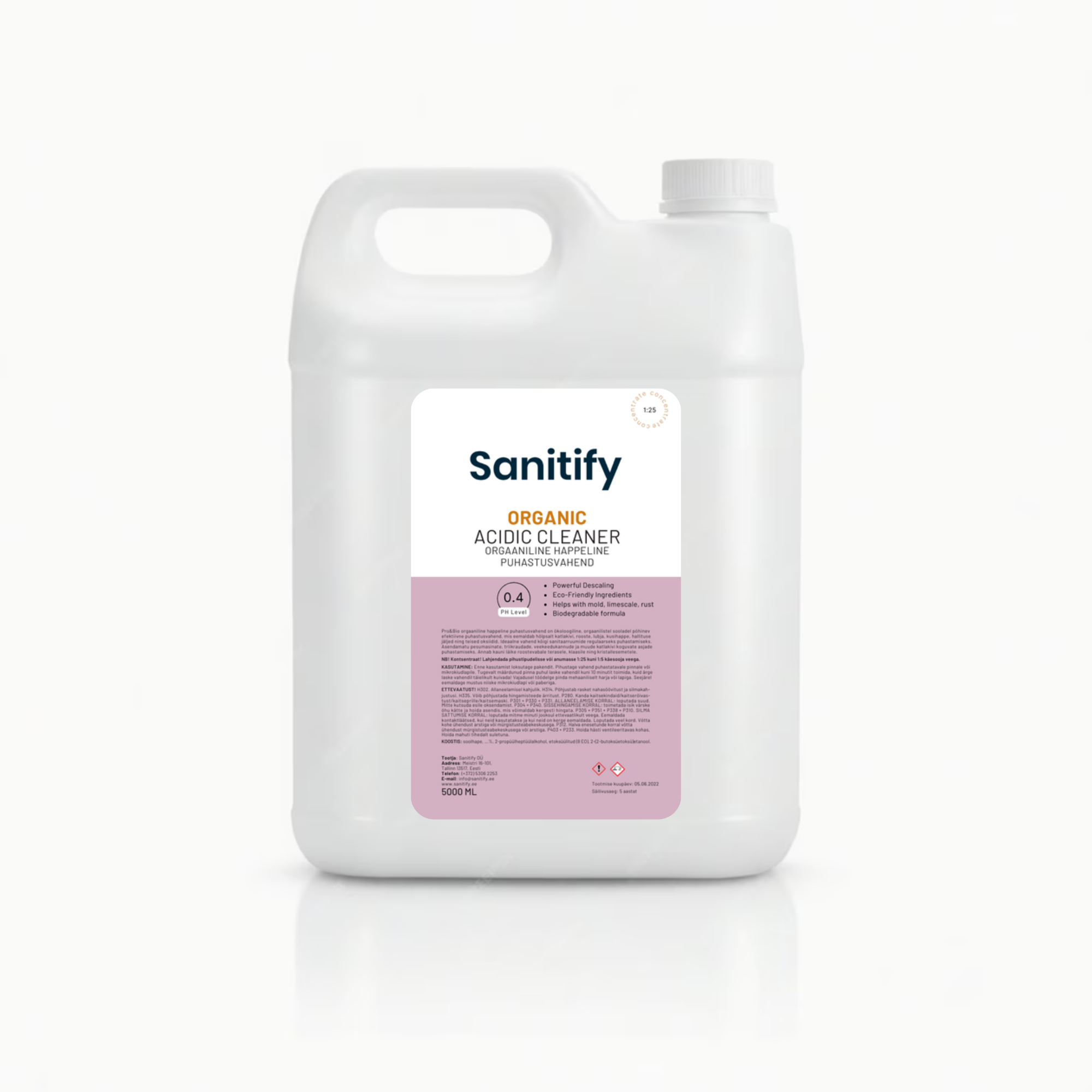
- Mold, Fungus, Rust & Limescale Remover — Salt-based acidic cleaner for targeted mold and mineral removal (paired with probiotic follow-up for prevention)
- Probiotic Drops — Personal care application of Bacillus Ferment technology for skin health
The system is designed for the hybrid approach validated in clinical research: use the acidic mold remover for immediate action where needed, then establish and maintain probiotic protection with the universal cleaner or concentrate. Read our guide on natural mold removal for the complete protocol.
Frequently Asked Questions
Are probiotic cleaners better than chemical cleaners?
For sustained daily hygiene, yes. Clinical studies show probiotic cleaning maintains 89% pathogen reduction over 6 months, while chemical disinfectants show 30–40% pathogen rebound within 48 hours. Chemical cleaners are still necessary for acute outbreak response and sterile environments. The optimal approach is using probiotic cleaning as the daily standard with chemical disinfection for targeted situations.
Do probiotic cleaners kill bacteria?
Probiotic cleaners do not primarily kill bacteria — they manage the surface microbiome through competitive exclusion. Beneficial Bacillus bacteria outcompete pathogens for nutrients and space, and produce antimicrobial lipopeptides (surfactin, iturin) that inhibit pathogen growth. The result is sustained pathogen suppression rather than a brief kill-and-rebound cycle.
Can chemical disinfectants cause antibiotic resistance?
Yes. Systematic reviews confirm that quaternary ammonium compounds (quats) at sub-lethal concentrations drive cross-resistance to clinical antibiotics including tetracyclines and aminoglycosides. Triclosan exposure makes bacteria up to 10,000 times more resistant to certain antibiotics. Probiotic cleaning avoids this risk because competitive exclusion does not apply the selective pressure that drives resistance evolution.
How long do probiotic cleaners protect surfaces?
A single application of a Bacillus-based probiotic cleaner provides 48–72 hours of active surface protection, depending on surface type, temperature, and foot traffic. With regular application (2–3 times per week for homes, daily for commercial facilities), the beneficial biofilm builds cumulatively and becomes increasingly effective over time.
Are probiotic cleaners safe for hospitals?
Yes — probiotic cleaners have been studied extensively in hospital settings. The most comprehensive trial (Caselli et al., 2018) implemented Bacillus-based cleaning across an Italian hospital network for 18 months and achieved a 52% reduction in healthcare-associated infections. No adverse events were reported. The hospital protocol uses probiotic cleaning for routine surfaces while reserving chemical disinfection for surgical areas and outbreak response.
What is the difference between disinfecting and probiotic cleaning?
Disinfecting aims to kill 99.9% of microorganisms on a surface at the moment of application — a temporary sterilization that leaves surfaces vulnerable to recontamination within hours. Probiotic cleaning establishes a living population of beneficial bacteria that continuously suppress pathogens for 48–72 hours. Disinfection is event-based; probiotic cleaning is state-based — it maintains ongoing protection rather than brief sterilization cycles.
Can I use probiotic cleaners and chemical cleaners together?
Not simultaneously — chemical disinfectants kill the beneficial bacteria in probiotic products. However, you can use them sequentially as a hybrid protocol: apply chemical disinfection first for immediate pathogen elimination (e.g., after a body fluid spill or during an illness), allow the surface to dry completely, then apply the probiotic cleaner to establish long-term protection. Do not use chemical disinfectants on surfaces where a probiotic biofilm is established, as this destroys the protective layer.